
Cooling Diagnostics and Repair
A contractor can check thermostat calls, electrical components, refrigerant pressures, coil condition, condensate drainage, and supply-air temperature when an air conditioner runs poorly or stops cooling.
Serving Los Angeles, California & surrounding areas
Calls answered around the clock
One call connects you directly with a local HVAC contractor who serves your area.
CALL NOW: 424 577 5132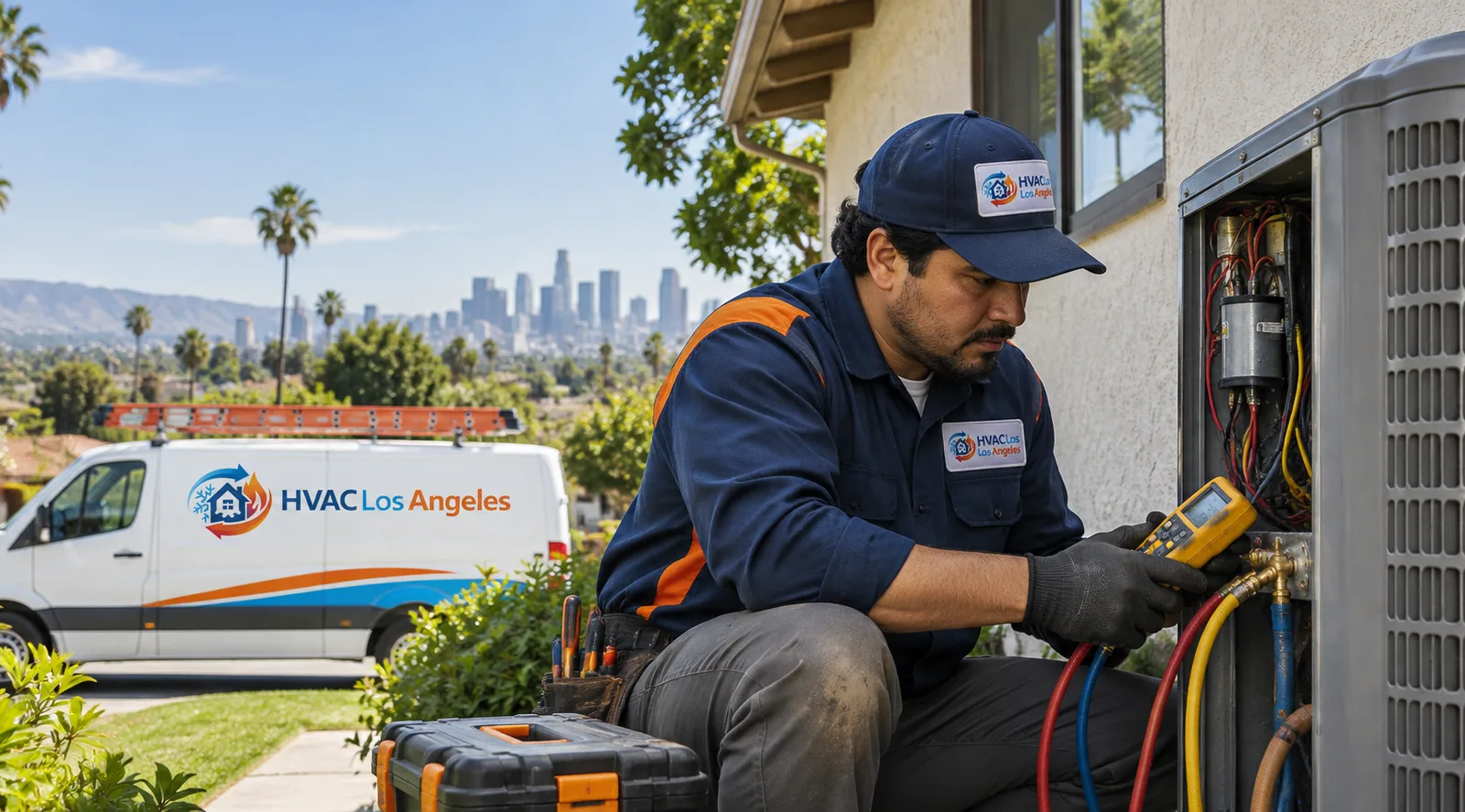
Los Angeles HVAC service covers air-conditioning and heating repair, system replacement, seasonal maintenance, airflow correction, thermostat work, and indoor air quality equipment.
One call through HVAC Los Angeles connects you with one of the hvac companies around Los Angeles that serves your area.
You speak with the contractor directly about the symptoms, service options, and quote, then decide whether to proceed.
Local systems face a demanding mix of hot inland afternoons, cooler coastal conditions, airborne dust, and periods of wildfire smoke. A home in the San Fernando Valley may have a heavier cooling load than a similar coastal property because summer temperatures differ across the basin. In hillside neighborhoods, outdoor-unit placement and service access may affect replacement planning. Older homes in areas such as Highland Park may also have compact mechanical spaces or ductwork added after the original construction.
A complete service visit should address the system rather than one symptom in isolation. Weak cooling may come from a dirty evaporator coil, restricted filter, low refrigerant charge, failed capacitor, duct leakage, or a blower problem. Uneven temperatures may point to duct sizing, closed dampers, insulation gaps, or poor return-air placement. A contractor can test the equipment, explain the findings, and separate a repairable fault from a system that warrants replacement.
HVAC replacement work may require permits and inspections through the Los Angeles Department of Building and Safety. A contractor should explain whether a permit applies, who handles it, and how equipment sizing affects the proposed system. Air conditioners and heat pumps should be selected through load calculations rather than simply copying the capacity of an old unit.
A contractor can check thermostat calls, electrical components, refrigerant pressures, coil condition, condensate drainage, and supply-air temperature when an air conditioner runs poorly or stops cooling.
Heating work may involve furnaces, heat pumps, ignition systems, burners, flame sensors, blower motors, controls, and venting. The contractor determines which components need attention.
Replacement planning includes load calculations, equipment type, efficiency ratings, electrical requirements, duct compatibility, drainage, equipment clearances, and installation access.
Hot rooms, noisy registers, and weak airflow can result from undersized returns, damaged ducts, excessive static pressure, closed dampers, or a blower that is not operating correctly.
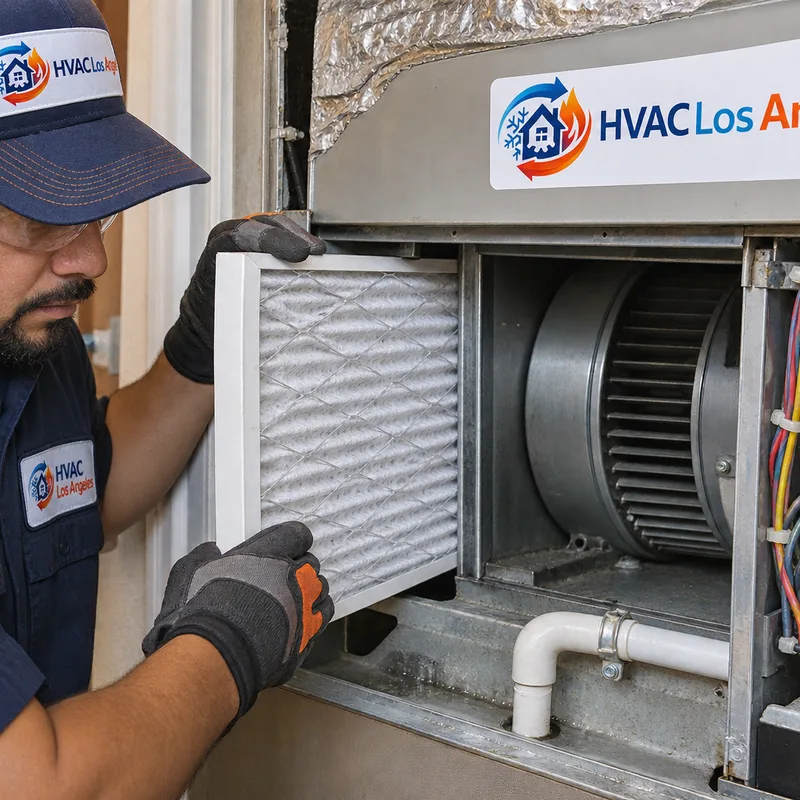
Routine service commonly includes checking filters, coils, drains, electrical connections, temperature split, motors, controls, and visible wear before demanding weather puts more load on the system.
Contractors may discuss filtration, media filters, air cleaners, humidity control, ventilation, and compatible accessories when dust, smoke particles, or stale indoor air are concerns.
Call the number shown and enter your ZIP code.
You are connected with a local HVAC contractor who serves that ZIP. There is no form, email wait, or intermediary conversation.
Explain the symptoms to the contractor, ask how the system will be evaluated, and discuss service or replacement options.
The contractor provides the quote and proposed scope. You decide whether the work should move forward.
Skip the search through multiple HVAC listings. One call connects you directly with a local contractor who handles heating, cooling, airflow, and indoor air quality work.
CALL NOW: 424 577 5132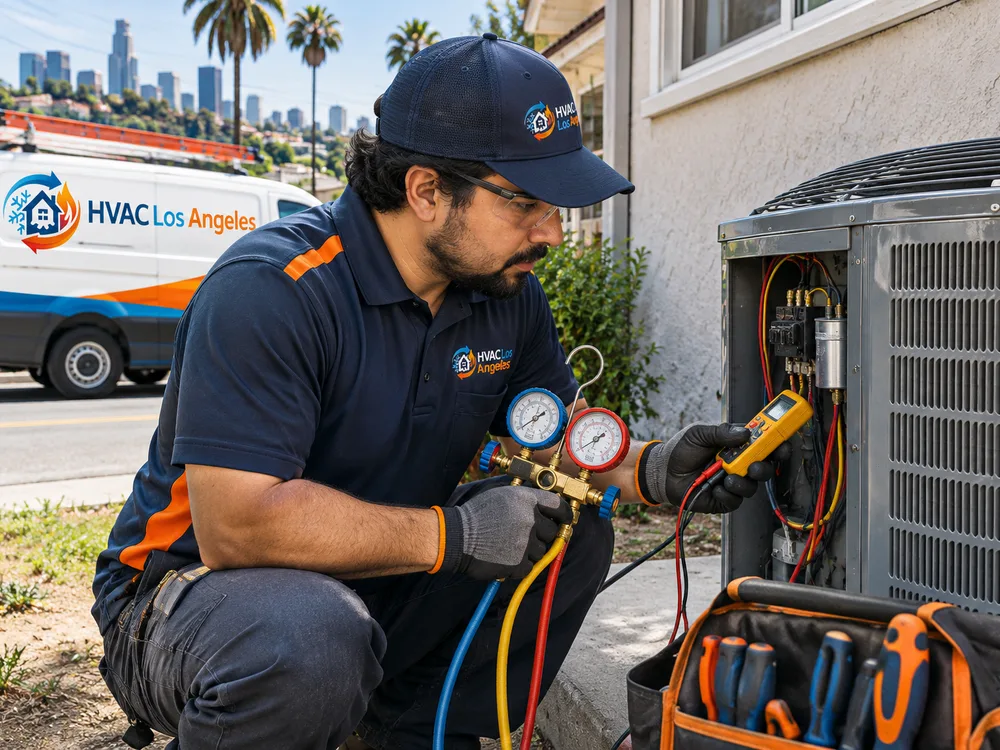
The decision depends on the failed component, equipment condition, refrigerant type, repair scope, comfort problems, and whether the system is properly sized. The contractor should diagnose the fault first and explain both viable options when repair and replacement are reasonable choices.
The contractor should check airflow at the registers, return-air capacity, filter and coil condition, duct leakage, static pressure, blower settings, insulation, and equipment sizing. In multi-level and hillside homes, duct routing and long runs can contribute to room-to-room temperature differences.
Yes, many HVAC contractors service and install heat pumps. A heat pump provides cooling and heating through the refrigeration cycle, and the contractor may evaluate the compressor, reversing valve, defrost controls, refrigerant circuit, air handler, and electrical supply.
The contractor confirms system sizing and equipment selection, removes the old components, prepares the equipment locations, installs the new indoor and outdoor units, connects refrigerant lines and electrical components, addresses drainage and duct transitions, and tests operation. Ask how permitting, inspections, disposal, thermostat setup, and warranty terms are handled.
A new unit will not correct every airflow problem. Restricted or poorly sized ducts, inadequate return air, dirty components, closed dampers, and high static pressure may remain after equipment replacement unless they are included in the scope.
For cooling equipment, contractors commonly discuss SEER2 and EER2. Heating comparisons may include HSPF2 for heat pumps and AFUE for furnaces. The right choice also depends on load calculations, duct condition, installation requirements, and how the home is used.
Ask what testing supports the diagnosis, which parts or equipment are included, whether duct or electrical changes are needed, whether permits apply, how the system will be commissioned, and what warranty terms come from the contractor or manufacturer. Get the scope and quote directly from the contractor before deciding.
One call connects you with a contractor who serves the Los Angeles area. Discuss the heating or cooling problem directly, review the contractor's proposed scope and quote, and decide what happens next.