Heater repair · Los Angeles

Heater Repair Los Angeles

One call connects you directly with a local heating contractor who serves your area and handles heater problems like yours.

CALL NOW: 424 577 5132
✓ One call instead of many ✓ Direct contractor conversation ✓ You decide what happens next
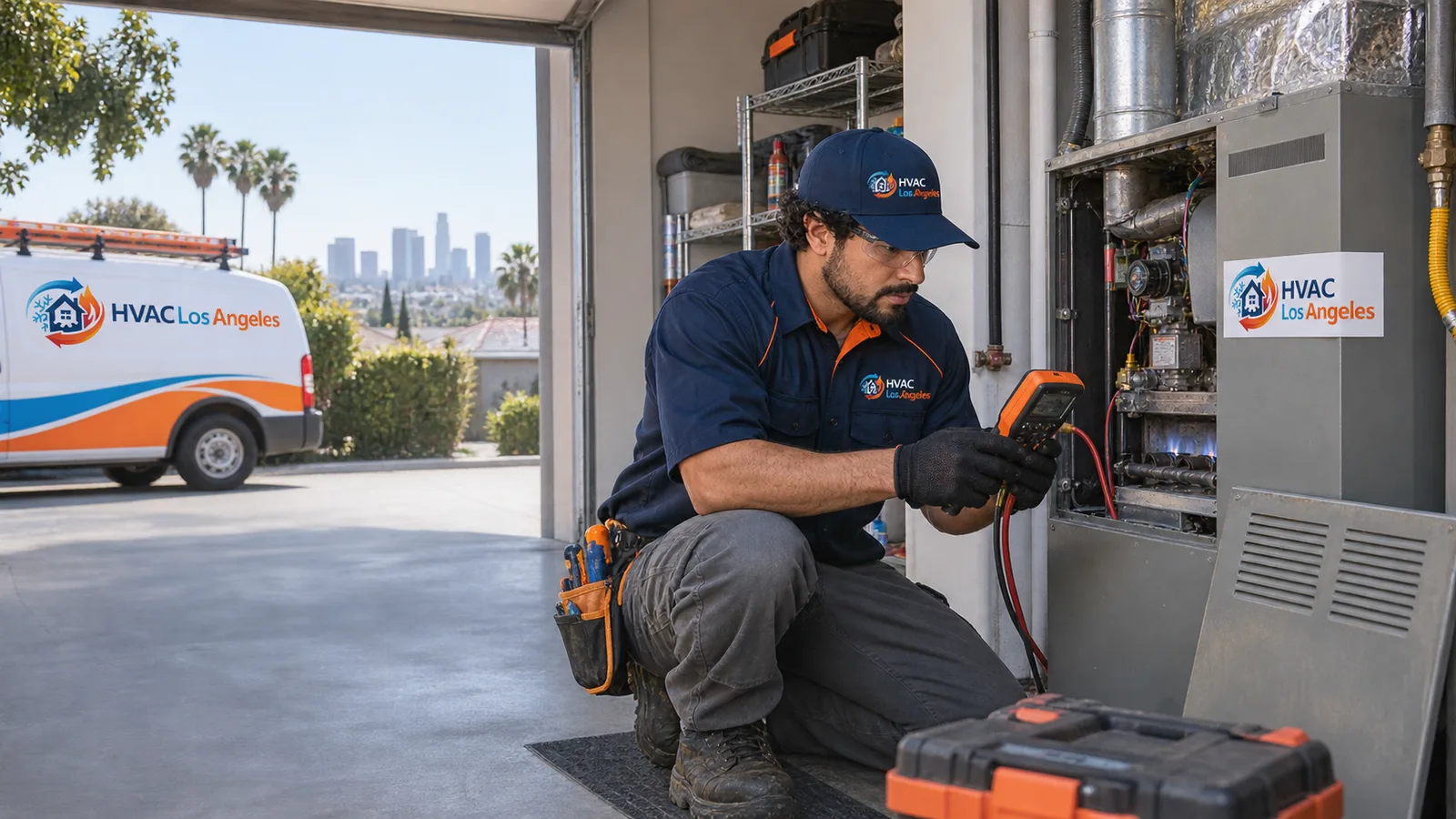
A contractor diagnosing a residential forced-air heater in a clean Los Angeles utility area with the furnace cabinet and testing instruments visible.
Diagnosis first

Heating Repair for Los Angeles Homes and Businesses

When a heater stops producing warm air, cycles repeatedly, makes unfamiliar sounds, or will not start, a proper diagnosis matters. Heater repair Los Angeles work begins by identifying whether the fault is in the thermostat, electrical supply, ignition system, burners, blower assembly, safety controls, airflow, or fuel supply. Replacing a part without testing the full operating sequence can leave the underlying fault unresolved.

Los Angeles has a long cooling season, so heating equipment can remain idle for months before it is needed. Dust on burners, aging ignition components, blocked filters, and motors that have deteriorated during periods of limited use may become apparent when cooler weather arrives. A contractor should operate the heater through a complete cycle and check both the source of the failure and any condition that could cause it to return.

Housing and equipment vary across the city. Older homes in Hancock Park may have aging furnaces and duct systems, while compact properties in Silver Lake can have equipment installed in tight closets or attic spaces. San Fernando Valley homes often rely on central forced-air systems that share ductwork with air conditioning. Downtown Los Angeles buildings may use packaged rooftop units or other commercial configurations. These differences affect access, diagnosis, and the parts required for repair.

We connect callers with local hvac la contractors in Los Angeles who handle heating systems in the area. There is no form or intake conversation. You speak with the contractor directly, discuss the symptoms and equipment, receive the quote from that contractor, and decide whether to proceed.

Repair details

What Los Angeles Heater Repair May Involve

Startup and Ignition Faults

For gas furnaces, the contractor may inspect the igniter, flame sensor, gas valve, burners, pressure switch, inducer motor, and venting. Modern furnaces must complete a defined safety sequence before the main blower begins moving heated air.

Airflow and Blower Problems

A clogged filter, dirty blower wheel, failing motor, closed register, or restricted return can reduce airflow and cause the high-limit switch to interrupt heating. The contractor should address the restriction rather than repeatedly resetting the system.

Thermostat and Control Issues

Loose low-voltage wiring, thermostat settings, failed relays, damaged control boards, and condensate safety switches can prevent a heating cycle. Diagnosis should confirm that the thermostat call reaches the equipment and that each control responds correctly.

Heat Pump Troubleshooting

Heat pumps can lose heating capacity because of refrigerant circuit faults, sensor problems, outdoor fan failures, reversing-valve issues, or defrost-control faults. A contractor may also check whether auxiliary heat is operating as designed.

Unusual Noise or Odor

Rattling panels, worn bearings, blower vibration, delayed ignition, and debris in the cabinet can produce noticeable sounds or smells. A strong gas odor calls for leaving the area and contacting the gas utility or emergency services from a safe place.

Repair or Replacement Guidance

The contractor can compare the failed component, equipment age, overall condition, parts availability, and any recurring faults. You receive the proposed scope from the contractor and choose whether repair or replacement makes sense for the property.

How Heater Repair in Los Angeles Works

  1. 01

    Make One Call

    Call the number and enter your ZIP code. You are connected directly with a local heating contractor who serves that ZIP.

  2. 02

    Discuss the Heater Directly

    Tell the contractor what the equipment is doing, when the problem began, and whether any thermostat message or fault code is visible. The contractor can discuss access, scheduling, and the next practical step.

  3. 03

    The Contractor Diagnoses the System

    At the property, the contractor may verify thermostat operation, power, airflow, ignition, temperature rise, safety controls, and the complete heating cycle. The exact checks depend on whether the system is a gas furnace, electric furnace, heat pump, wall heater, or packaged unit.

  4. 04

    Review the Proposed Work

    The contractor explains the fault, recommended repair, parts involved, and quote. Ask whether the proposal addresses the cause of the failure, what testing follows the repair, and what warranty terms apply. You decide whether the work goes ahead.

CALL NOW: 424 577 5132

Stop working through lists of contractors. One call connects you directly with a local heating contractor who handles Los Angeles heater repair.

CALL NOW: 424 577 5132
Testing and completion

Common Heating Repair Work

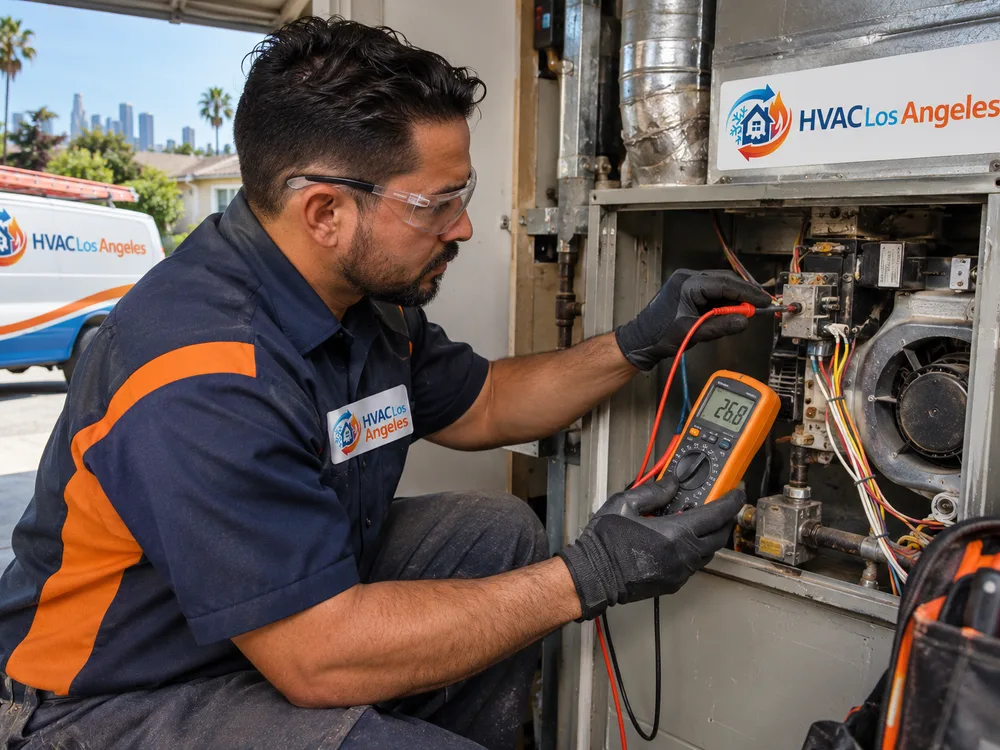
A contractor using a multimeter to test electrical components inside an open residential furnace cabinet.
Electrical and control testing helps isolate the failed component.
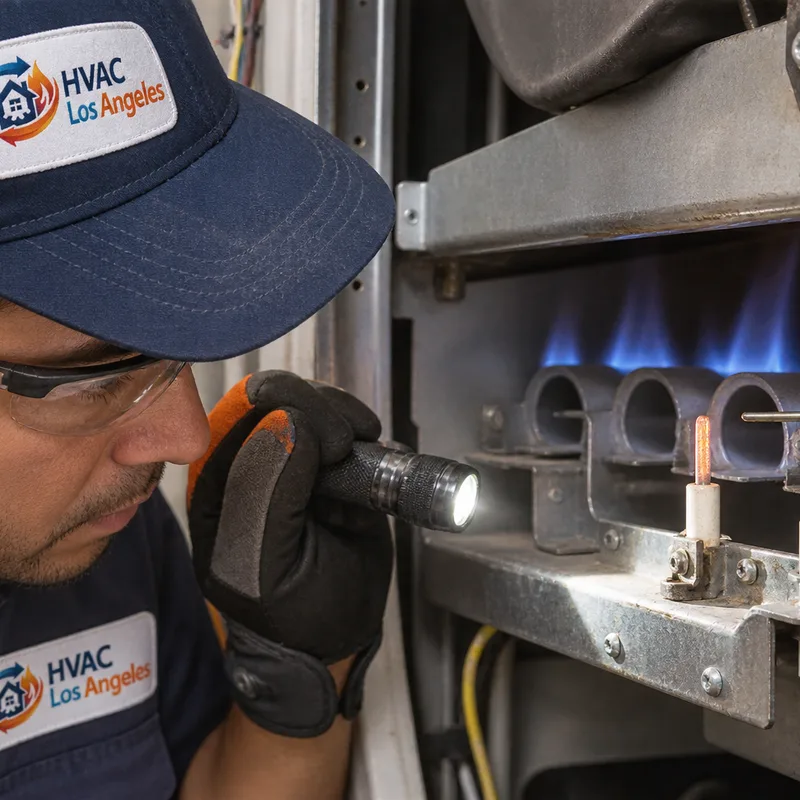
Close-up of a furnace burner assembly, flame sensor, and igniter during inspection.
Ignition components are checked as part of the furnace startup sequence.
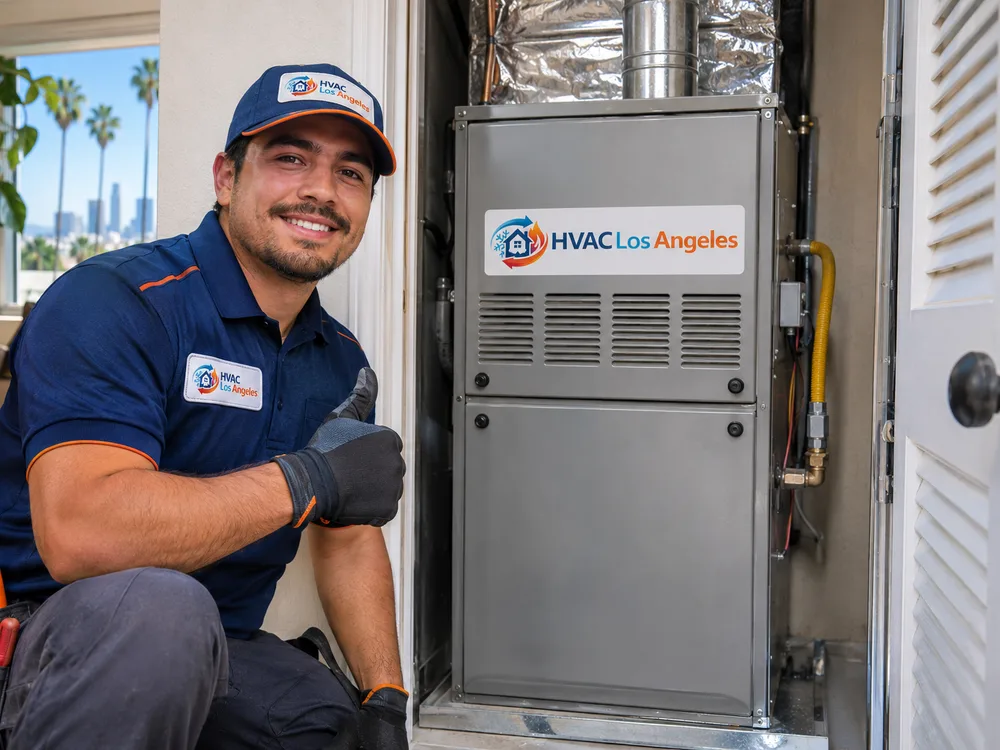
A clean, fully assembled forced-air furnace operating in a residential utility closet after repair with access panels secured.
Final operation should be checked through a complete heating cycle.
Decision support

Los Angeles Heating Repair Questions

What should a contractor check before recommending a furnace part?

A contractor should confirm the failure through testing rather than relying on the symptom alone. Common checks include thermostat demand, incoming power, control-board signals, ignition sequence, flame sensing, pressure-switch operation, blower performance, filter condition, temperature rise, and venting. The relevant tests depend on the furnace design and observed fault code.

Why does my heater turn on and shut off repeatedly?

Short cycling can result from restricted airflow, an overheating high-limit switch, thermostat placement or wiring, flame-sensor trouble, pressure-switch faults, or equipment sizing issues. A dirty filter is worth checking, but repeated shutdowns require diagnosis because the system may be responding to a safety condition.

Can a heat pump produce cool-feeling air while heating?

Yes. Heat-pump supply air can feel cooler than air from a gas furnace even when the system is heating normally. A contractor can measure return and supply temperatures, check outdoor-unit operation, inspect the refrigerant circuit, and test defrost and auxiliary-heat controls to determine whether performance is normal.

When is a heater replacement more practical than repair?

Replacement may be worth considering when a major component has failed, parts are unavailable, the heat exchanger is damaged, or the equipment has recurring problems. The contractor should explain the repair scope and the replacement alternative separately. You can compare the condition of the whole system, proposed equipment, installation requirements, and warranty terms before deciding.

What happens during Los Angeles heater repair?

The contractor first reproduces the fault and tests the systems related to that symptom. After identifying the cause, the contractor explains the proposed work and quote. If you approve it, the repair is completed and the heater should be run through a full cycle to confirm startup, heating, airflow, shutdown, and safety-control operation.

Who handles gas service or permits when they are involved?

The contractor can explain whether the proposed work involves the Southern California Gas Company or the Los Angeles Department of Building and Safety. Routine component repair may differ from work that changes equipment, gas piping, venting, or electrical connections. Ask the contractor what approvals or utility coordination apply to the specific scope.

What should I ask before approving heating repair in Los Angeles?

Ask what failed, how the diagnosis was confirmed, whether another condition contributed to the failure, which parts are included, and how the system will be tested afterward. Also ask about access needs, thermostat compatibility, permit requirements if applicable, and written warranty terms from the contractor.

Get Your Heater Problem in Front of a Local Contractor

One call connects you with a heating contractor who serves your area. You speak directly with the contractor about the system and decide what happens next.

CALL NOW: 424 577 5132