HVAC contractors · Los Angeles

HVAC Contractors In Los Angeles CA

One call connects you directly with a local HVAC contractor who handles heating, cooling, ventilation, maintenance, and replacement work.

CALL NOW: 424 577 5132
✓ One call instead of a long search ✓ Talk directly with the contractor ✓ You decide whether to proceed
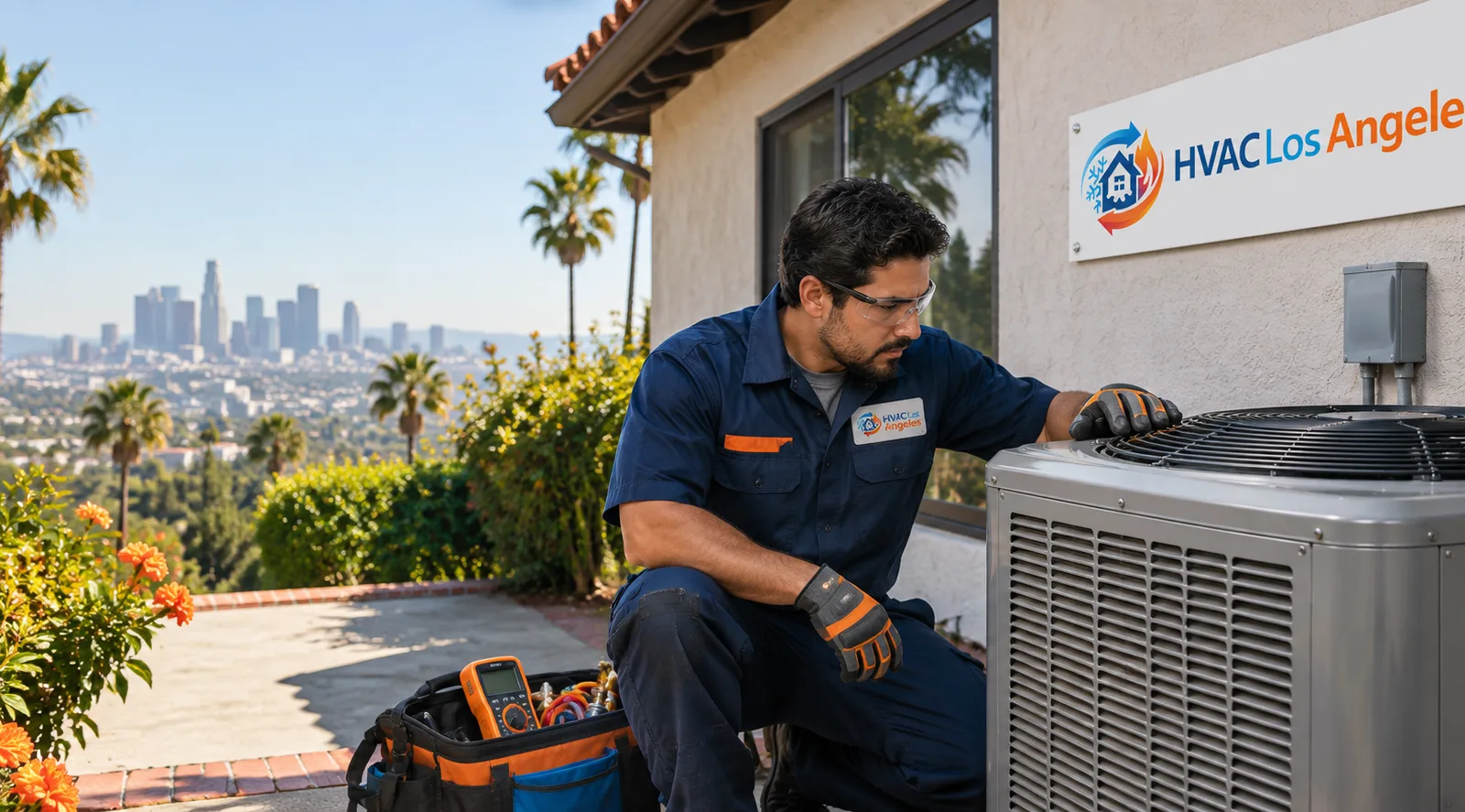
A contractor examining an outdoor heat pump beside a Los Angeles home.
Local HVAC help

Heating And Cooling Help Without A Long Contractor Search

HVAC contractors in Los Angeles CA work on air conditioners, heat pumps, furnaces, duct systems, thermostats, indoor air equipment, and light commercial systems. A contractor may diagnose a unit that will not start, correct poor airflow, replace worn components, maintain equipment, or plan a complete system change.

We connect callers with hvac la companies serving Los Angeles, CA that serve the caller's area. You speak with the contractor directly, discuss the property and system, receive the contractor's quote, and decide whether to proceed. There is no contact form or email wait.

Los Angeles buildings present different HVAC demands. Older houses in areas such as Highland Park may have limited mechanical space or ducts added long after construction. Many Westside properties face mild coastal conditions but still need humidity control and dependable airflow. Homes in the San Fernando Valley contend with hotter summer afternoons, which can expose weak capacitors, dirty coils, restricted filters, and undersized duct returns. Downtown commercial spaces may use packaged rooftop units or divided zoning rather than a single residential split system.

Permits for applicable HVAC alterations within the City of Los Angeles generally run through the Los Angeles Department of Building and Safety. Equipment changes can also involve electrical work, condensate drainage, refrigerant piping, gas connections, and California energy requirements. The contractor should identify which requirements apply before installation begins.

Service scope

What Los Angeles HVAC Contractors Handle

Heating And Cooling Diagnosis

A contractor checks thermostat calls, electrical power, filters, blower operation, temperature change across the equipment, refrigerant-side symptoms, and fault codes. Diagnosis should identify the failed part and any condition that contributed to the failure.

System Replacement

Replacement planning includes load needs, equipment type, efficiency ratings, available electrical service, duct capacity, clearances, drainage, and controls. Manual J load calculations and Manual S equipment selection are recognized methods for sizing residential systems.

Airflow And Ductwork

Hot or cold rooms can result from crushed flex duct, disconnected runs, leakage, dirty coils, closed dampers, inadequate returns, or poor system balance. A larger unit does not correct restricted ducts and can create short cycling or comfort problems.

Maintenance And Tune-Ups

Routine work may include filter review, coil inspection, drain clearing, electrical checks, blower assessment, thermostat testing, and a review of operating temperatures. The exact checklist depends on whether the property has a furnace, heat pump, split system, or packaged unit.

Ventilation And Indoor Air Equipment

Contractors can discuss exhaust ventilation, filtration, air cleaners, fresh-air controls, and humidity-related concerns. Equipment should be chosen for the building and installed without creating excess static pressure.

Residential And Commercial Systems

A Los Angeles HVAC contractor may work on residential split systems, ductless mini-splits, heat pumps, furnaces, packaged rooftop equipment, and zoned controls. Ask whether the contractor regularly handles the system installed at your property.

How To Reach An HVAC Contractor In Los Angeles

  1. 01

    Make One Call

    Call the number shown and enter your ZIP code. You are connected directly with a local HVAC contractor who serves that ZIP.

  2. 02

    Talk With The Contractor

    Discuss the equipment, symptoms, affected rooms, property type, and access conditions directly with the contractor. If available, the model number and thermostat error code can help identify the system before a visit.

  3. 03

    Review The Proposed Work

    The contractor determines the diagnosis, scope, and quote. Ask what is being repaired or replaced, whether permits apply, how the system was sized, and which warranty terms come with the equipment and labor.

  4. 04

    Choose What Happens Next

    You decide whether to approve the work. Any scheduling, property access, payment terms, and project questions are handled directly with the contractor.

CALL NOW: 424 577 5132

Stop working through contractor listings. One call connects you with a local HVAC contractor who serves your part of Los Angeles, and you discuss the heating or cooling job directly.

CALL NOW: 424 577 5132
Diagnosis and installation

Common HVAC Work

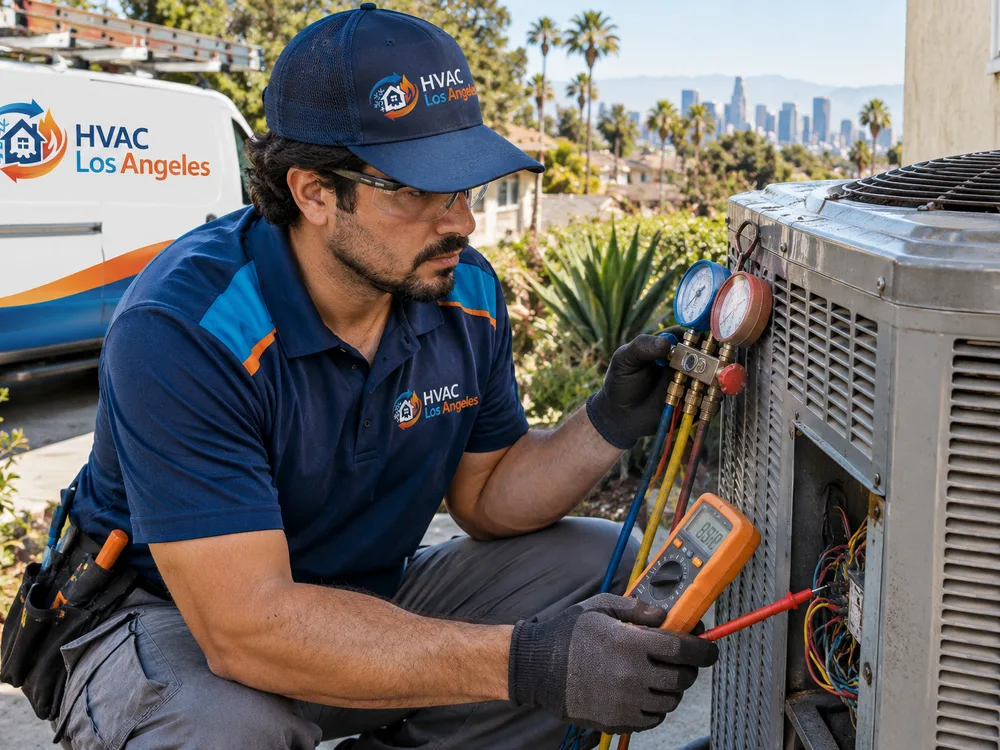
A contractor using diagnostic gauges and an electrical meter at a residential outdoor air-conditioning unit.
System diagnosis should consider electrical, airflow, and refrigerant-side conditions.
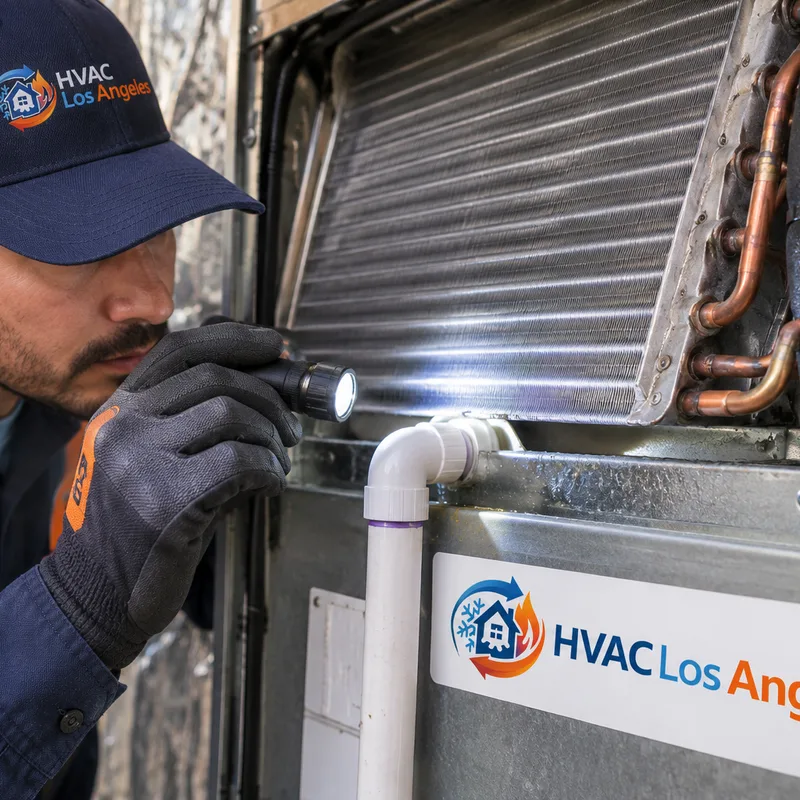
A clean HVAC evaporator coil, condensate drain connection, and insulated refrigerant lines during inspection.
Coils, drainage, and refrigerant piping are key inspection points.
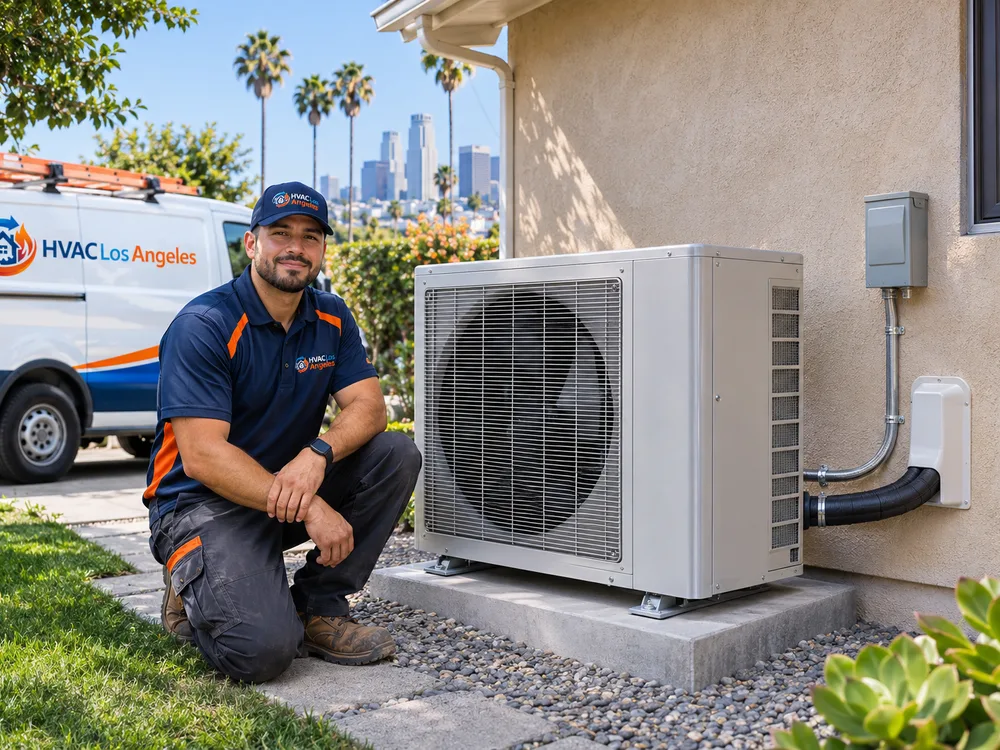
A neatly installed heat pump condenser on a level pad with protected lines and clear service access.
A finished installation needs stable support, proper clearances, and service access.
Decision support

Questions To Ask Before Hiring An HVAC Contractor

How do I know whether my HVAC system needs repair or replacement?

The decision should follow a diagnosis of the equipment's condition, failure, capacity, and compatibility with the rest of the system. A failed capacitor or contactor may be a focused repair, while a damaged compressor, leaking coil, obsolete refrigerant configuration, or repeated breakdowns may lead to a replacement discussion. Ask the contractor to separate the immediate fault from optional improvements.

What should an HVAC contractor check before recommending new equipment?

The contractor should evaluate heating and cooling loads, duct capacity, airflow, electrical service, equipment location, drainage, controls, and the condition of components that will remain. Matching an outdoor condenser to an incompatible indoor coil can affect operation. For ducted homes, return-air capacity and external static pressure deserve attention before equipment size is increased.

Are heat pumps practical for Los Angeles homes?

Heat pumps are a practical option for many Los Angeles homes because they provide cooling and electric heating through one system. The contractor still needs to consider the home's load, electrical capacity, duct condition, equipment placement, and colder-night performance. Ductless heat pumps can also suit additions or rooms that are difficult to connect to existing ducts.

Why is one room hotter than the rest of the house?

An uneven room temperature often points to an airflow or load problem rather than a thermostat problem alone. The contractor may check supply volume, return-air paths, duct leakage, insulation exposure, window heat gain, zoning controls, and whether the room was added after the original system was designed. Valley sun exposure and upper-floor heat gain can make marginal airflow more noticeable.

What happens during an HVAC replacement?

The old equipment is disconnected and removed, and the contractor prepares the approved location for the replacement system. Depending on the scope, the work can include a new pad or mounting hardware, refrigerant lines, electrical connections, condensate drainage, gas venting, thermostat controls, duct transitions, startup testing, and permit inspections. Ask how the occupied areas will be protected and when heating or cooling will be unavailable.

What should I compare in an HVAC contractor's proposal?

Compare the exact equipment model numbers, capacity, efficiency rating, included controls, duct or electrical changes, permit responsibility, disposal, startup testing, exclusions, payment schedule, and warranty terms. For matched systems, ask for the indoor and outdoor equipment pairing. The contractor provides the quote, and you decide whether its scope addresses the diagnosis.

Should ductwork be replaced with a new HVAC system?

Duct replacement is appropriate when ducts are damaged, disconnected, contaminated beyond practical cleaning, badly restricted, or unsuitable for the planned airflow. Sound ducts may only need sealing, insulation repair, balancing, or revised transitions. Ask for measured reasons, such as high static pressure or visible deterioration, rather than assuming every equipment replacement needs all-new ducts.

Ready To Talk With A Local HVAC Contractor?

One call connects you directly with a contractor who serves your area. Discuss the system, ask about the proposed work and quote, and decide what happens next.

CALL NOW: 424 577 5132