
Correct system size
An oversized system may cycle too often and control humidity poorly, while an undersized unit may run continuously during high demand. The contractor should explain how the home's load informs equipment selection.
Serving Los Angeles, California & surrounding areas
Calls answered around the clock
One call connects you directly with a local HVAC contractor who handles complete system replacement.
CALL NOW: 424 577 5132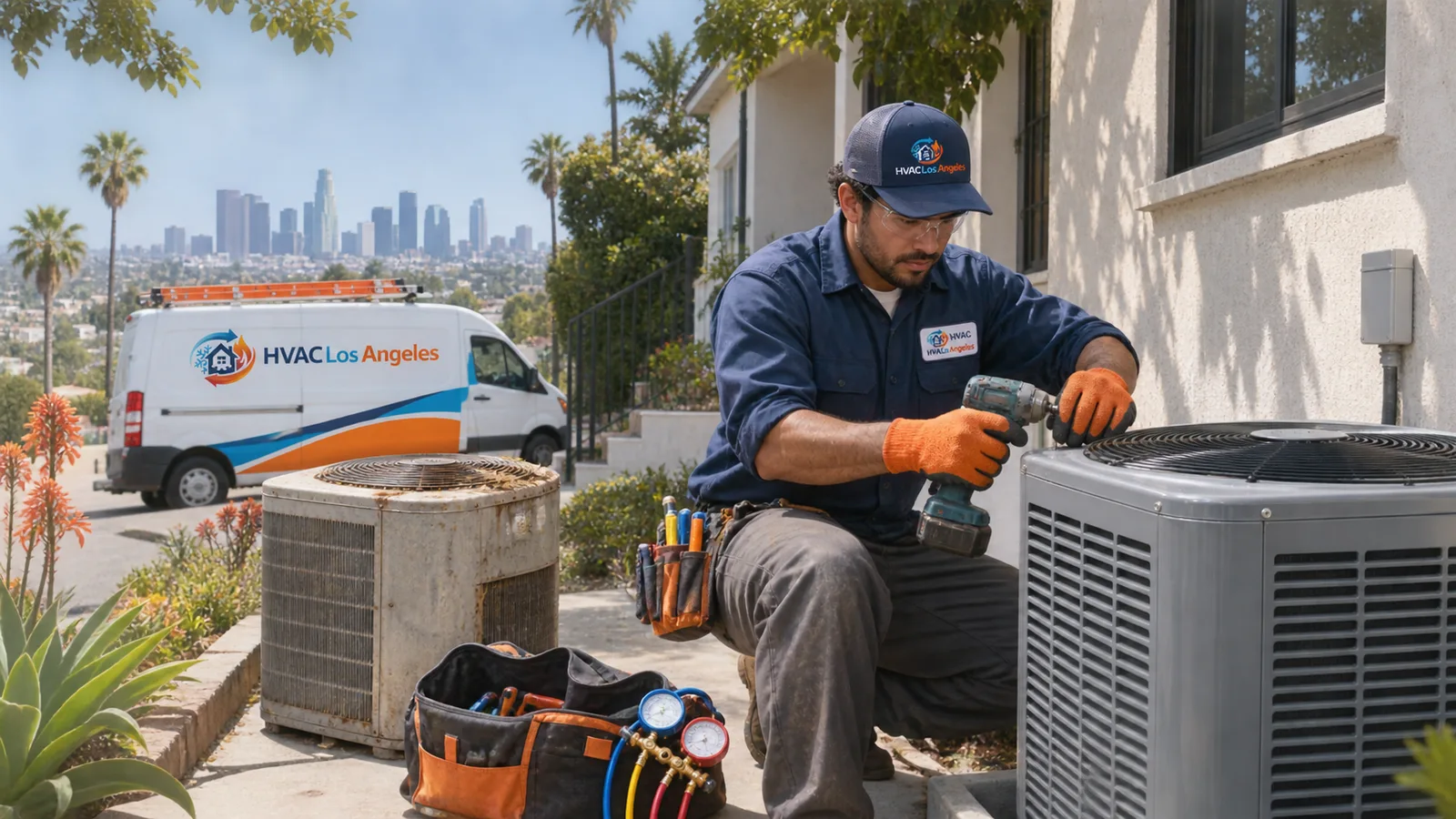
HVAC replacement in Los Angeles can restore dependable heating and cooling when an aging system breaks down repeatedly, struggles to hold the set temperature, or uses equipment that is no longer practical to repair. Replacement may involve the outdoor condenser or heat pump, the indoor furnace or air handler, the evaporator coil, the thermostat, and related electrical or refrigerant components.
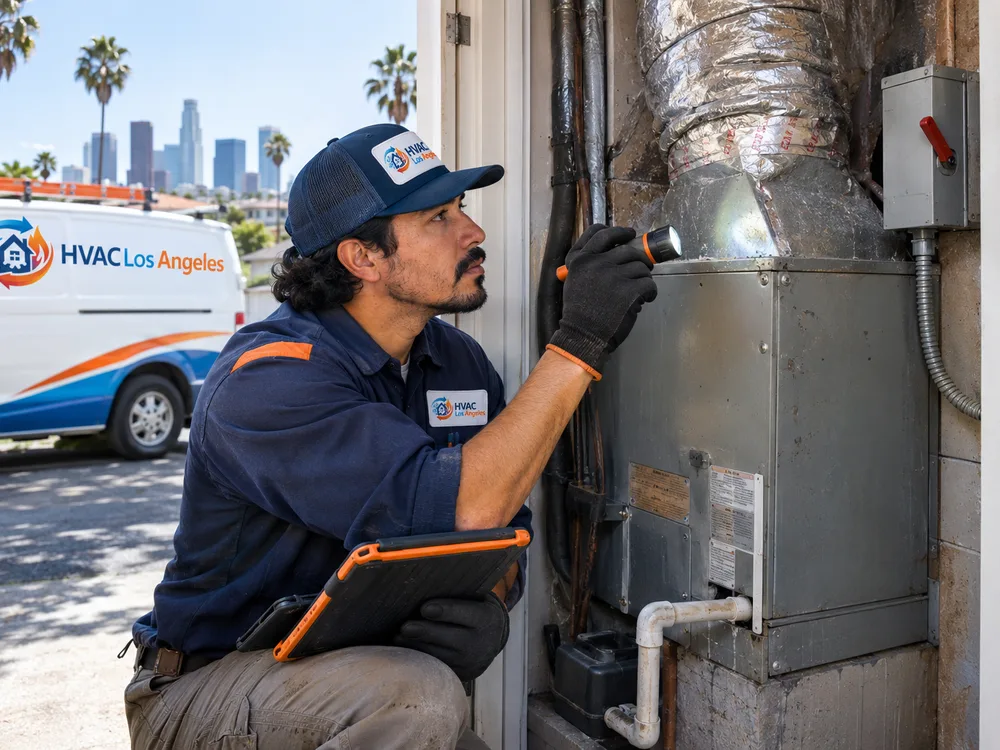
A contractor should inspect the entire system before recommending equipment. That includes checking the existing unit configuration, duct condition, electrical service, condensate drainage, refrigerant-line compatibility, filtration, and available installation space. Equipment should be sized from the home's cooling and heating loads rather than copied automatically from the old unit. A load calculation considers floor area, insulation, windows, orientation, air leakage, and other conditions that affect demand.
Los Angeles homes vary widely. Older houses in Echo Park may have tight mechanical spaces and ducts added long after construction. Many San Fernando Valley homes face heavier cooling demand during hot inland weather. Hillside properties in areas such as Mount Washington can complicate equipment access and placement. These details influence the proposed system, installation plan, and whether duct or electrical changes belong in the scope.
Complete replacement differs from broader heating and cooling work, which may include maintenance or repair. When replacement is the right course, one call connects you with a local contractor who can evaluate the existing setup and discuss appropriate options directly with you.
An oversized system may cycle too often and control humidity poorly, while an undersized unit may run continuously during high demand. The contractor should explain how the home's load informs equipment selection.
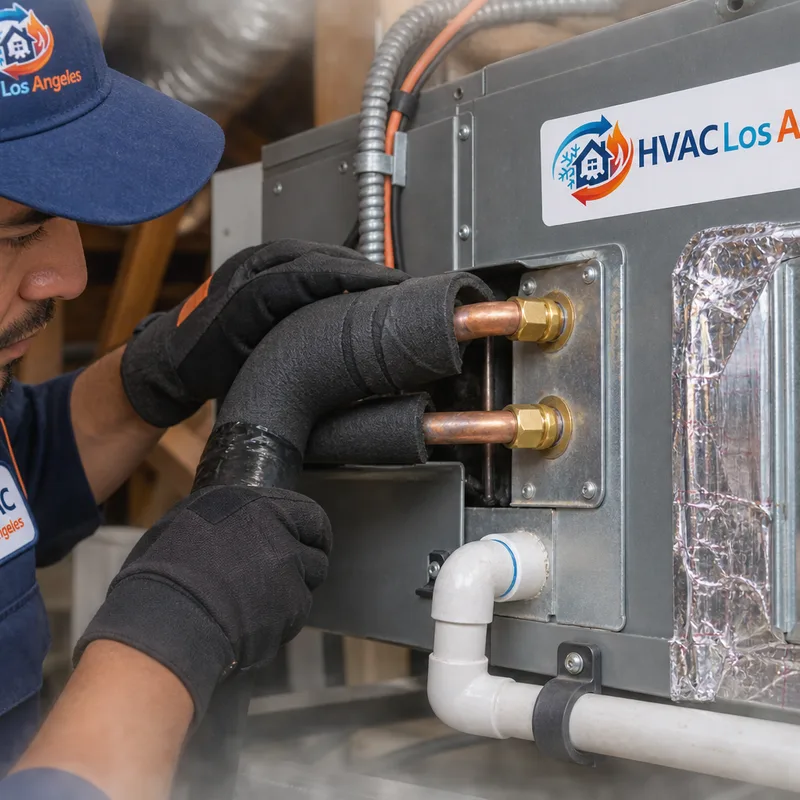
The indoor coil, outdoor unit, blower, and controls must be compatible. Mixing components without confirming ratings can reduce performance and create commissioning problems.
Leaky, restricted, or poorly sized ducts can undermine new equipment. A contractor may recommend sealing, insulation, return-air changes, or limited duct replacement when inspection shows a need.
Depending on the home, choices may include a split air conditioner with a furnace, an all-electric heat pump, a packaged unit, or ductless equipment. The contractor should compare practical tradeoffs for the property.
HVAC replacement commonly involves local permit requirements and code-related checks. In the City of Los Angeles, the Los Angeles Department of Building and Safety administers applicable permits and inspections.
One call connects you with a contractor who serves the area. You receive the proposed scope and quote from that contractor, then decide whether to proceed.
Call, enter your ZIP code, and you are connected directly with a local HVAC contractor who serves that area. There is no form or email wait.
The contractor examines the equipment, duct connections, electrical components, drainage, controls, access, and installation constraints. They may also discuss rooms that are difficult to keep comfortable.
The contractor explains the recommended system type, capacity, efficiency level, necessary modifications, permit responsibilities, and what is included in the quote. Ask for model numbers and a written scope.
The old equipment is disconnected and removed. The installer sets the new components, makes approved electrical, duct, drain, venting, and refrigerant connections, and protects nearby surfaces during the work.
Commissioning should verify thermostat operation, airflow, temperature change, drainage, electrical performance, and refrigerant charge as applicable. The homeowner can also ask for filter instructions, operating guidance, and equipment documents.
Stop working through lists of contractors. One call connects you directly with a local HVAC contractor who handles system replacement in the Los Angeles area.
CALL NOW: 424 577 5132
That depends on component compatibility, equipment condition, refrigerant type, and the condition of the indoor coil or furnace. Ask the contractor to explain whether a partial replacement produces a properly matched system and which existing components would remain.
A heat pump can provide both cooling and heating in the region's generally mild climate, but suitability depends on the home, electrical capacity, ducts, comfort preferences, and equipment design. A contractor can compare an all-electric heat pump with an air conditioner and furnace arrangement for the specific property.
Duct replacement is not automatically part of every HVAC replacement. The contractor should inspect accessible ducts for leakage, damaged insulation, restrictions, poor connections, and inadequate supply or return capacity before recommending duct work.
The proposal should identify equipment model numbers, system capacity, efficiency ratings, included labor and materials, removal of old equipment, required modifications, permit responsibility, commissioning, and any exclusions. Ask the contractor directly about manufacturer coverage and any contractor-provided warranty terms.
The installer typically needs access to the thermostat, electrical panel, indoor equipment, registers, and the route between indoor and outdoor components. Heating or cooling will be unavailable during part of the work, and the contractor should explain how work areas and access paths will be managed.
Permit requirements depend on the jurisdiction and scope of work. Properties within the City of Los Angeles generally fall under the Los Angeles Department of Building and Safety, while properties in other cities or unincorporated areas use their respective authorities. Confirm who obtains the permit and coordinates required inspections.
Compare the complete installed scope rather than the equipment name alone. Look at sizing method, matched components, efficiency ratings, duct or electrical changes, controls, filtration, noise considerations, commissioning, permit responsibility, and warranty terms.
Call and get connected with a local HVAC contractor who serves your area. You talk with the contractor directly, receive the quote from them, and decide what happens next.