AC repair · Los Angeles

AC Repair Los Angeles

One call connects you directly with a local air conditioning contractor who serves your area.

CALL NOW: 424 577 5132
✓ One call instead of many ✓ Direct contractor conversation ✓ You decide what happens next
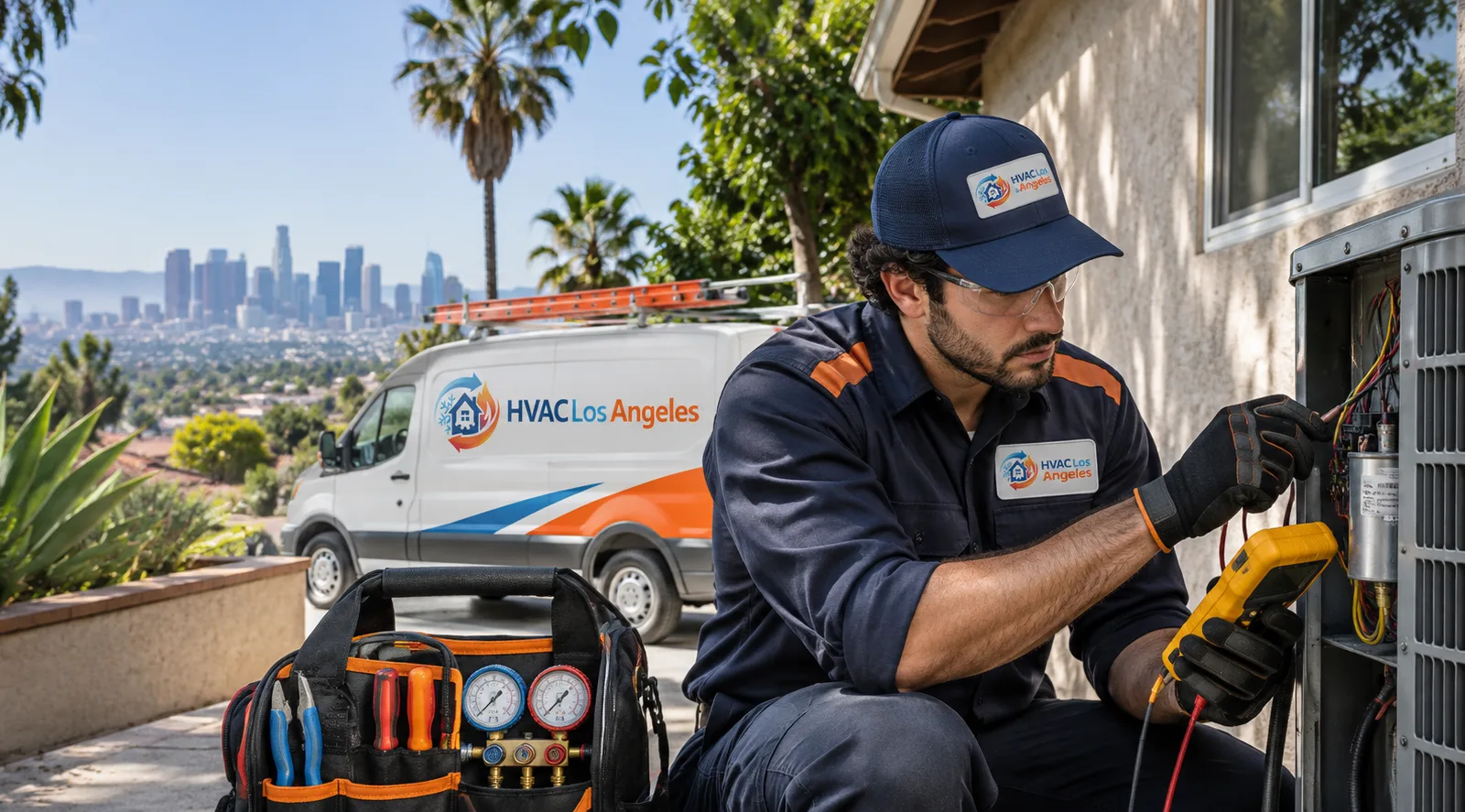
A contractor checking components of a residential outdoor air conditioning unit in Los Angeles with tools and test instruments visible.
Diagnosis first

Air Conditioner Repair in Los Angeles Starts With a Proper Diagnosis

When an air conditioner runs without cooling, cycles repeatedly, leaks water, makes a new noise, or will not start, replacing a part without testing the system can miss the real fault. AC repair Los Angeles work should begin with a diagnosis of the equipment, controls, airflow, and electrical supply.

A contractor may inspect the thermostat settings, air filter, indoor blower, evaporator coil, condensate drain, electrical connections, capacitor, contactor, compressor, condenser fan, and refrigerant circuit. Temperature and pressure readings can help separate an airflow restriction from a refrigerant or mechanical problem. If refrigerant is low, the system should be checked for a leak rather than treated as though refrigerant disappears during normal operation.

Los Angeles conditions affect the diagnosis. Airborne dust and long cooling cycles can load filters and collect on condenser coils. Homes near the coast may expose outdoor equipment to salt-laden air, while units in hotter inland parts of the Los Angeles basin can operate under heavier summer loads. In hillside neighborhoods such as Hollywood Hills, equipment access and drainage routes may also shape how a repair is approached.

We connect callers with local hvac contractors in Los Angeles, CA who handle air conditioner troubleshooting and repair. You speak with the contractor directly, discuss the symptoms and equipment, receive the quote from that contractor, and decide whether to proceed.

Repair details

Common AC Repair Problems and What Contractors Check

AC Runs but Does Not Cool

The contractor may compare supply and return air temperatures, inspect the filter and coils, confirm blower operation, and take refrigerant readings. Weak cooling can come from restricted airflow, dirty heat-transfer surfaces, a refrigerant leak, or failing mechanical parts.

System Will Not Start

Diagnosis may include the thermostat, disconnect, breaker, low-voltage circuit, safety switches, capacitor, and contactor. A tripped breaker should not be reset repeatedly because an electrical or motor fault may still be present.

Short Cycling

Frequent starts and stops can be tied to thermostat placement, airflow restrictions, an overheating motor, electrical faults, refrigerant conditions, or equipment sizing. The cause matters because repeated cycling places added stress on components.

Water Around the Indoor Unit

A contractor can inspect the condensate pan, drain line, pump, evaporator coil, and filter. A blocked drain can cause overflow, while an iced coil may point to poor airflow or a refrigerant-system problem.

Noise or Odor

Rattling, grinding, buzzing, or squealing can indicate loose panels, motor wear, electrical trouble, or fan contact. Persistent musty odors may call for inspection of the drain, coil area, filter, and nearby ductwork.

Uneven Room Temperatures

Uneven cooling may involve closed registers, duct leakage, insulation, solar exposure, blower performance, or system balance. Older homes in neighborhoods such as Hancock Park can have additions or altered duct layouts that deserve close inspection.

How Los Angeles AC Repair Works

  1. 01

    Call and Enter Your ZIP Code

    The call system uses your ZIP code to connect you directly with a local contractor who serves that part of Los Angeles or the surrounding area.

  2. 02

    Talk With the Contractor

    Discuss the system symptoms, equipment type, and access conditions directly with the contractor. Ask how diagnosis is handled and whether any diagnostic charge applies.

  3. 03

    Review the Findings

    The contractor should explain the fault, the proposed repair, the parts involved, and any alternatives. If replacement is recommended, ask why repair is no longer the preferred option.

  4. 04

    Decide What Happens Next

    The contractor provides the quote and proposed scope. You decide whether to authorize the work and can ask about parts, labor, scheduling, and warranty terms before proceeding.

CALL NOW: 424 577 5132

Stop working through lists of Los Angeles air conditioning companies. One call connects you directly with a local contractor who handles AC diagnosis and repair.

CALL NOW: 424 577 5132
Testing and completion

What Air Conditioning Repair Can Involve

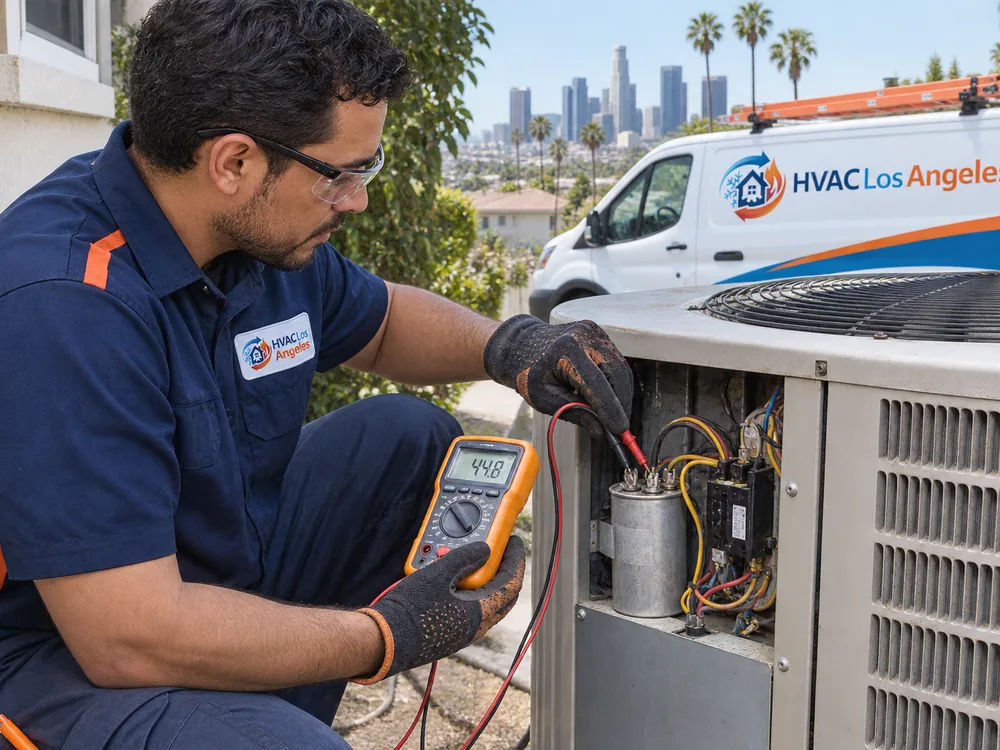
A contractor using a digital multimeter to test an air conditioner capacitor and electrical compartment.
Electrical testing can identify failed capacitors, contactors, motors, and control-circuit faults.
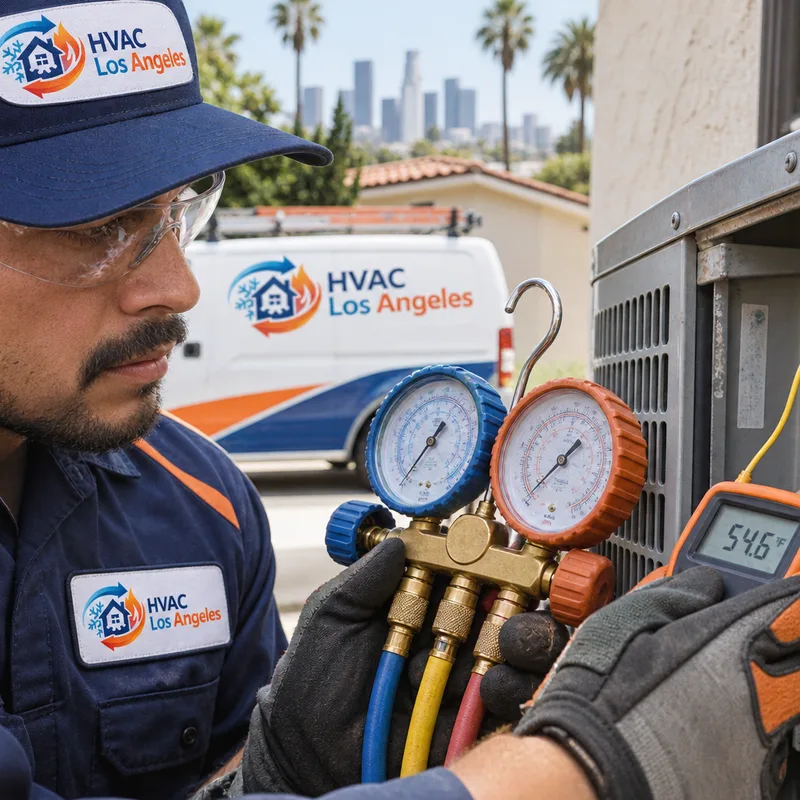
Close-up of HVAC gauges and temperature probes being used during residential air conditioner diagnosis.
Pressure and temperature readings help a contractor evaluate refrigerant and heat-transfer performance.
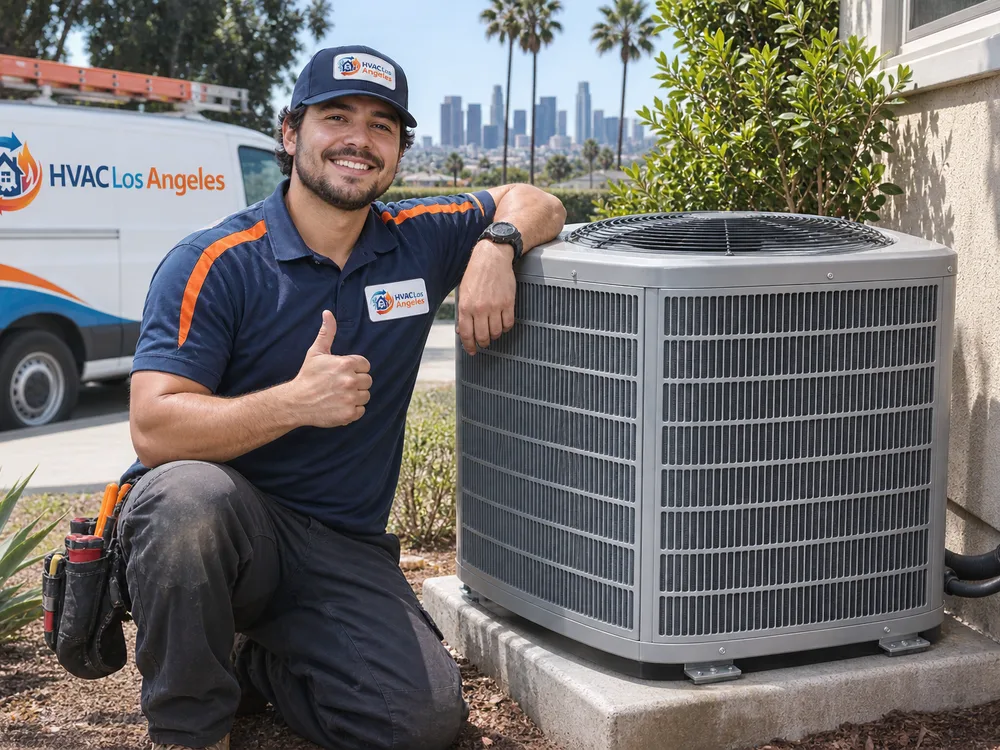
A clean residential outdoor condenser after repair and coil cleaning with clear airflow around the cabinet.
The completed system should be reassembled, tested through a cooling cycle, and checked for normal operation.
Decision support

Questions About Air Conditioning Repair in Los Angeles

How can I tell whether my air conditioner needs repair or replacement?

Age alone does not decide whether an air conditioner should be replaced. A contractor should consider the failed component, equipment condition, refrigerant type, repair history, efficiency, comfort problems, and whether suitable parts are available. Ask for the repair and replacement reasoning in clear terms before choosing.

What should a contractor check before recommending refrigerant?

The contractor should first confirm airflow and gather operating measurements that support a refrigerant diagnosis. If the charge is low, ask how the leak will be located and addressed. Adding refrigerant without considering the source of the loss may leave the underlying problem unresolved.

Why does my AC freeze even during hot Los Angeles weather?

Ice usually means the evaporator coil is too cold because airflow is restricted or the refrigerant system is not operating correctly. A clogged filter, blower problem, dirty coil, blocked registers, or low refrigerant can contribute. Turn cooling off if ice is visible and let the contractor diagnose the cause before normal operation resumes.

What questions should I ask about an AC repair quote?

Ask which component failed, what testing supports the diagnosis, which parts and labor are included, and whether the proposed work addresses the cause or only the symptom. You can also ask about warranty terms, equipment shutdown needs, and any follow-up testing after the repair.

What happens while an air conditioner repair is being completed?

The contractor typically shuts off power, accesses the affected components, completes the authorized work, and restores the equipment for testing. Depending on the fault, final checks may include electrical readings, temperature change across the indoor coil, drain operation, refrigerant measurements, and a complete cooling cycle.

Can poor airflow feel like a refrigerant problem?

Yes. A dirty filter, blocked coil, weak blower, closed register, or damaged duct can reduce cooling and may even contribute to coil icing. A sound diagnosis checks airflow before concluding that the refrigerant circuit is at fault.

Ready to Get Your Air Conditioner Checked?

Call and get connected directly with a local AC contractor who serves Los Angeles. Talk with the contractor about the system, review the proposed repair, and decide what happens next.

CALL NOW: 424 577 5132