
System diagnostics
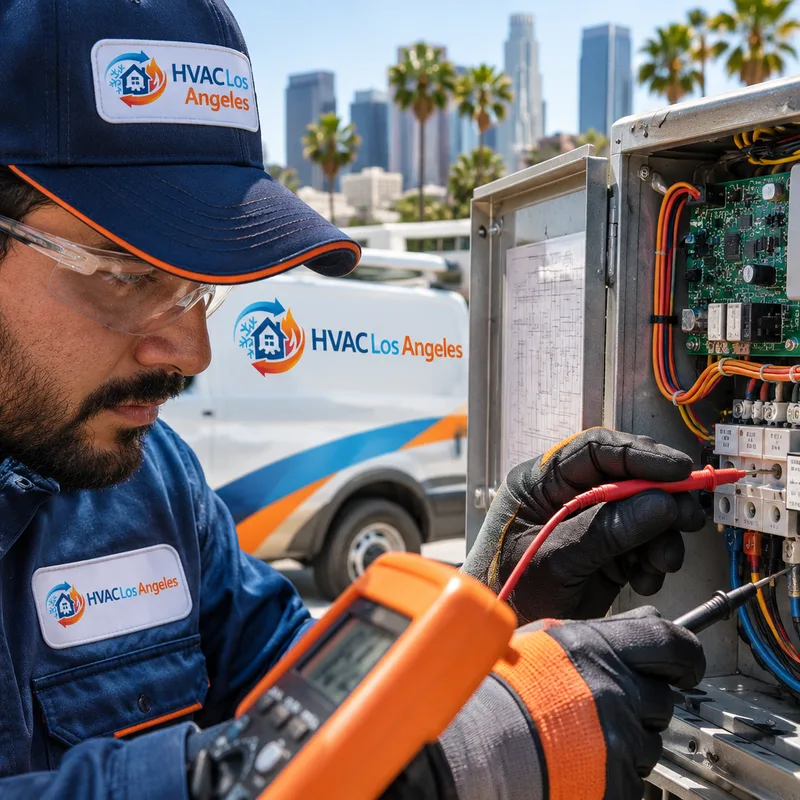
The contractor traces the cooling call through controls, electrical components, fans, coils and the refrigeration circuit instead of relying on the first visible symptom.
Serving Los Angeles, California & surrounding areas
Calls answered around the clock
One call connects you directly with a local commercial HVAC contractor who serves your area.
CALL NOW: 424 577 5132
Commercial air conditioning Los Angeles work covers rooftop units, split systems, heat pumps, controls, ventilation equipment and larger central systems. A contractor may diagnose a cooling failure, address uneven temperatures, set up planned maintenance or assess equipment for replacement. The right approach depends on the building, occupancy, operating schedule and existing HVAC design.
Los Angeles properties create varied demands. Downtown offices may have tenant schedules and limited rooftop access. Restaurants in Koreatown can add substantial kitchen heat and ventilation loads. Warehouses in the Arts District often combine large open areas with offices that need separate temperature control. Retail spaces along Ventura Boulevard may need work planned around customers and business hours.
A contractor should begin with the symptoms and the equipment serving the affected area. That may include checking thermostat calls, control signals, filters, belts, coils, condensate drainage, blower operation, refrigerant conditions and electrical components. For recurring comfort problems, the investigation may extend to duct leakage, airflow balance, zoning and outside-air settings.
HVAC Los Angeles connects callers with local hvac la contractors across Los Angeles, CA who handle commercial cooling work. There is no form or intake conversation. You speak with the contractor directly, discuss the building and decide whether to proceed.
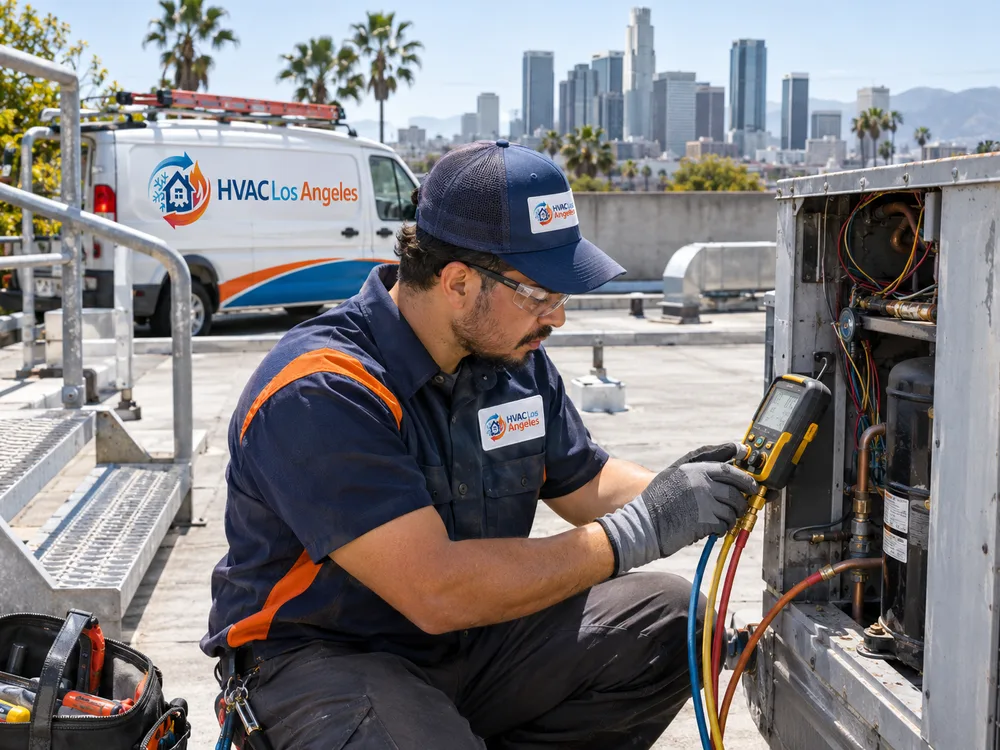
The contractor traces the cooling call through controls, electrical components, fans, coils and the refrigeration circuit instead of relying on the first visible symptom.
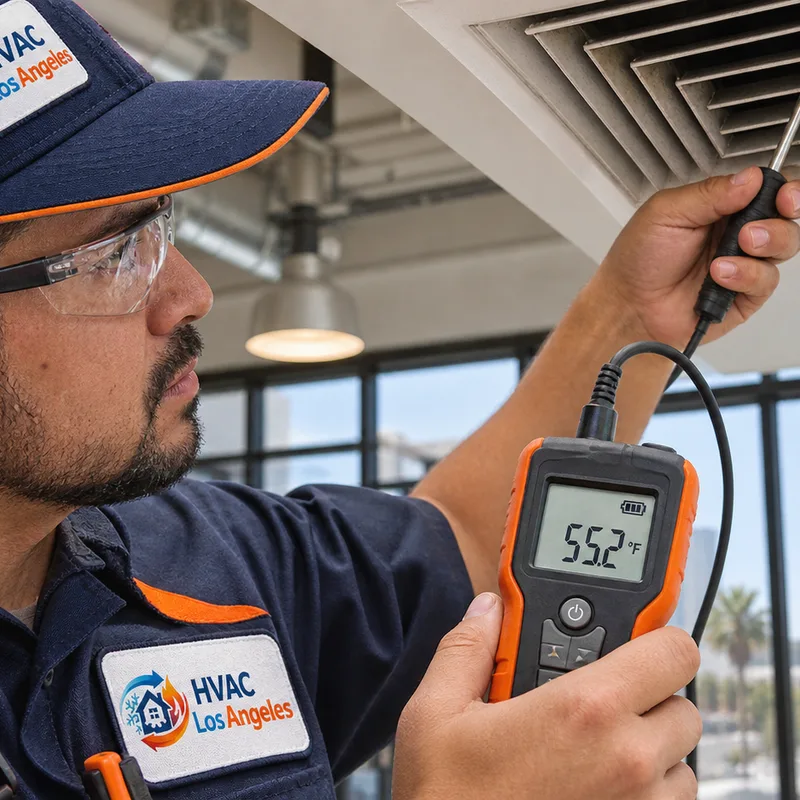
Commercial maintenance can include filter and belt checks, coil inspection, drain service, electrical testing, temperature measurements and review of unusual noise or vibration.
Depending on the diagnosis, work may involve contactors, capacitors, motors, sensors, thermostats, control boards, drain components or refrigeration-system parts.
A contractor can compare repair with replacement and review capacity, efficiency, electrical requirements, controls, curb compatibility and access for the proposed unit.
Hot rooms and uneven temperatures may point to duct restrictions, failed dampers, incorrect fan operation, zoning faults or changes in how the space is used.
Commercial comfort also depends on outside air, exhaust, filtration and humidity control. These factors must be evaluated as part of the building's complete HVAC operation.
Call when a commercial cooling system needs diagnosis, maintenance, repair or replacement planning. Calls are answered around the clock.
The ZIP code routes the call directly to a local contractor who serves that part of Los Angeles or the surrounding area.
Discuss the building, affected areas, system type, operating schedule and access conditions directly with the contractor.
The contractor provides the quote and explains the recommended scope. You can ask questions about parts, scheduling, permits and warranty terms before deciding what happens next.
Skip the search through multiple commercial HVAC listings. One call connects you with a local contractor who handles commercial air conditioning systems.
CALL NOW: 424 577 5132
The decision should follow a diagnosis of the failed component and the condition of the complete system. The contractor may consider equipment age, repair history, refrigerant type, coil and compressor condition, available replacement parts, energy use, comfort complaints and whether the unit still suits the building's load. Ask for both options when repair and replacement are reasonably possible.
Uneven cooling often comes from airflow, zoning or control problems rather than a single failed cooling component. The contractor may check filters, blower operation, duct restrictions, diffusers, dampers, sensors and thermostat placement. Internal heat from restaurant equipment, computers, lighting or changed occupancy can also alter the load.
Discuss the equipment type, affected rooms, thermostat behavior, unusual sounds or odors, recent service history and the hours when the problem occurs. The contractor may also ask about roof or mechanical-room access, parking restrictions, tenant coordination and when work can occur without disrupting operations.
Some equipment replacements and alterations require permits, while routine maintenance and certain repairs may not. For properties under the City of Los Angeles, the contractor can identify whether the Los Angeles Department of Building and Safety is involved. Requirements can differ in other cities within Los Angeles County, so ask which authority governs the property and who will handle permit tasks.
The scope should reflect the equipment and its operating conditions. Common checks include filters, belts, coils, drains, fan assemblies, electrical connections, controls, temperature change and signs of refrigerant or airflow trouble. Restaurants, high-occupancy spaces and equipment exposed to grease or heavy airborne debris may need a different maintenance plan than a lightly used office.
Ask how the proposed capacity was selected and whether the existing curb, ducts, electrical supply, controls and roof access are compatible. The contractor should also explain crane or lifting arrangements when needed, disposal of the old equipment, permit responsibilities, business interruption and manufacturer warranty terms.
One call connects you with a contractor who serves your area and handles commercial air conditioning work. Discuss the building and system directly, receive the quote from the contractor and decide what happens next.