
Heating and Cooling Operation
The contractor can run available operating modes and observe startup, shutdown, cycling, thermostat response, and unusual noise or vibration.
Serving Los Angeles, California & surrounding areas
Calls answered around the clock
One call connects you directly with a local HVAC contractor who can inspect your heating and cooling equipment.
CALL NOW: 424 577 5132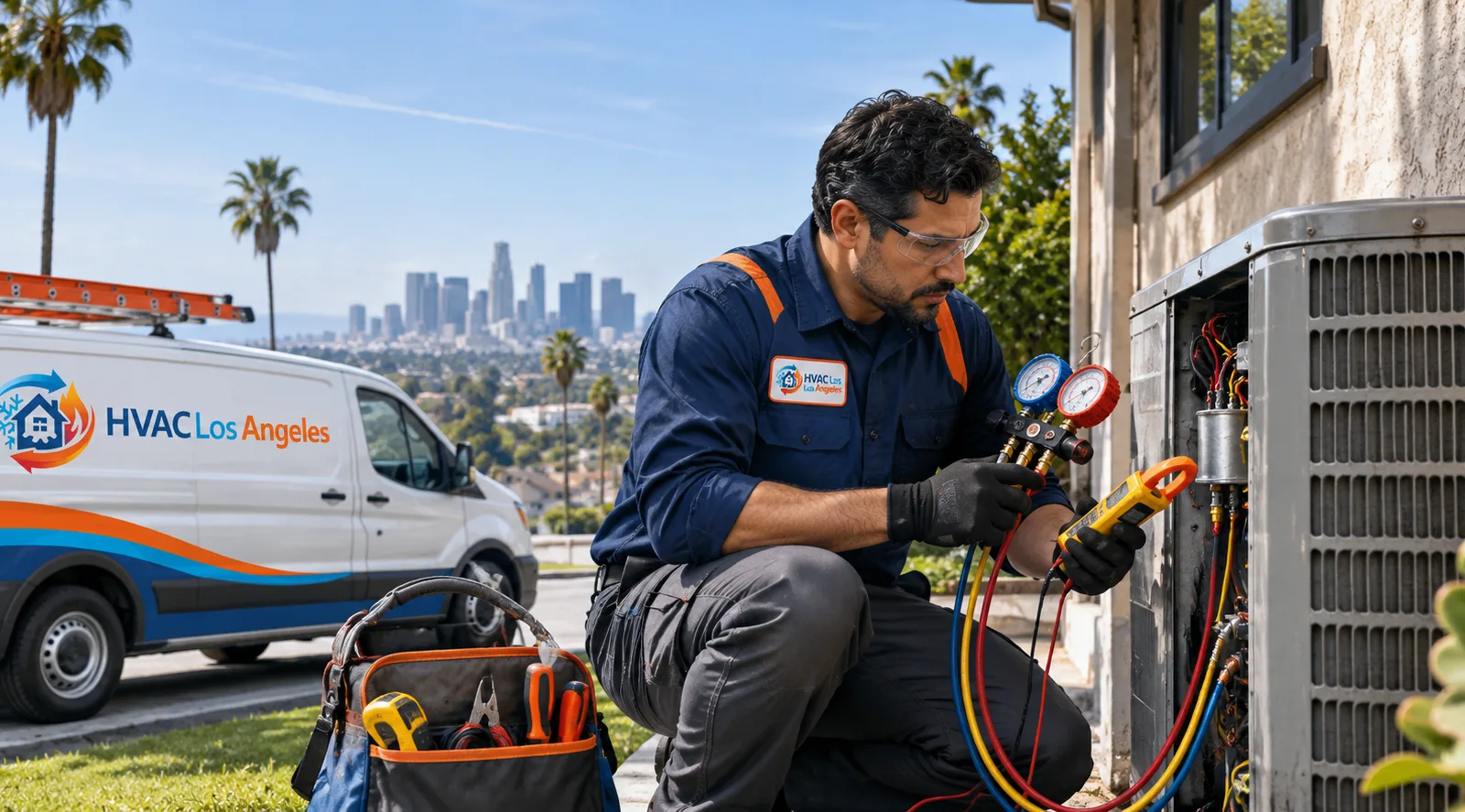
An HVAC inspection Los Angeles homeowners request should examine the equipment as a working system, not treat the furnace, air conditioner, thermostat, and ductwork as unrelated parts. The contractor may review equipment condition, operation, electrical components, airflow, temperature change across the indoor coil, condensate drainage, filtration, thermostat response, and accessible duct connections. The scope depends on the system type and the reason for the inspection.
Common reasons for arranging an inspection include uneven temperatures, rising energy use, unusual cycling, weak airflow, unfamiliar sounds, water near the indoor unit, or concern about aging equipment. Home buyers and owners planning seasonal maintenance may also want a current assessment before deciding whether service, repair, or replacement deserves further discussion.
Los Angeles conditions can put different demands on the same system. Long cooling periods expose airflow and condenser problems, while wildfire smoke and regional dust can load filters and reveal leakage around filter racks or return-air connections. Coastal air may contribute to corrosion on exposed outdoor components. In hillside neighborhoods, an inspector may also encounter condensers installed on platforms, roofs, or tight side yards where access affects the inspection scope.
We connect callers with Los Angeles hvac contractors who serve the area and handle HVAC inspections. You speak with the contractor directly about availability, inspection scope, and the quote, then decide whether to proceed.
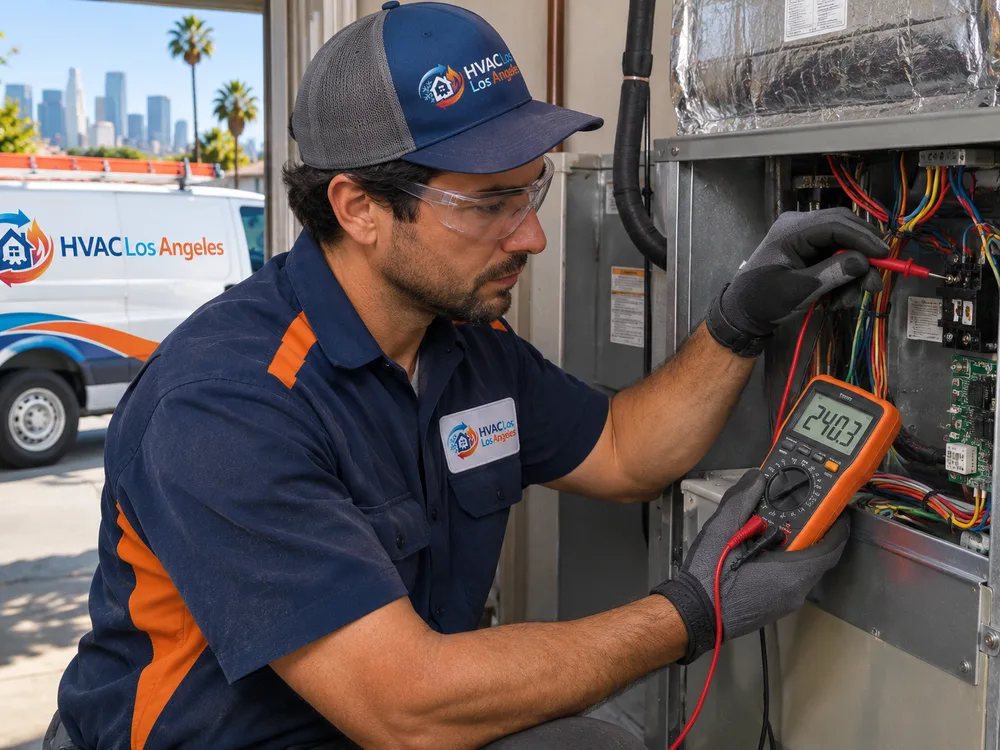
The contractor can run available operating modes and observe startup, shutdown, cycling, thermostat response, and unusual noise or vibration.
Filter condition, blower operation, return-air paths, supply registers, accessible duct connections, and temperature differences can point to restrictions or distribution problems.
Accessible disconnects, wiring, contactors, capacitors, motors, and terminals may be checked for wear, damage, overheating, or readings outside the equipment manufacturer's specifications.
Operating pressures, line temperatures, coil condition, and signs of oil residue or icing may support further diagnosis. Refrigerant handling requires the appropriate tools and procedures.
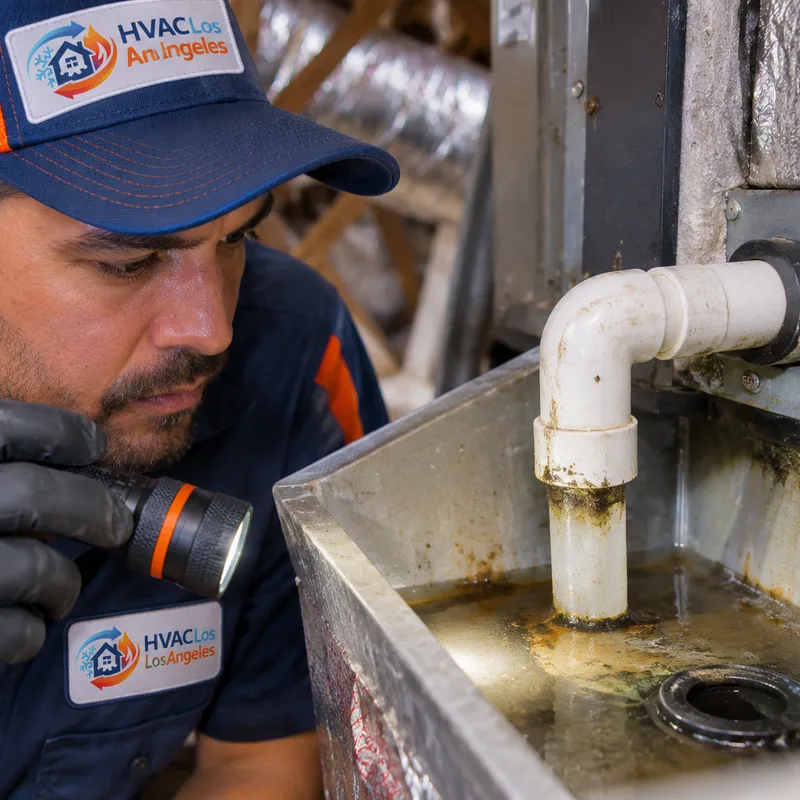
The contractor may inspect the condensate pan, drain line, pump when present, and nearby surfaces for blockage, overflow, staining, or microbial growth.
For gas-fired equipment, the inspection may include accessible venting, burner operation, flame appearance, ignition components, heat-exchanger concerns, and carbon monoxide testing where appropriate.
Enter your ZIP code and you are connected directly with a local HVAC contractor who serves that area. There is no form or email wait.
Discuss the system type, the reason for the inspection, access conditions, and what the contractor includes. Ask whether written findings, photographs, operating measurements, or repair recommendations are provided.
The contractor typically needs access to the thermostat, indoor unit, outdoor unit, electrical disconnect, filter, registers, and accessible ductwork. Attic, crawlspace, rooftop, or closet installations may require additional access planning.
Ask the contractor to separate immediate safety or operating concerns from maintenance items and longer-term planning. The contractor provides any quote for additional work, and you decide what happens next.
Stop working through a list of numbers. One call connects you with a local contractor who handles HVAC inspections, and you discuss the work directly.
CALL NOW: 424 577 5132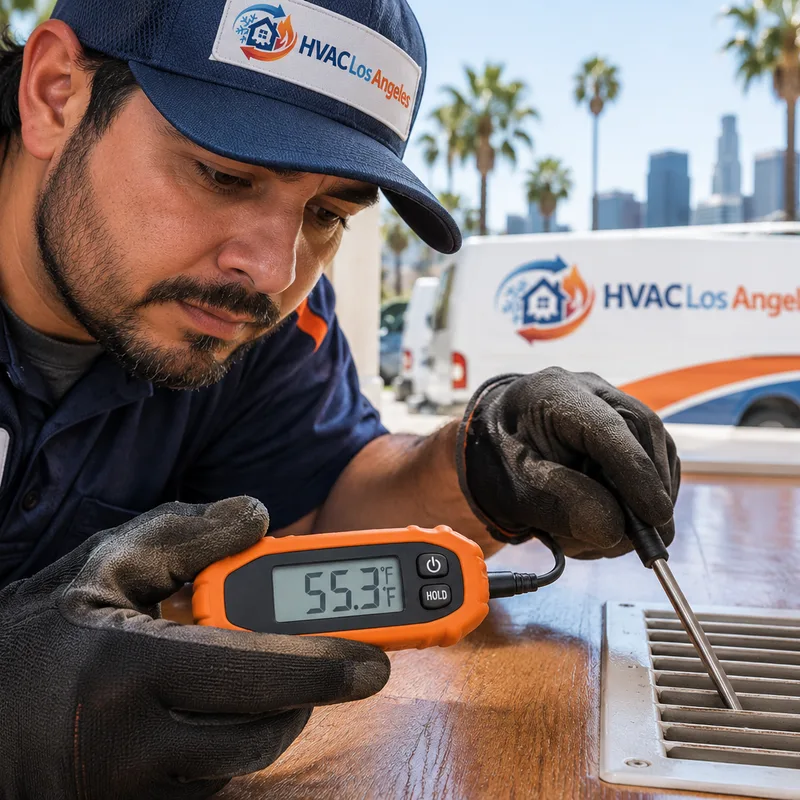
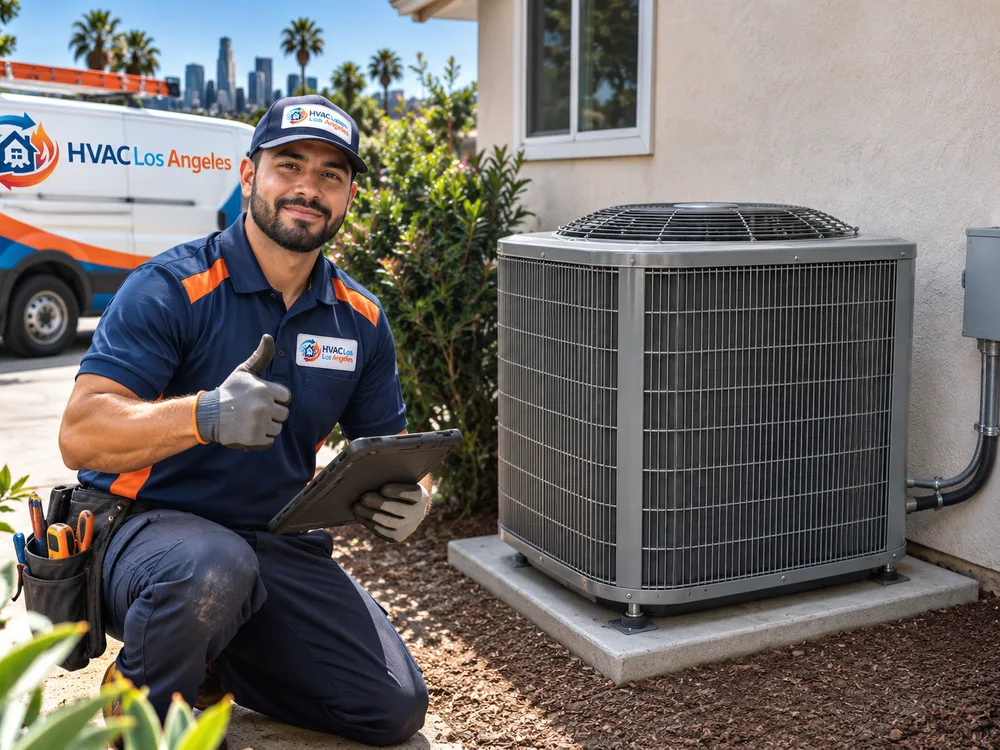
Both sides should be discussed when the home has a combined system, but operating conditions may limit what can be tested. A contractor may avoid running an air conditioner when outdoor conditions could produce misleading readings or risk equipment damage. Ask which modes can be operated and which components will receive a visual inspection.
An inspection evaluates accessible equipment and documents its condition and operation, while a repair visit focuses on diagnosing and correcting a specific failure. If the inspection uncovers a problem, ask whether additional diagnostic work is needed before a repair quote can be prepared.
An inspection can identify clues, but confirming a refrigerant leak may require separate diagnostic testing. Low operating pressure, icing, poor temperature change, or oil residue can justify further testing, yet those signs alone do not locate or prove every leak.
Accessible ductwork can usually be checked for disconnected joints, damaged insulation, visible gaps, crushed flexible duct, and obvious air leakage. Much of a Los Angeles home's duct system may be concealed in an attic, crawlspace, wall, or ceiling, so ask how much can be reached and whether airflow or duct-leakage testing is available.
Ask for findings that identify the component, observed condition, relevant measurement, and recommended next step. Photographs can be useful for rooftop, attic, or crawlspace equipment. Request a clear distinction between safety concerns, present operating faults, maintenance needs, and items to monitor.
An HVAC inspection by a contractor is not the same as an approval by the Los Angeles Department of Building and Safety. If the concern involves recent installation or alteration work, ask the contractor whether permits and municipal inspection records may apply to that work.
The findings can support that decision, but equipment age alone should not decide it. Ask about the failed or worn component, overall equipment condition, repair scope, comfort problems, efficiency concerns, refrigerant type, and whether other parts of the system would limit the value of the proposed work.
Call and get connected with a local HVAC contractor who serves your area. Talk with the contractor directly about the inspection and decide whether to proceed.