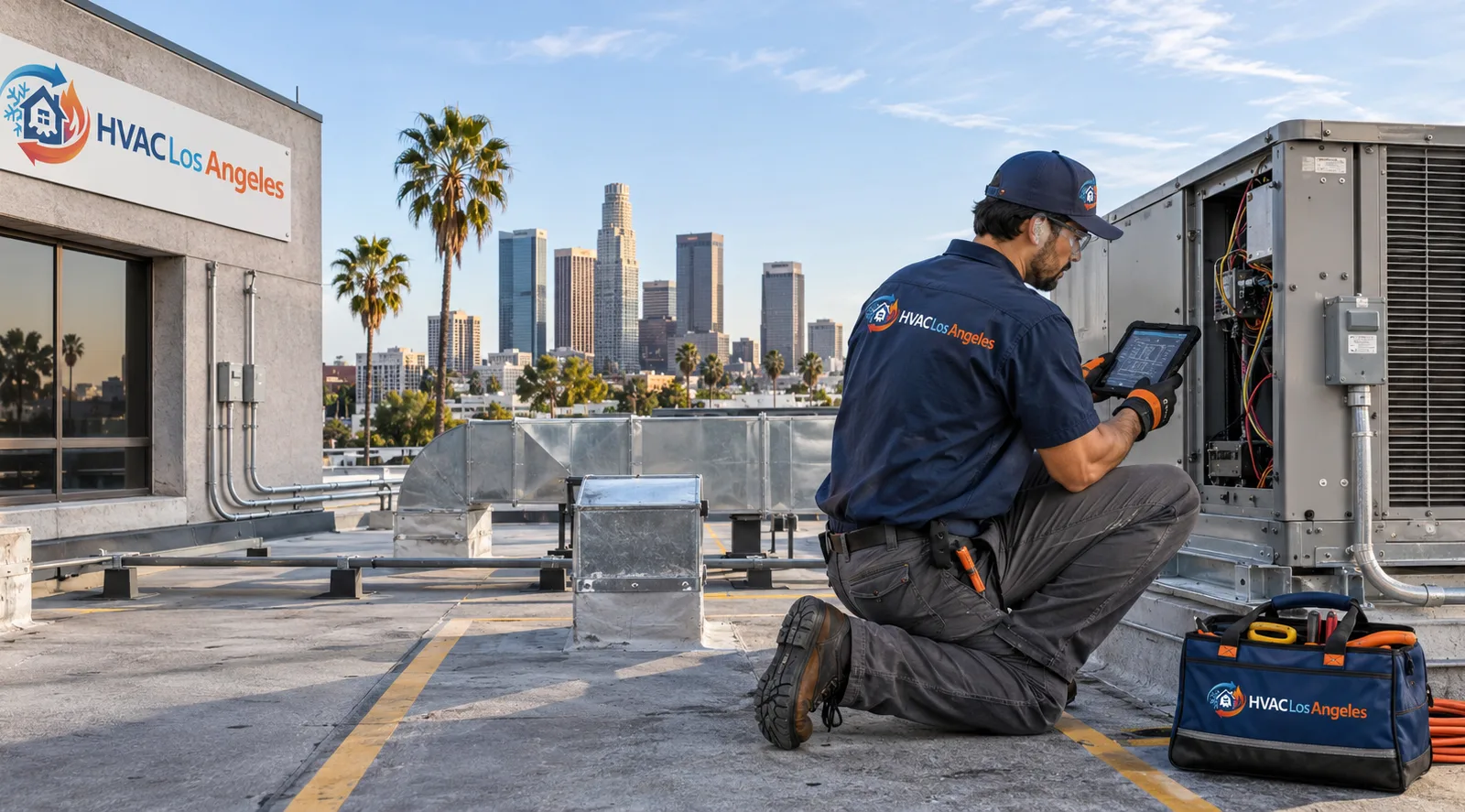
Commercial HVAC contractors Los Angeles CA property owners call may work on packaged rooftop units, split systems, heat pumps, central plants, ventilation equipment, controls, and tenant-specific systems. The right scope depends on the building, occupancy, equipment condition, operating schedule, and complaint.
HVAC Los Angeles removes the repeated search and unanswered calls. We connect callers with that handle commercial work, and the caller speaks with the contractor directly. The contractor can discuss the building, arrange an assessment, provide the quote, and explain the available choices. The property owner, manager, or facilities contact decides whether to proceed.
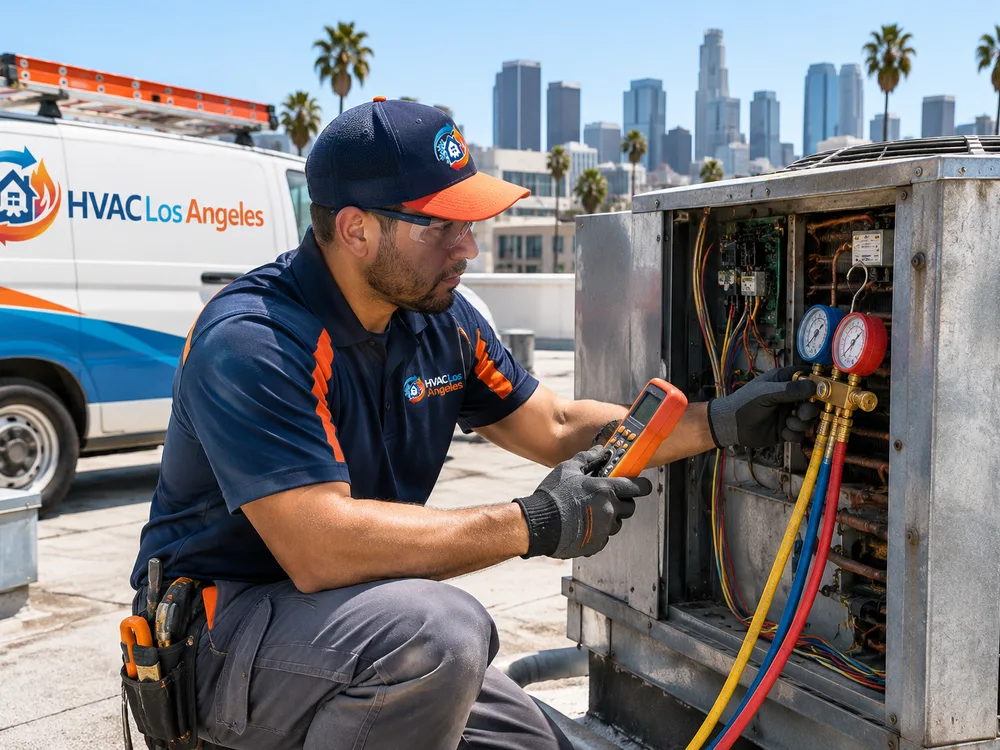
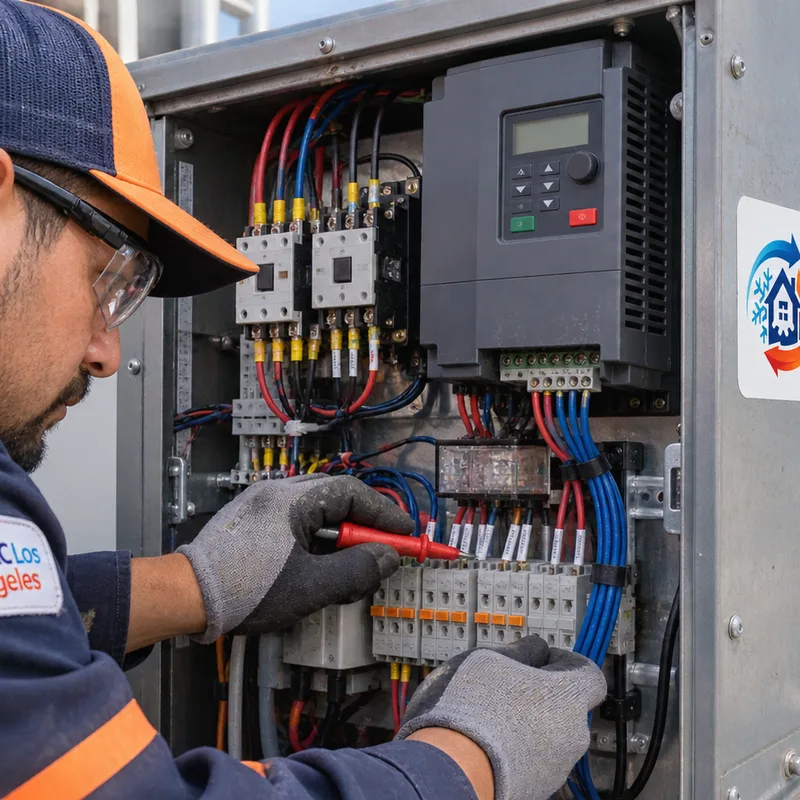
Commercial service starts with diagnosis rather than assumptions. A contractor may review thermostat or building automation commands, operating modes, fault history, filters, belts, coils, condensate drainage, refrigerant conditions, electrical components, dampers, economizers, sensors, and airflow. For comfort complaints, supply and return temperatures alone do not tell the whole story. Static pressure, zone demand, outside-air settings, equipment staging, and operating schedules may reveal why one area is uncomfortable while another is normal.
Los Angeles buildings present varied conditions. Downtown towers may have central systems, mechanical rooms, and access rules that require coordination with building management. Low-rise commercial properties in the San Fernando Valley commonly use roof-mounted equipment exposed to strong summer heat. Warehouses and production buildings in the Arts District may combine large open areas with offices that need separate zoning. Retail properties along Wilshire Boulevard can have long operating hours and changing occupancy loads. Coastal areas such as Venice can expose outdoor components to salt-laden air, making corrosion checks relevant during equipment reviews.
The Los Angeles Department of Building and Safety handles permits within the City of Los Angeles. Depending on scope, replacement equipment, altered ductwork, electrical work, gas connections, structural supports, and controls may require plans, permits, or inspections. A commercial HVAC contractor should clarify which responsibilities belong to the contractor, owner, engineer, landlord, or tenant before work starts.