
System diagnostics
A contractor checks the thermostat or building controls, verifies the call for cooling, and follows the electrical and refrigeration sequence. This helps separate a failed component from a control, power, or airflow issue.
Serving Los Angeles, California & surrounding areas
Calls answered around the clock
One call connects you directly with a local commercial HVAC contractor who serves your area.
CALL NOW: 424 577 5132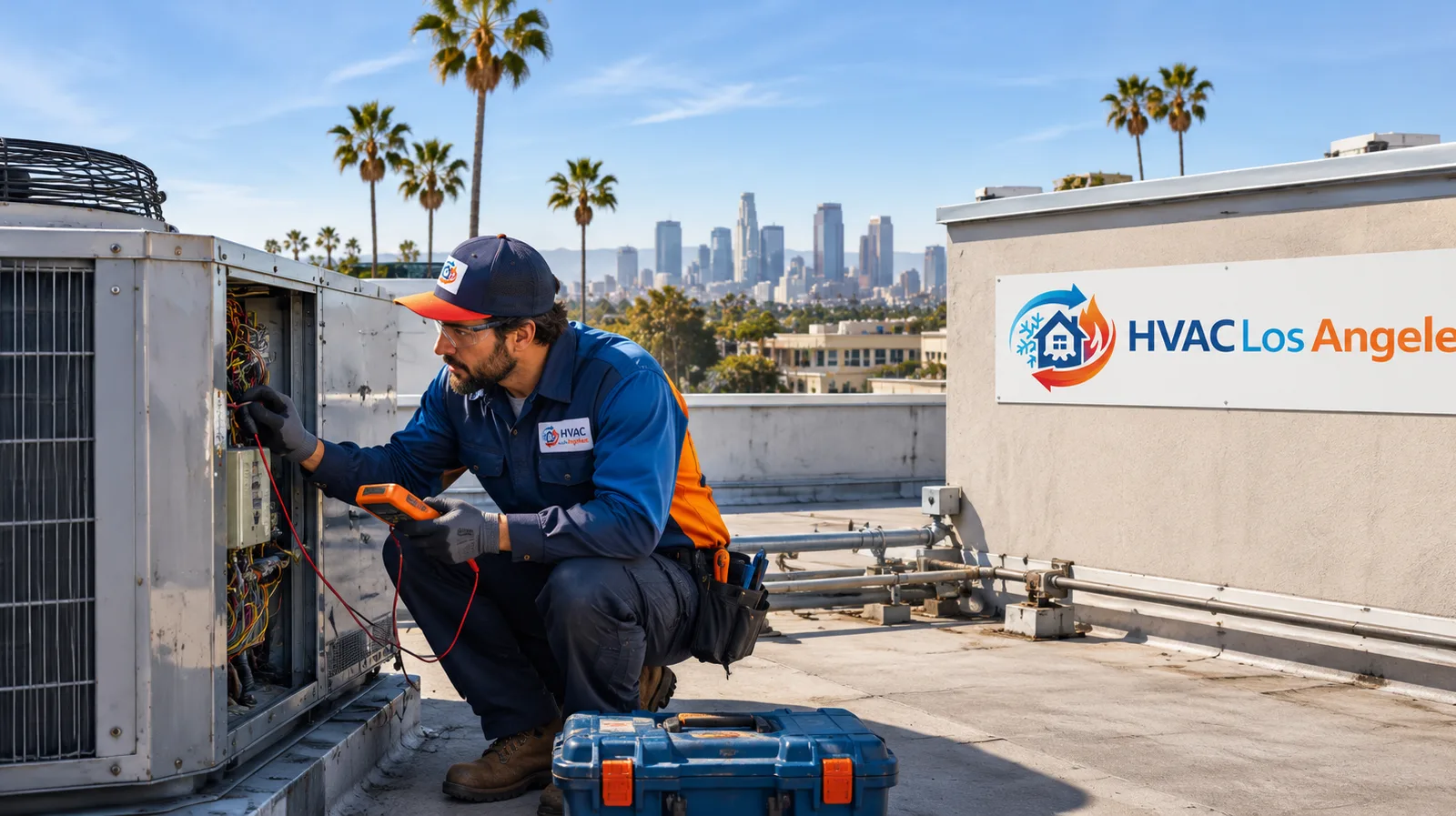
Commercial HVAC repair Los Angeles property owners and facility managers request can cover rooftop package units, split systems, heat pumps, air handlers, controls, ventilation equipment, and zoned systems. A contractor may trace an electrical fault, test a compressor or fan motor, clear a condensate restriction, check refrigerant conditions, or correct an airflow problem. The right starting point is diagnosis rather than replacing parts based on symptoms alone.
Los Angeles buildings place varied demands on cooling equipment. Rooftop units serving low-rise properties in the Arts District face direct sun and outdoor debris. Downtown towers may rely on central equipment and building automation controls. Restaurants in Koreatown can add substantial heat and ventilation loads, while warehouses around South Los Angeles often have large open zones that expose airflow problems. Coastal influence near Venice can also contribute to corrosion on exposed coils and electrical components.
HVAC Los Angeles connects callers with hvac la contractors around Los Angeles who handle commercial equipment. You speak with the contractor directly, discuss the building and symptoms, receive the contractor's quote, and decide whether to proceed. There is no form or email wait.
A contractor checks the thermostat or building controls, verifies the call for cooling, and follows the electrical and refrigeration sequence. This helps separate a failed component from a control, power, or airflow issue.
Dirty filters, blocked coils, slipping belts, failed blower components, closed dampers, and duct restrictions can reduce airflow. The contractor may measure temperature change and static pressure before recommending repairs.
Commercial AC failures can involve contactors, capacitors, relays, sensors, disconnects, wiring, variable-frequency drives, or control boards. Burn marks, loose connections, and fault codes provide useful diagnostic clues.
A contractor can inspect coil condition, operating pressures, line temperatures, metering devices, and signs of refrigerant leakage. Refrigerant should not be added before the reason for a low charge is addressed.
Blocked drain lines, damaged pans, failed pumps, and poor drainage can shut equipment down or allow water to reach ceilings and occupied areas. The source of the water should be confirmed before repairs begin.
Commercial HVAC maintenance in Los Angeles commonly includes filter service, coil inspection, belt and bearing checks, drain cleaning, electrical inspection, control testing, and documentation of equipment condition.
Enter your ZIP code and you are connected directly with a local commercial HVAC contractor who serves that area. Calls are answered around the clock.
Tell the contractor which equipment is affected, what the occupants are experiencing, and whether controls show an alarm or fault code. The contractor can explain availability and the next practical step.
At the building, the contractor identifies the affected zone, confirms operating symptoms, and tests the relevant controls, airflow, electrical components, and refrigeration circuit.
The contractor explains the findings and provides the quote. Ask which parts and labor are included, how operations may be affected, and what warranty terms apply. You decide whether the work moves forward.
Stop working through contractor lists. One call connects you with a local contractor who handles commercial air conditioning repair in Los Angeles, and you discuss the building directly with that contractor.
CALL NOW: 424 577 5132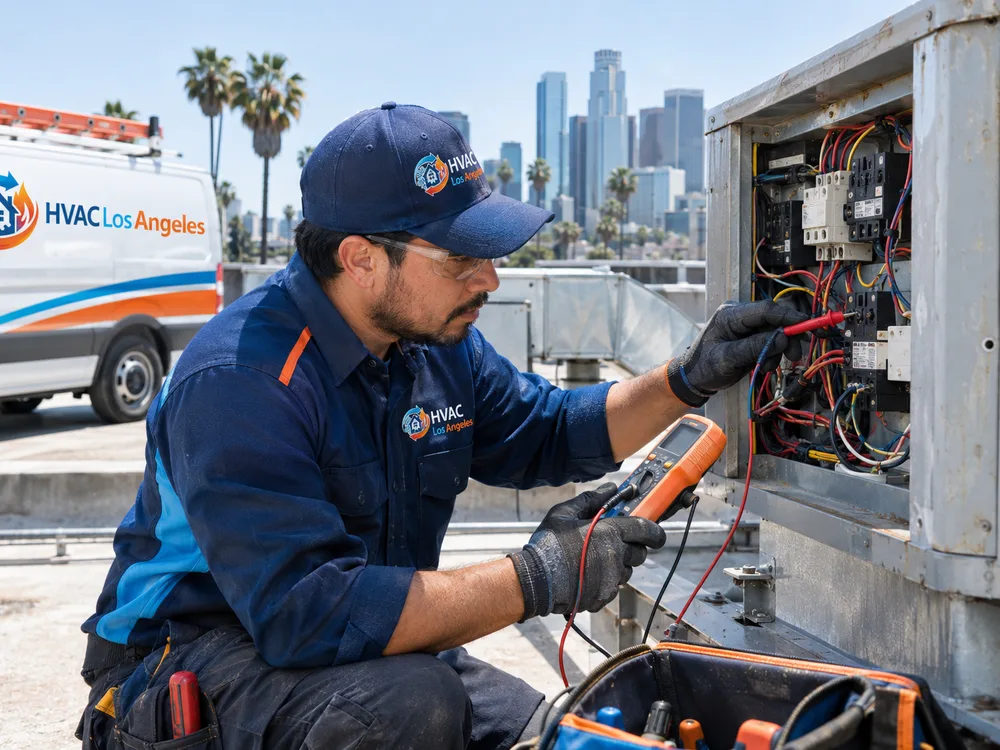
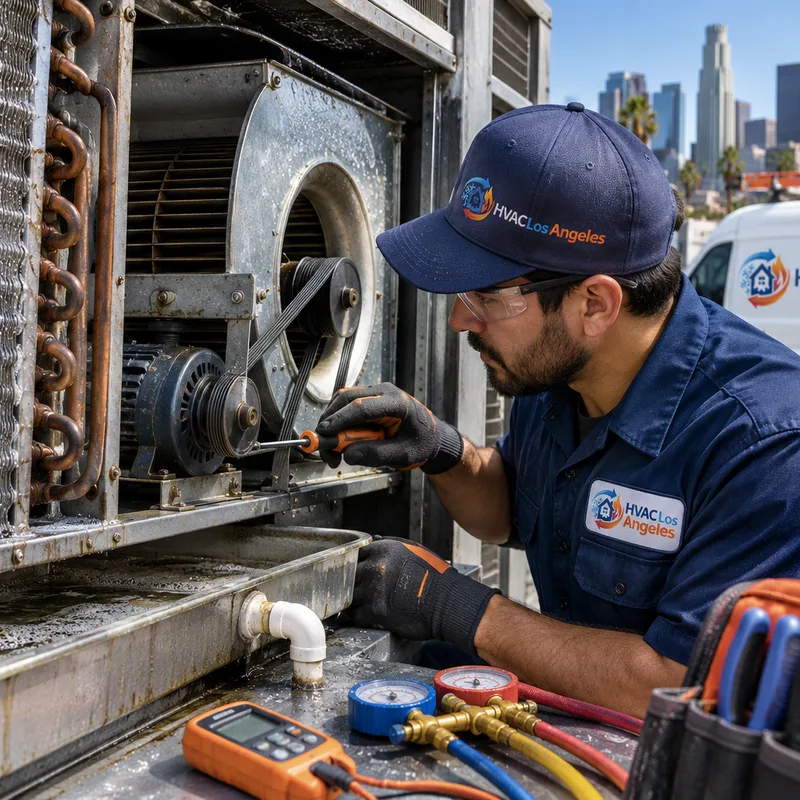
A contractor should confirm the complaint at the affected zone and test the system before recommending parts. The diagnostic sequence may include controls, power supply, safeties, airflow, filter and coil condition, blower operation, refrigerant readings, and condensate drainage. For multi-zone equipment, the contractor may also review dampers, sensors, and building-control alarms.
The decision depends on the failed component, equipment condition, repair history, refrigerant considerations, load requirements, and whether replacement parts remain available. Ask the contractor to separate the immediate repair from any broader replacement recommendation. The contractor should explain what the repair addresses, what condition remains, and how replacement would affect controls, ductwork, electrical service, and occupied areas.
Useful information includes the equipment type, affected floors or zones, visible model information, recent maintenance records, fault codes, unusual sounds, water leaks, and whether the failure is constant or intermittent. Access rules, roof access, tenant schedules, and shutdown restrictions also help the contractor plan the visit. You can discuss these points directly after the call connects you.
A single uncomfortable zone often points to a local airflow or control issue rather than complete equipment failure. The cause may be a closed damper, failed zone sensor, duct restriction, diffuser problem, heat load change, or variable-air-volume box fault. A contractor should compare the affected zone with nearby zones and verify control commands before changing central equipment.
The contractor inspects and services the equipment according to its design and condition. Work may include filters, coils, belts, bearings, drains, electrical connections, contactors, capacitors, economizer operation, thermostat or control response, and operating measurements. Rooftop equipment exposed to direct sun, airborne debris, or coastal air may need particular attention to coil condition, panel seals, and corrosion.
Some repairs require a temporary shutdown of the affected unit or zone. The effect depends on system design, access, electrical isolation, parts being replaced, and whether other equipment can carry part of the load. Ask the contractor to explain the shutdown scope and coordinate roof, tenant, security, or equipment-room access before work begins.
Ask the contractor to identify the diagnosed fault and state what labor, parts, controls, refrigerant work, testing, and disposal are included. Clarify whether the proposal addresses the underlying cause or only restores operation, and ask about exclusions and warranty terms. The quote comes directly from the contractor, and you decide whether to accept it.
Call HVAC Los Angeles and speak directly with a local commercial HVAC contractor who serves your area. Discuss the affected equipment, receive the contractor's quote, and choose what happens next.