Boiler repair · Los Angeles

Boiler Repair in Los Angeles

One call connects you directly with a local boiler contractor who serves your area.

CALL NOW: 424 577 5132
✓ One call instead of listings ✓ Direct contractor conversation ✓ You decide whether to proceed
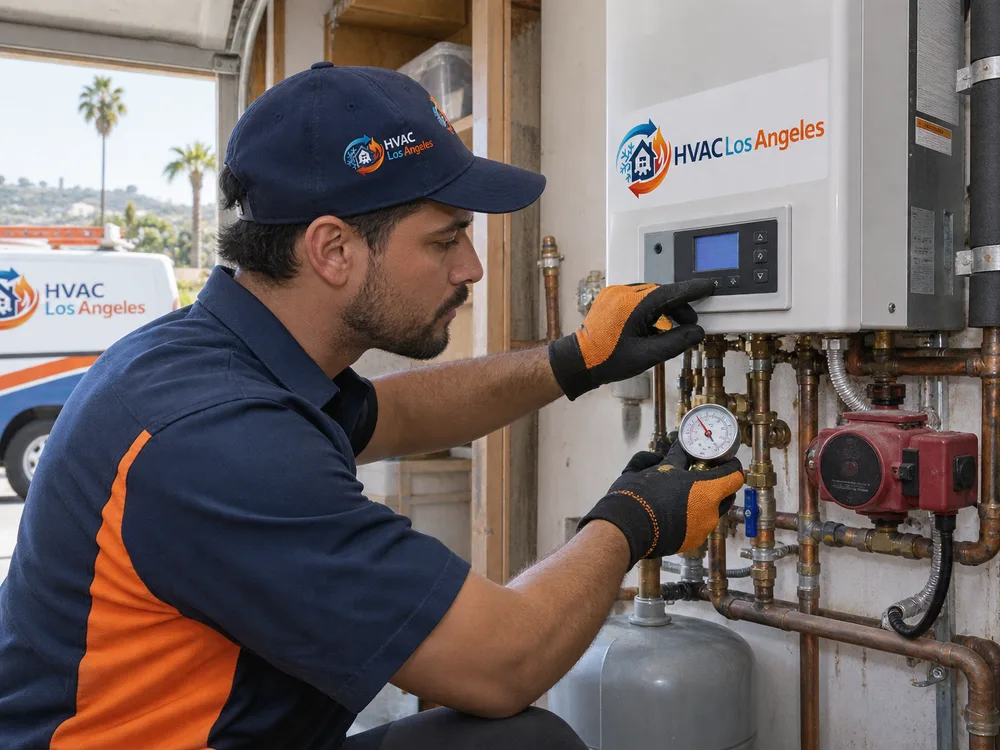
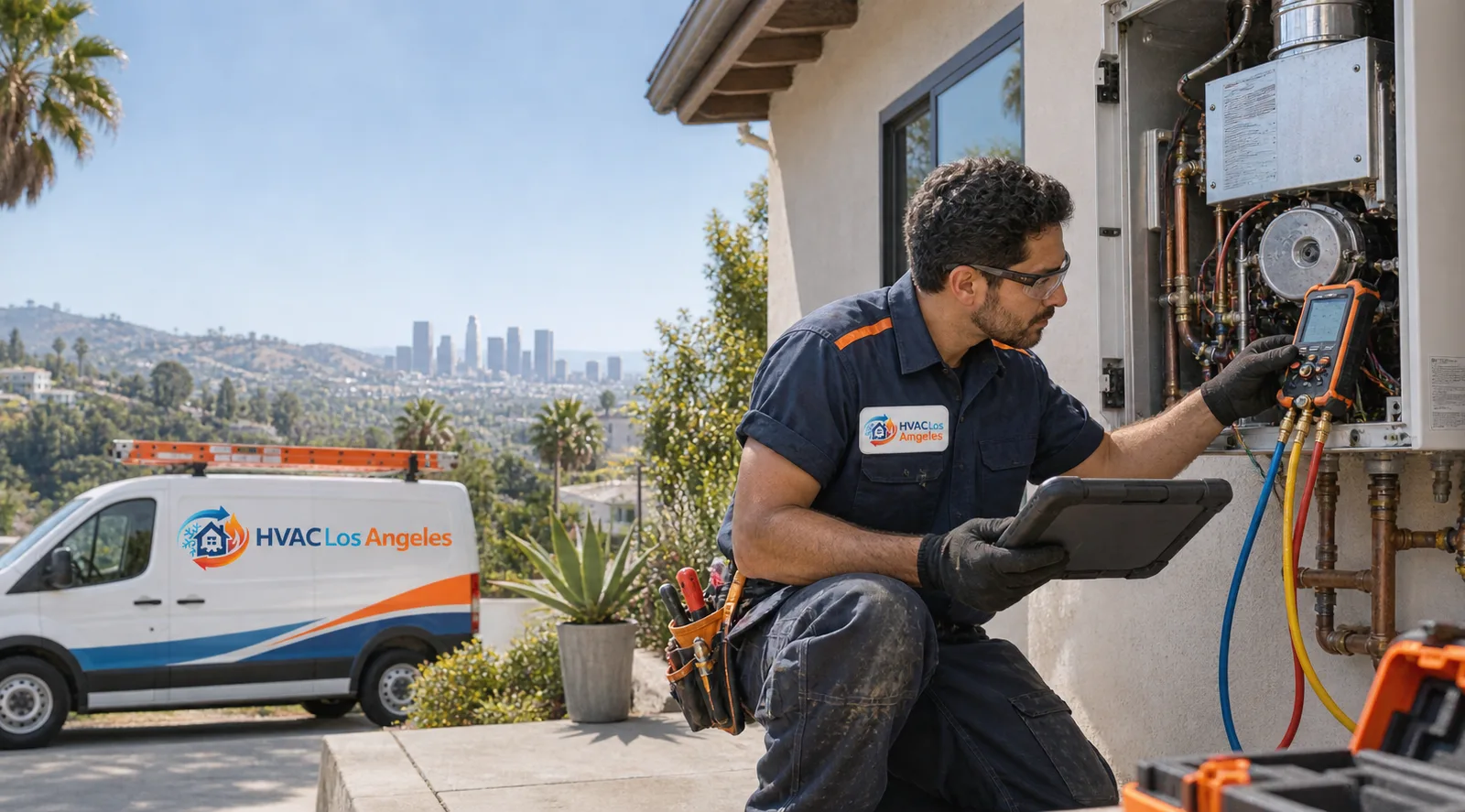
Wide view of a contractor diagnosing a residential boiler with the access panel open and testing instruments attached
Local boiler help

A Direct Route to a Local Boiler Contractor

When heat is unreliable, searching through listings and waiting for several responses adds another problem. HVAC Los Angeles connects callers with hvac companies across Los Angeles, CA that handle boiler faults. You speak with the contractor directly, discuss the symptoms and property, receive the quote from the contractor, and decide whether to proceed.

Boiler repair in Los Angeles can involve a hydronic system that heats rooms through radiators, baseboard units, or radiant tubing. The fault may be at the boiler, but it can also involve a circulator pump, zone valve, thermostat, expansion tank, pressure-reducing valve, air separator, or control. A contractor should diagnose the complete heating loop rather than replace a part based only on one symptom.

Los Angeles has varied building conditions. Older homes in neighborhoods such as Hancock Park may have aging piping or radiator systems, while hillside properties can have multiple heating zones and longer hydronic runs. Condominiums and multifamily buildings may use shared equipment, so the contractor may need access to a mechanical room and information about which areas have lost heat. These details affect diagnosis without changing the basic next step: one call connects you with a contractor who handles boiler work.

Contractor checking boiler pressure, electrical controls, piping, and circulator components in a residential mechanical area
Boiler diagnosis should account for the appliance, controls, and connected hydronic loop.
Repair details

What Boiler Repair Los Angeles Contractors Check

No Heat or Uneven Heat

The contractor may test the thermostat call, boiler controls, burner operation, circulator pump, zone valves, and flow through the affected loop. A cold room can point to trapped air or a closed zone rather than a failed boiler.

Pressure and Water Loss

Repeated pressure changes can involve a leak, expansion tank, relief valve, pressure-reducing valve, or gauge. Adding water without finding the cause can introduce oxygen that contributes to corrosion.

Ignition and Shutdown Faults

A boiler that starts and stops unexpectedly may have a control, sensor, venting, fuel-supply, or flame-sensing issue. Fault codes help direct testing, but they do not always identify the failed component by themselves.

Noise in the System

Banging, gurgling, whistling, or pump noise can indicate trapped air, restricted flow, scale, incorrect pressure, or a circulator problem. The location and timing of the sound help narrow the cause.

Leaks and Corrosion

A contractor traces moisture to its source before recommending a repair. Common areas include valves, threaded fittings, pump flanges, relief discharge piping, heat exchangers, and nearby hydronic lines.

Repair or Replacement Choice

The contractor should explain the failed part, the condition of the boiler, parts availability, and whether other defects affect the decision. The homeowner receives the quote directly and chooses what happens next.

How the Call and Repair Process Works

  1. 01

    Make One Call

    Enter your ZIP code and you are connected directly with a local boiler contractor who serves that area. There is no form or email wait.

  2. 02

    Discuss the Heating Problem

    Tell the contractor which areas are cold, when the trouble began, whether the boiler displays a fault code, and whether you have noticed leaking, unusual noise, or repeated shutdowns.

  3. 03

    Arrange Diagnosis With the Contractor

    The contractor sets the visit details with you. Access may be needed to the boiler, thermostat, radiators or radiant manifolds, and any mechanical room serving the property.

  4. 04

    Review the Findings

    After testing the system, the contractor explains the likely cause and proposed work. Ask which parts are being repaired or replaced, whether the system needs purging, and what warranty terms apply.

  5. 05

    Decide Whether to Proceed

    The contractor provides the quote. You decide whether to approve the work, ask more questions, or decline.

CALL NOW: 424 577 5132

Stop working through contractor listings. One call connects you with a local contractor who can discuss the boiler fault directly with you.

CALL NOW: 424 577 5132
System detail

Boiler Components That May Need Attention

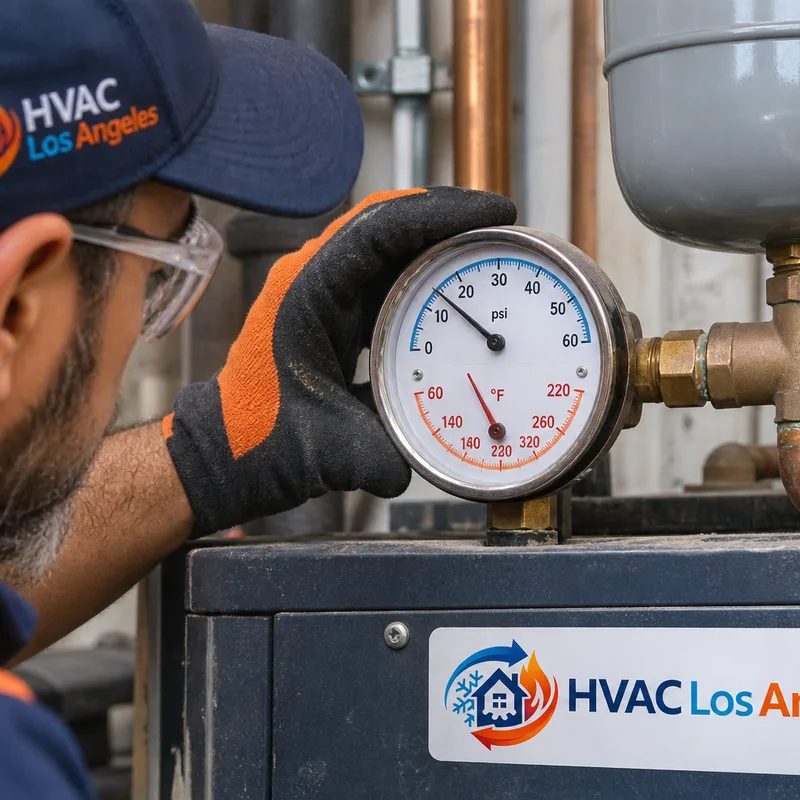
Close-up of a hydronic boiler pressure and temperature gauge beside an expansion tank connection
Pressure behavior can point to expansion, fill-valve, relief-valve, or leak problems.
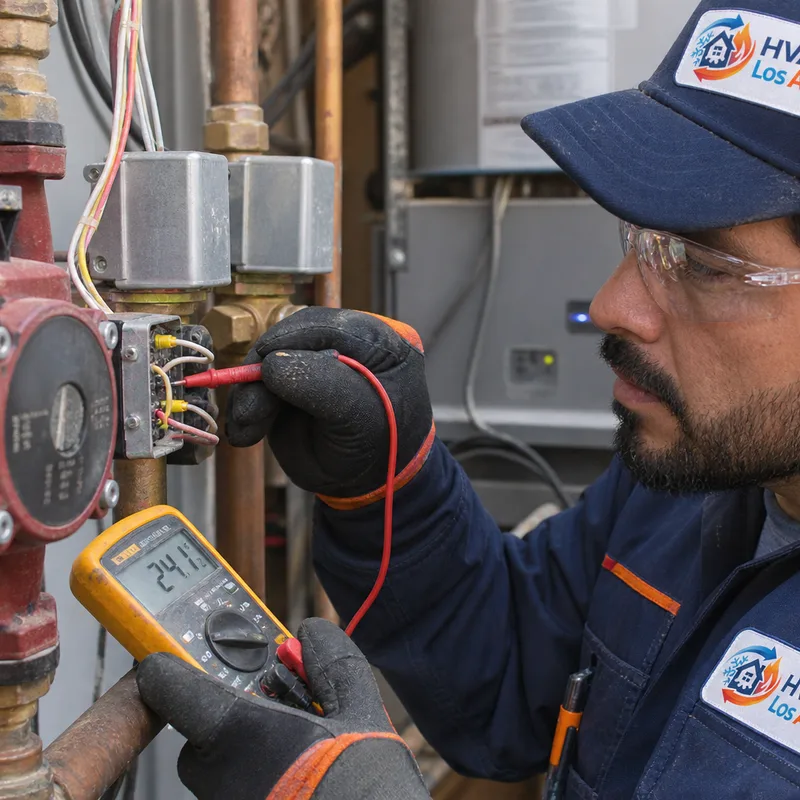
Close-up of a contractor testing a boiler circulator pump and zone valve wiring
Controls and flow components can cause heat loss even when the boiler can fire.
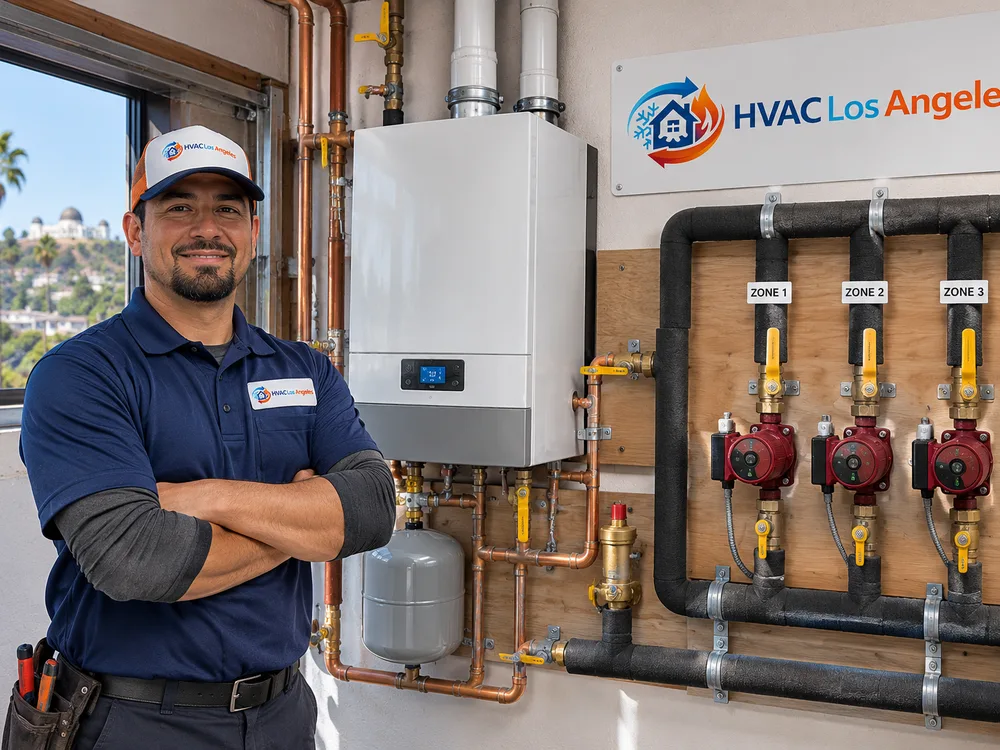
Orderly residential boiler installation with insulated hydronic piping, labeled zones, circulator pumps, and accessible service valves
Accessible valves and clearly arranged zones make future testing and service more direct.
Decision support

Questions About Boiler Repair in Los Angeles

How can I tell whether the boiler or a heating zone has failed?

A contractor separates a boiler-wide fault from a zone fault by checking which areas receive heat and testing the controls and water flow. If one area is cold while others heat normally, the cause may be a thermostat, zone valve, circulator, trapped air, or restriction in that loop.

Should I shut the boiler off if it is leaking?

Active leaking near electrical parts, the burner, or the boiler cabinet warrants caution and direct guidance from a contractor. Avoid touching wet electrical equipment or opening the boiler casing; tell the contractor where the water appears and whether pressure is dropping.

What happens during a boiler diagnosis?

The contractor typically reviews the reported symptoms, checks system pressure and controls, looks for leakage or corrosion, and tests the heating call and circulation. Depending on the equipment, diagnosis may also include ignition components, combustion-related controls, venting, pumps, valves, sensors, and manufacturer fault codes.

Why does my boiler keep losing pressure?

Recurring pressure loss usually means water is escaping or a pressure-control component is not operating correctly. The contractor may inspect exposed piping, radiator or manifold connections, the relief valve, expansion tank, fill valve, and boiler components before recommending work.

Can a noisy boiler still be operated?

The meaning of boiler noise depends on its source, timing, and severity. Gurgling often relates to air in a hydronic loop, while banging or whistling can involve restricted flow, scale, pressure, or overheating; a contractor should identify the cause before continued operation is assumed to be appropriate.

When is replacement considered instead of repair?

Replacement is considered when the boiler has a major failed component, extensive corrosion or leakage, recurring faults, or parts that cannot reasonably be sourced. The contractor should separate the immediate defect from the boiler's overall condition and explain both options when both are practical.

What should I ask before approving the work?

Ask what testing identified the fault, which components are included, whether water will be drained or zones purged, and what operating checks will follow. Also ask the contractor to state the quote, exclusions, and warranty terms clearly before you decide.

Ready to Speak With a Boiler Contractor?

Make one call and talk directly with a local contractor who handles boiler repair in your area. The contractor discusses the next step and provides the quote, while you remain in control of the decision.

CALL NOW: 424 577 5132