
Cooling system faults
The contractor can diagnose a system that runs without cooling, cycles irregularly, trips a breaker, freezes at the indoor coil, or produces weak airflow.
Serving Los Angeles, California & surrounding areas
Calls answered around the clock
One call connects you directly with a local HVAC contractor who handles heating and cooling repairs.
CALL NOW: 424 577 5132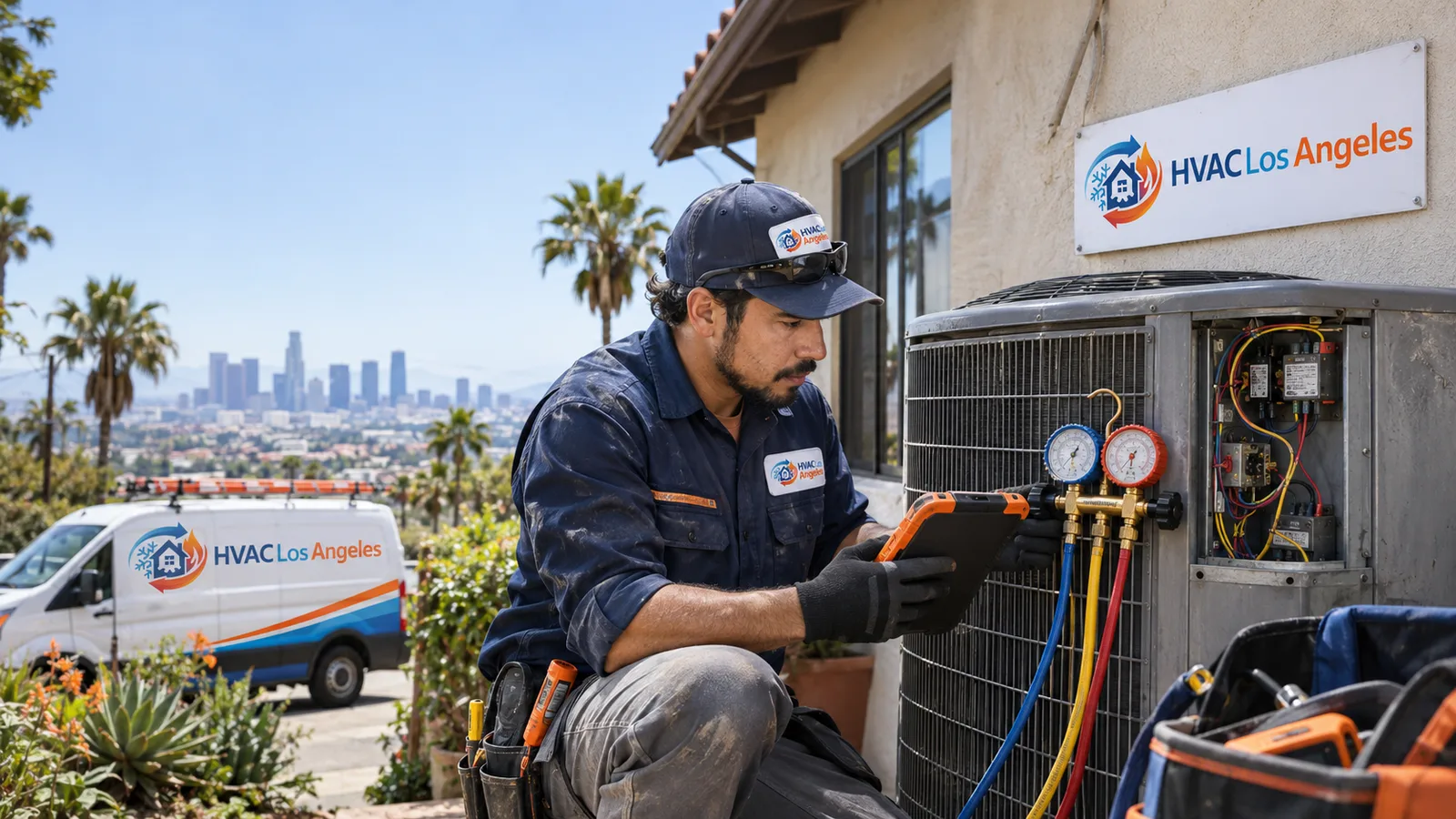
Homeowners searching for hvac repairs los angeles ca may be dealing with weak airflow, warm air from the vents, uneven temperatures, unusual cycling, water near an indoor unit, or a system that will not start. A proper diagnosis comes before a repair recommendation. The contractor may check the thermostat, filter, electrical disconnect, contactor, capacitor, blower assembly, condensate drain, refrigerant circuit, supply and return temperatures, and accessible ductwork.
The symptoms do not always identify the failed component. A frozen evaporator coil, for example, can result from restricted airflow, a dirty coil, a blower problem, or a refrigerant issue. Replacing a part without finding the cause can leave the original fault unresolved. Refrigerant work should also include leak diagnosis rather than treating repeated charging as the repair.
Los Angeles conditions shape the service call. Long cooling cycles during hot, dry weather put added demand on capacitors, contactors, condenser fan motors, and coils. Coastal air can contribute to corrosion on exposed outdoor components, while wildfire smoke and airborne dust can load filters and coils. In older neighborhoods such as West Adams, contractors may encounter aging duct systems or equipment added long after the original construction. Hillside properties in areas such as Mount Washington can also have outdoor units in tight or sloped access areas.
HVAC Los Angeles connects callers with hvac la companies in Los Angeles that serve local ZIP codes, so the homeowner talks with the contractor directly about diagnosis, repair choices, and the quote. There is no form or email wait between the call and that conversation.
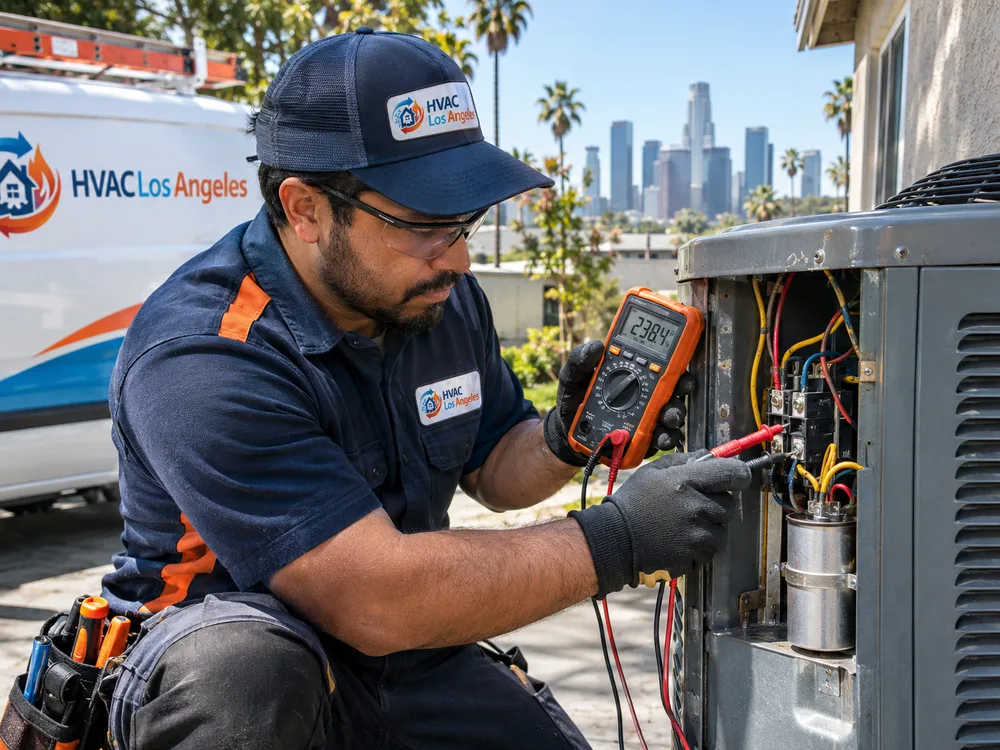
The contractor can diagnose a system that runs without cooling, cycles irregularly, trips a breaker, freezes at the indoor coil, or produces weak airflow.
Gas furnaces, heat pumps, and packaged units can develop ignition, sensor, control-board, blower, or airflow faults. The exact checks depend on the equipment.
Thermostats, low-voltage wiring, contactors, capacitors, relays, disconnects, and motors are common diagnostic points when equipment will not start or stay running.
A clogged condensate line, damaged drain pan, failed pump, or frozen coil can place water near the air handler. The moisture source must be identified before damage spreads.
Dirty filters, blocked returns, closed dampers, blower faults, disconnected ducts, and crushed flex duct can reduce comfort even when the refrigeration circuit operates.
The contractor can explain whether a targeted repair is practical or whether equipment condition, refrigerant type, repeated failures, and parts availability make replacement worth considering.
Enter your ZIP code and you are connected directly with a local HVAC contractor who serves that area.
You can explain what the equipment is doing, when the problem began, and whether breakers, thermostats, or filters have already been checked.
The contractor sets the visit details with you and inspects the equipment. Access to the thermostat, indoor unit, electrical panel, outdoor unit, and relevant vents may be needed.
The contractor explains the fault, proposed parts or work, quote, and any alternatives. You decide whether to proceed.
Stop working through lists of HVAC companies. One call connects you with a local contractor who handles heating and cooling repairs in the Los Angeles area.
CALL NOW: 424 577 5132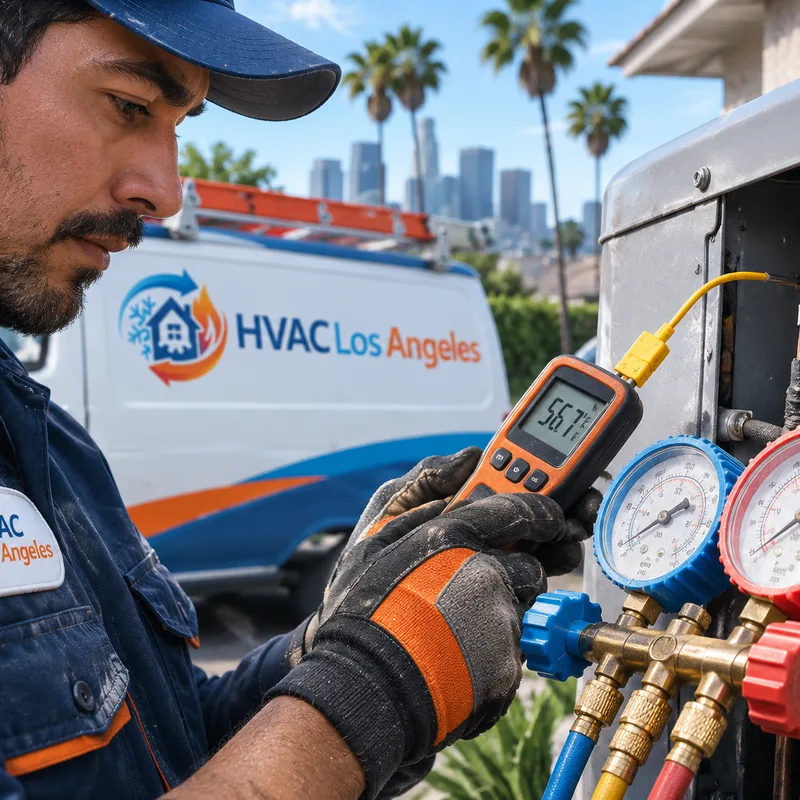
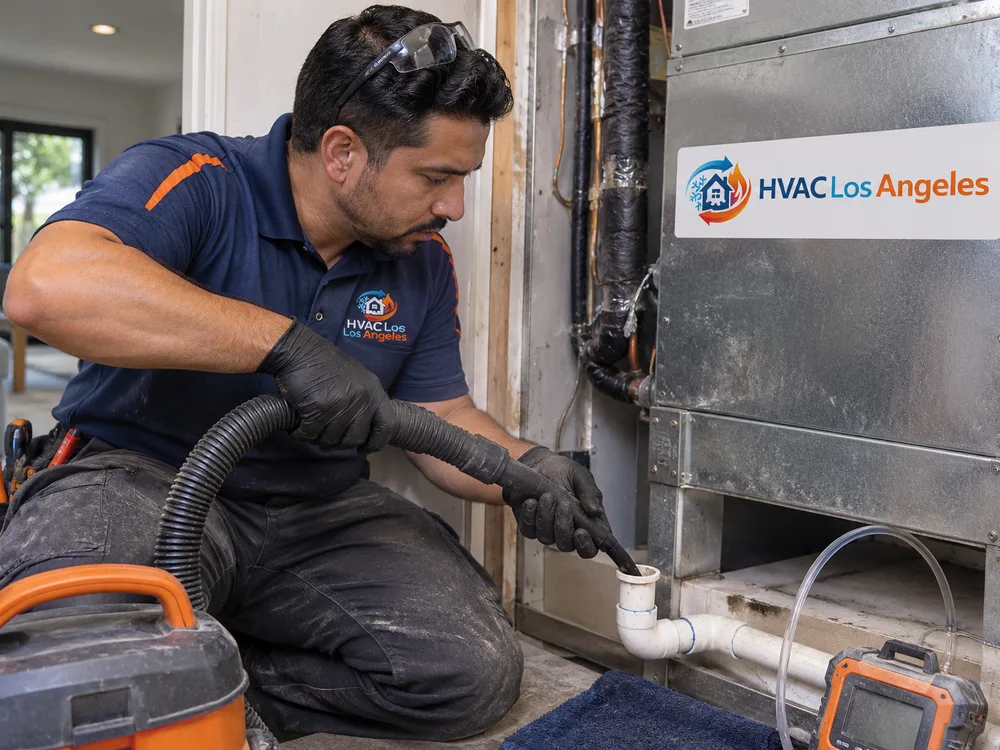
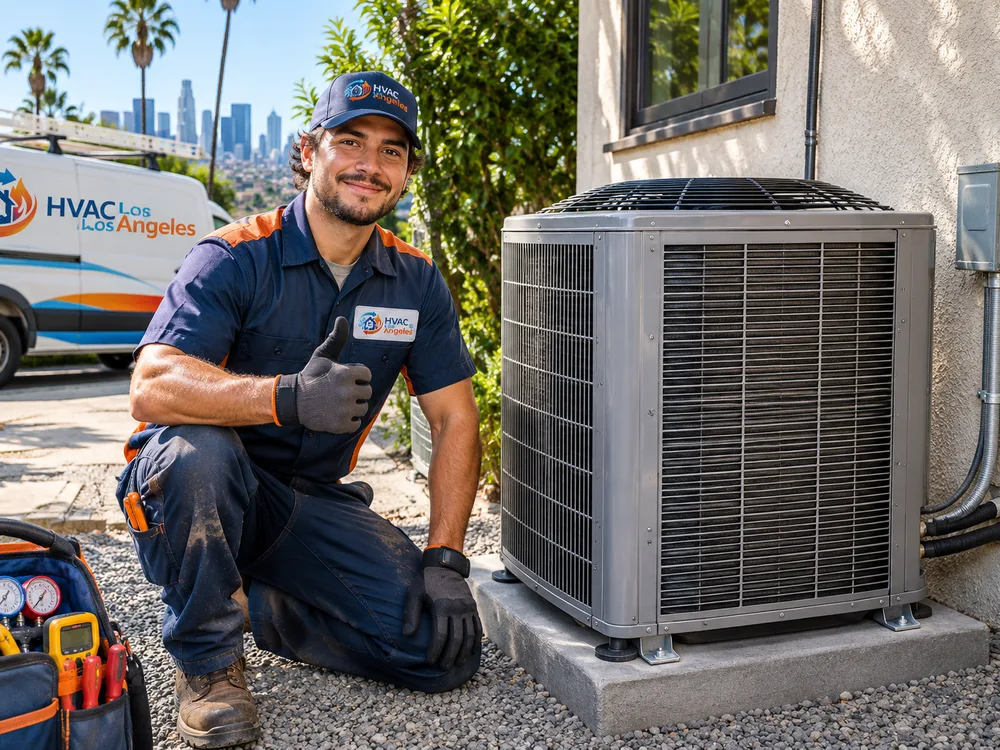
The checks should follow the symptoms and equipment type rather than begin with a parts recommendation. Typical diagnostic work includes thermostat settings, power supply, safety switches, electrical components, airflow, temperature change across the indoor coil, fault codes, condensate drainage, and the refrigerant circuit when relevant.
Continuous operation with poor cooling can result from restricted airflow, dirty coils, a weak blower, a failed compressor component, duct leakage, an incorrect thermostat setting, or a refrigerant problem. A contractor should test the system instead of assuming it needs refrigerant based on that symptom alone.
Ice does not prove that refrigerant is low. A clogged filter, blocked return, dirty evaporator coil, blower fault, closed registers, duct restriction, or refrigerant issue can lower coil temperature enough to cause freezing. Turn cooling off and avoid chipping the ice, which can damage the coil.
Replacement becomes a reasonable discussion when the equipment has major component damage, repeated failures, hard-to-source parts, significant corrosion, or a refrigerant issue that makes continued repair impractical. The contractor should explain the repair option and replacement option separately so you can compare the scope and decide.
The contractor confirms the symptoms, examines the relevant indoor and outdoor components, performs diagnostic tests, and explains the finding before work proceeds. After an approved repair, the contractor may operate the system, check temperatures and controls, and confirm that panels and disconnects are returned to their proper positions.
Ask which fault was confirmed, which parts and labor are included, whether related damage was found, and what testing follows the repair. You can also ask about equipment compatibility, permit requirements if the scope expands, and any warranty terms offered by the contractor.
Yes. Smoke and dust can load filters and coat heat-transfer surfaces, while coastal air can contribute to corrosion on exposed outdoor components. The contractor can distinguish environmental buildup from an electrical, airflow, or refrigeration fault and recommend work tied to the actual condition.
Call HVAC Los Angeles and get connected directly with a local contractor who serves your area. You discuss the system with the contractor, receive the quote from the contractor, and decide what happens next.