
Airflow and filtration
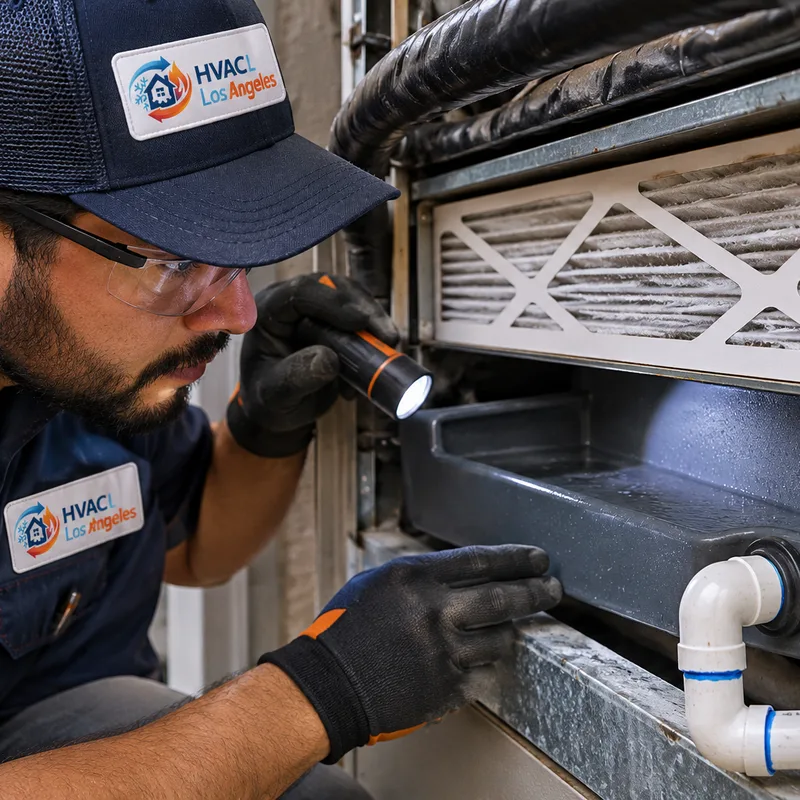
A clogged filter, dirty blower wheel, blocked return, closed register, or damaged duct can reduce airflow. The contractor checks the filter type and looks for restrictions before treating weak cooling as a refrigerant problem.
Serving Los Angeles, California & surrounding areas
Calls answered around the clock
One call connects you directly with a local HVAC contractor who handles routine heating and cooling maintenance.
CALL NOW: 424 577 5132
Regular HVAC maintenance in Los Angeles helps heating and cooling equipment operate consistently through warm inland afternoons, cooler winter nights, and long periods of air-conditioning use. One call connects you with hvac la contractors serving the Los Angeles area who handle maintenance for central air conditioners, heat pumps, furnaces, packaged units, and ductless mini-splits.
A maintenance visit is more than a filter change. The contractor typically checks the thermostat, electrical connections, disconnect, contactor, capacitors, blower assembly, condensate drain, refrigerant lines, indoor coil, outdoor coil, and accessible duct connections. Operating checks may include temperature split, airflow, refrigerant pressures, compressor amperage, blower amperage, and safety controls. The exact work depends on the equipment and its condition.
Los Angeles puts distinct demands on HVAC systems. Coastal air can contribute to corrosion on exposed outdoor components, while dust and debris can collect on condenser coils in drier inland neighborhoods. Homes near heavily traveled roads may also need closer attention to filters and coils. In hillside areas, contractors need safe access to equipment installed on roofs, slopes, or tight side yards. Older homes in neighborhoods such as West Adams may have additions or altered ductwork that leave rooms with uneven airflow.
Maintenance is preventive work. It cannot eliminate every breakdown, but it can reveal worn electrical parts, drainage trouble, restricted airflow, and dirty heat-transfer surfaces before those conditions cause more extensive problems.
A clogged filter, dirty blower wheel, blocked return, closed register, or damaged duct can reduce airflow. The contractor checks the filter type and looks for restrictions before treating weak cooling as a refrigerant problem.
Dust, leaves, and other debris reduce heat transfer at the condenser. The contractor inspects coil condition, cabinet panels, fan operation, and the clear space around the outdoor unit.
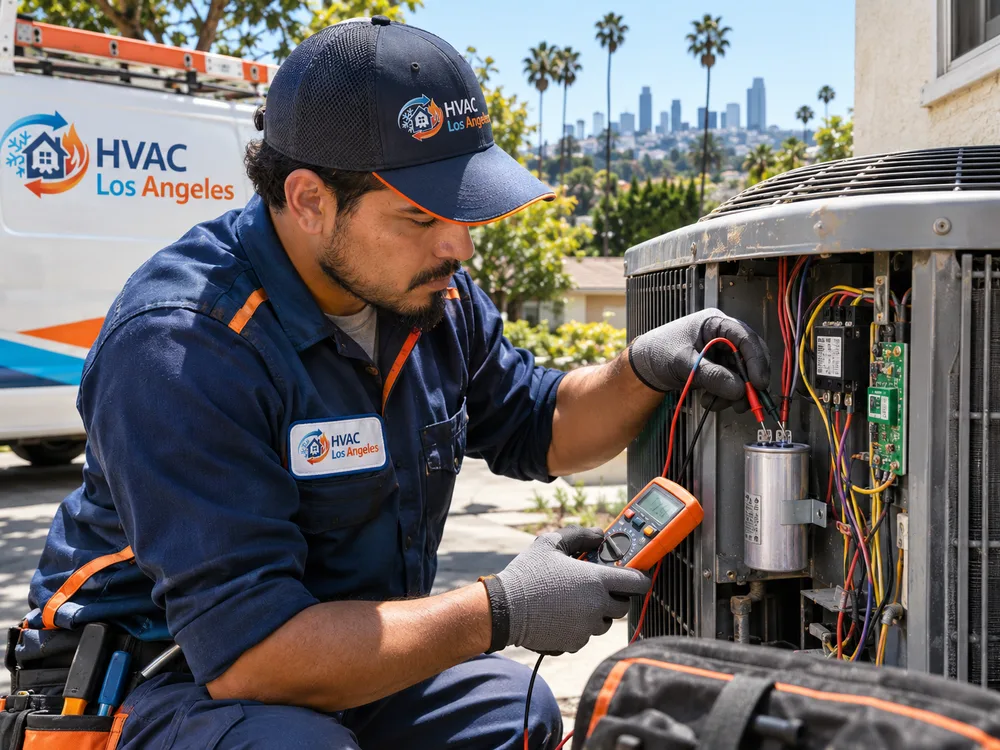
Loose terminals, pitted contactors, weak capacitors, and overheated wiring can lead to unreliable starts or component damage. Testing is performed with the equipment safely isolated when required.
The condensate pan, drain line, trap, and accessible overflow controls are checked for blockage or leakage. This matters when an indoor unit sits in an attic or another finished part of the home.
For a gas furnace, maintenance may include checking ignition, burner condition, flame sensing, venting, and safety controls. Heat pumps are checked in both heating and cooling modes when conditions allow.
The contractor compares thermostat settings with system operation and checks relevant measurements. The findings help separate routine cleaning needs from repair issues that require approval.
Enter your ZIP code and you are connected directly with a local HVAC contractor who serves that area. There is no form or intake conversation with a middleman.
Tell the contractor what type of equipment you have, where it is installed, and whether you have noticed noise, odors, weak airflow, short cycling, leaks, or uneven temperatures. The contractor can explain scheduling and the planned maintenance scope.
After inspecting and testing the equipment, the contractor explains the condition of the system. If maintenance uncovers a repair need, ask for the repair scope and quote separately before deciding whether to proceed.
Stop working through lists of HVAC companies. One call connects you directly with a local contractor who maintains heating and cooling systems in the Los Angeles area.
CALL NOW: 424 577 5132
The right interval depends on equipment type, manufacturer guidance, usage, and local exposure to dust or coastal air. Many homeowners schedule cooling equipment before sustained air-conditioning use and heating equipment before regular winter operation. The contractor can recommend an interval after seeing the system and its service history.
Yes, normal operation does not rule out dirty coils, a weakening capacitor, restricted drainage, or developing airflow problems. Maintenance gives the contractor a chance to inspect and test accessible components while the system is still operating.
The contractor will benefit from knowing the equipment type, approximate age, installation location, filter size if known, and any changes in sound, airflow, cycling, odors, or energy use. Access details also matter when equipment is in an attic, on a roof, or behind a locked gate.
Routine maintenance and repair work are separate scopes unless the contractor says otherwise. If testing identifies a failed or worn component, ask what is wrong, whether operation is safe, what work is proposed, and whether the quote includes the part and labor. You decide whether to authorize additional work.
Maintenance may correct uneven comfort when the cause is a dirty filter, obstructed coil, blower problem, closed damper, or another serviceable airflow restriction. If the cause is undersized ductwork, poor return-air placement, insulation, solar exposure, or equipment sizing, the contractor may recommend further diagnosis rather than routine maintenance alone.
The contractor should explain what was inspected, cleaned, adjusted, or tested and identify any conditions that need attention. Ask for measured findings when relevant, the filter specification, and any recommended follow-up. The contractor provides the quote for additional work, and you remain in control of the decision.
Call and get connected with a local HVAC contractor who serves your part of Los Angeles. You speak with the contractor directly about the equipment and decide what happens next.