
New system installation
A contractor evaluates heating and cooling loads, electrical service, equipment placement, ductwork, and controls before recommending a system.
Serving Los Angeles, California & surrounding areas
Calls answered around the clock
One call connects you directly with a local contractor who installs, replaces, and maintains heat pumps.
CALL NOW: 424 577 5132
A heat pump provides heating and cooling by moving heat rather than producing it through combustion. In cooling mode, it transfers heat out of the home. In heating mode, a reversing valve changes the refrigerant flow so the system can bring heat indoors. Los Angeles has long cooling periods and generally mild winters, making equipment selection, airflow, and correct sizing central to year-round comfort.
Heat pump work may involve a new installation, replacement of an aging system, conversion from a furnace and air conditioner, or a ductless setup for rooms without suitable ductwork. A contractor should begin with the home's layout, insulation, windows, electrical capacity, existing ducts, and comfort problems. Equipment should not be selected solely by matching the capacity of the old unit. Oversized systems can cycle too often, while undersized systems may struggle during hotter weather.
We connect homeowners with local hvac la companies in Los Angeles, CA that handle heat pump work. You speak with the contractor directly, discuss the property and available equipment, receive the contractor's quote, and decide whether to proceed.
Local conditions affect the plan. Older homes in neighborhoods such as West Adams may have limited electrical capacity or ducts that need evaluation before conversion. Hillside properties in areas such as Mount Washington can require careful planning for outdoor-unit access, drainage, and secure placement. In the San Fernando Valley, sustained summer heat makes cooling-load calculations and outdoor-unit location especially important. Coastal air around communities such as Venice can also influence equipment placement and maintenance planning.
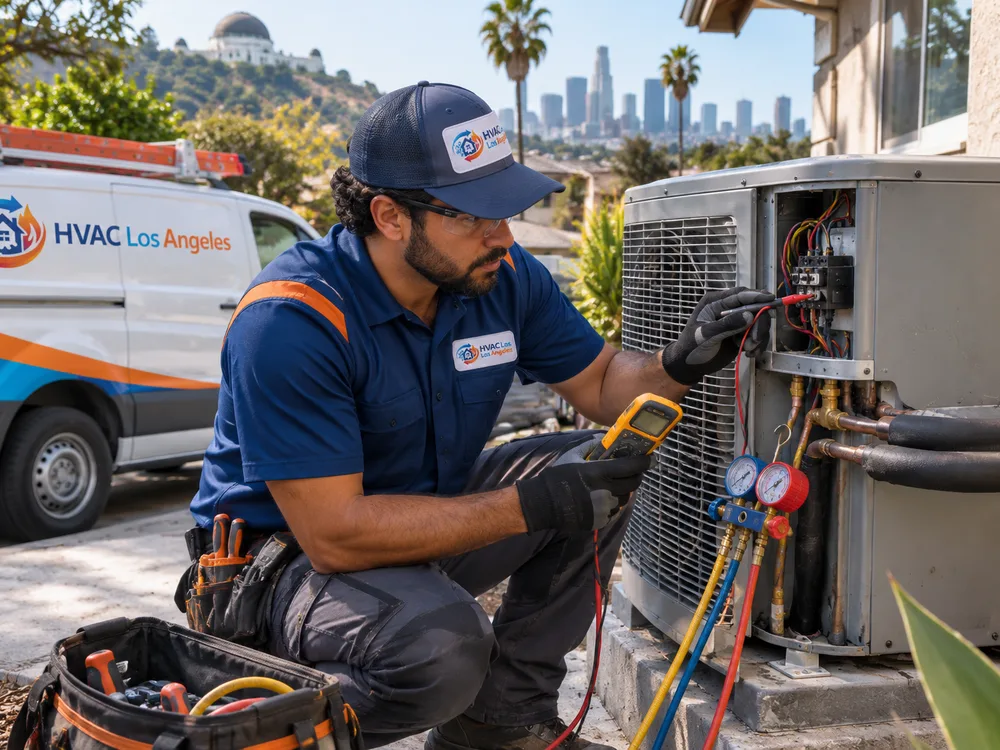
A contractor evaluates heating and cooling loads, electrical service, equipment placement, ductwork, and controls before recommending a system.
Replacement may include the outdoor unit, indoor coil or air handler, thermostat, refrigerant lines, disconnect, drain components, and equipment pad as needed.
A central heat pump uses ducts to serve the home. The contractor should check duct sizing, leakage, return-air capacity, filter access, and airflow at the registers.
Mini-split and multi-split systems use indoor heads connected to an outdoor unit. They can suit additions, converted spaces, and homes where installing ducts is impractical.
Maintenance commonly covers filters, coils, condensate drainage, electrical connections, operating temperatures, refrigerant-circuit performance, and thermostat operation.
One call connects you with a local heat pump contractor. There is no form or email wait, and you decide what happens after speaking with the contractor.
Enter your ZIP code and you are connected directly with a local contractor who serves that area. Calls are answered around the clock.
The contractor may ask about the existing equipment, utility type, rooms with comfort problems, electrical panel, ductwork, and whether the project is a new installation or replacement.
For system selection, the contractor should evaluate the building rather than rely on square footage alone. A load calculation considers factors such as insulation, windows, orientation, air leakage, and indoor design conditions.
The contractor explains the equipment, capacity, efficiency ratings, controls, electrical work, duct changes, permit responsibilities, installation details, and quoted scope. You decide whether to proceed.
The installer removes equipment included in the scope, sets the new components, completes electrical and refrigerant connections, establishes drainage, and tests operation. Commissioning should include airflow and control checks rather than a simple start-up.
Skip the search through multiple listings. One call connects you directly with a Los Angeles-area contractor who handles heat pump installation, replacement, and maintenance.
CALL NOW: 424 577 5132
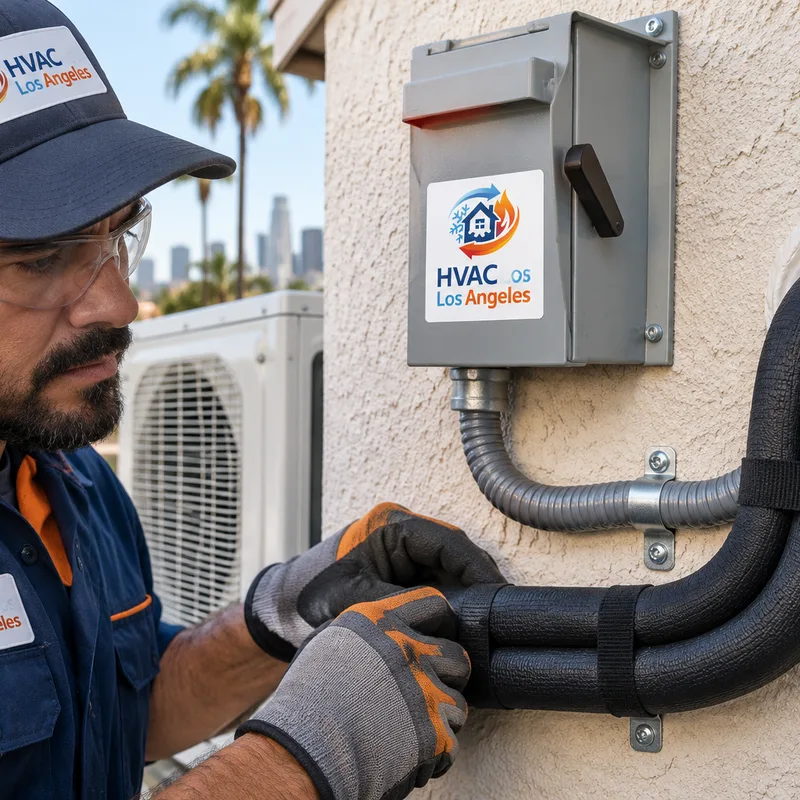
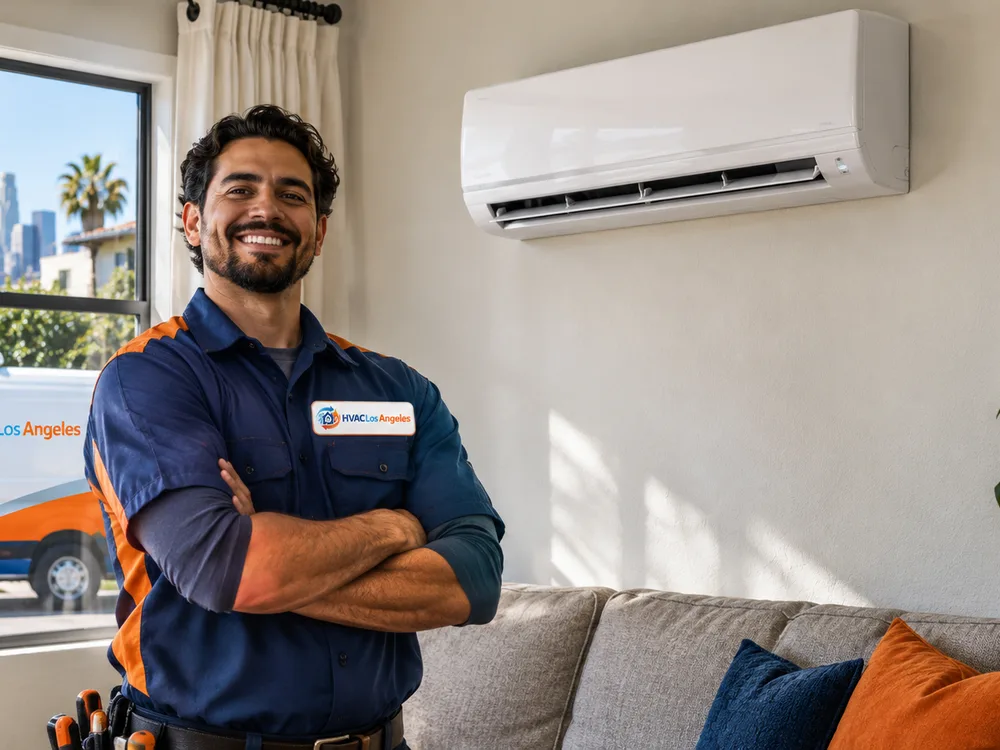
The right choice depends on the condition of the existing equipment, ducts, electrical service, and refrigerant piping. Ask the contractor to separate required replacement work from optional changes and explain whether a central, ductless, or mixed setup suits the home's layout.
A contractor should size the system using a heating and cooling load calculation, not square footage alone. The calculation should account for insulation, windows, air leakage, orientation, and local design conditions, which can differ between coastal communities, central Los Angeles, and hotter inland valleys.
Panel work depends on available capacity, the proposed equipment, and other electric loads in the home. The contractor should check the panel, breaker spaces, circuit requirements, disconnect, wiring route, and whether auxiliary electric heat is part of the design.
Mechanical and electrical work commonly requires permits through the authority responsible for the property, such as the Los Angeles Department of Building and Safety within the City of Los Angeles. Ask the contractor which permits and inspections apply and who is responsible for each part of that process.
The scope should identify the indoor and outdoor equipment, capacity, efficiency ratings, thermostat or controls, refrigerant piping, condensate drainage, electrical work, duct changes, equipment supports, removal work, permits, commissioning, and warranty terms. Ask the contractor to note exclusions as clearly as included work.
Existing ducts can sometimes be reused if they are correctly sized, reasonably sealed, and capable of delivering the required airflow. The contractor should inspect supply and return paths, static pressure, filter location, insulation, accessible leakage, and rooms with uneven temperatures before recommending reuse.
The old equipment included in the scope is disconnected and removed, then the new indoor and outdoor components are installed and connected. The contractor should test drainage, electrical operation, refrigerant-circuit performance, airflow, thermostat functions, heating mode, and cooling mode before completing the job.
Routine care includes replacing or cleaning filters, keeping the outdoor coil clear, checking condensate drainage, and having operating components evaluated as appropriate. Ask the contractor for maintenance instructions specific to the installed model and for the correct filter size and replacement schedule.
Call and get connected directly with a contractor who serves your area. Discuss installation, replacement, or maintenance with the contractor and decide what happens next.