
Equipment sizing
The contractor should base capacity on the home's cooling load, not square footage alone or the size printed on the old unit.
Serving Los Angeles, California & surrounding areas
Calls answered around the clock
One call connects you directly with a local air conditioning contractor who serves your area.
CALL NOW: 424 577 5132
Air conditioner installation in Los Angeles starts with selecting equipment for the property rather than simply replacing an old unit with one of the same nominal size. A contractor should evaluate the conditioned floor area, insulation, window area, sun exposure, air leakage and duct system. These factors affect the cooling load, airflow and equipment capacity.
Oversized equipment can satisfy the thermostat too soon, cycle frequently and provide uneven comfort. Undersized equipment may struggle during sustained hot weather. A Manual J load calculation is the recognized method for estimating a home's heating and cooling loads, while Manual S applies those results to equipment selection. If ducts are involved, Manual D principles guide sizing and layout.
Los Angeles properties present varied installation conditions. Older homes in neighborhoods such as Highland Park may have limited space for ducts or electrical equipment. Dense lots in Koreatown can restrict condenser placement and service clearances. Hillside properties in areas such as Mount Washington may require careful planning for equipment access, drainage and a stable outdoor pad. In the San Fernando Valley, high summer cooling demand makes load calculation and duct condition especially relevant.
The Los Angeles Department of Building and Safety handles permits and inspections for work within the City of Los Angeles. The contractor can explain which approvals apply to the property and whether electrical, mechanical or structural work is included. Southern California Edison or the Los Angeles Department of Water and Power may be the electric utility, depending on the address, so the installer should confirm available service rather than assume.
We connect callers with hvac la contractors throughout Los Angeles, CA who serve local ZIP codes and handle residential AC installation. The conversation is direct. The contractor can discuss the property, installation options, quote and next steps, and the homeowner decides whether to proceed.
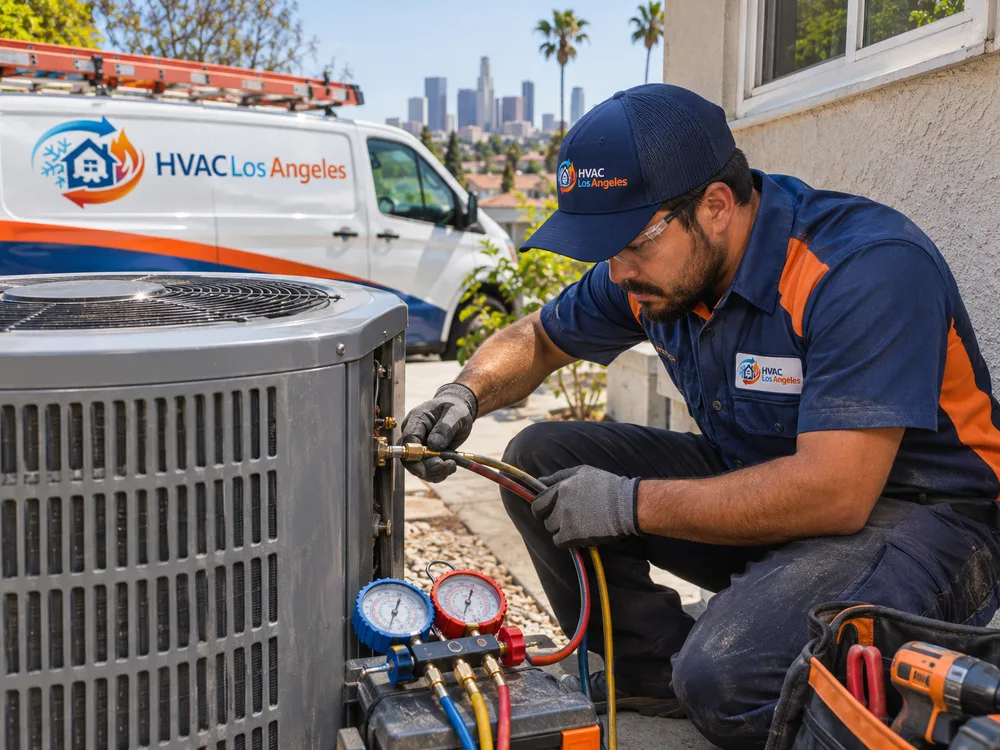
The contractor should base capacity on the home's cooling load, not square footage alone or the size printed on the old unit.
Restricted returns, leaking ducts and poorly balanced supply runs can limit the performance of new equipment. Existing ducts should be checked before reuse.
The installer checks the panel, circuit, disconnect and conductor requirements for the selected system. Some replacements require electrical changes.
Line-set compatibility, insulation, routing and condensate disposal affect reliability. Existing lines may be reused only when their condition and specifications suit the new equipment.
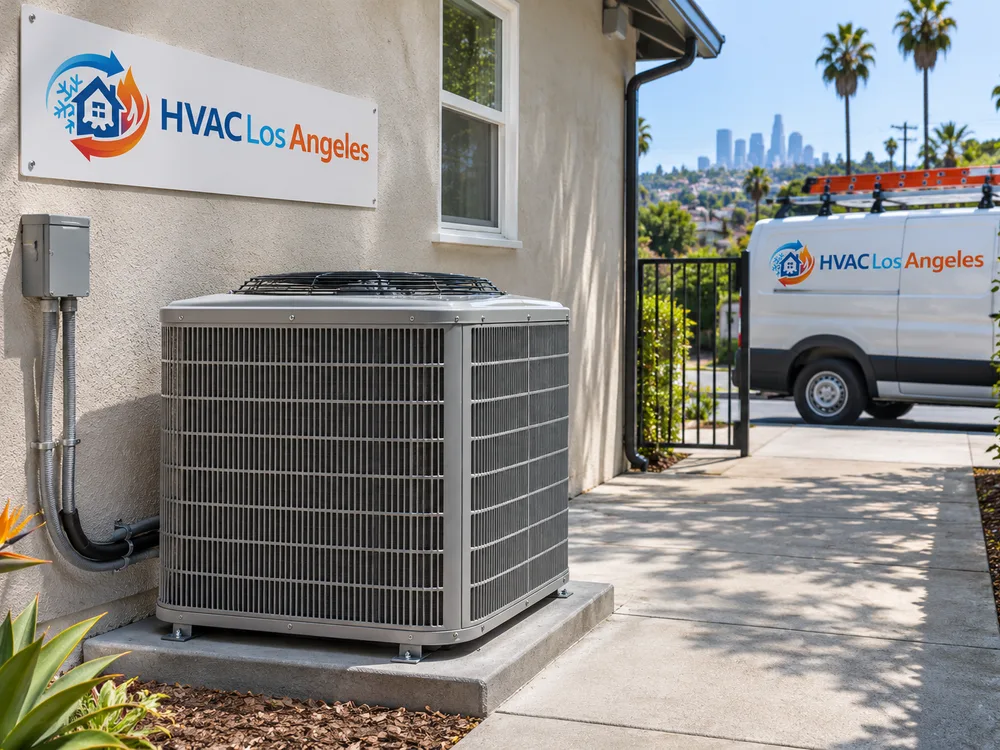
The outdoor unit needs a level base, manufacturer clearances and practical service access. Noise, drainage and distance from property boundaries may also affect placement.
One call connects you with a local contractor. You discuss the installation and receive the quote directly from the contractor, then choose what happens next.
Call, enter your ZIP code and you are connected directly with a local air conditioning contractor who serves that area.
The contractor discusses the home and arranges the appropriate evaluation. Existing equipment, ducts, electrical capacity, access and comfort concerns may influence the recommendation.
The contractor identifies the equipment type and explains what the installation includes. Review capacity, efficiency ratings, duct changes, controls, permits, disposal and warranty terms before deciding.
The old equipment is removed when replacement is part of the job. The installer sets and connects the new system, then checks refrigerant charge, condensate drainage, controls, temperature change and airflow.
Avoid contacting contractor after contractor. One call connects you directly with a local AC installer who handles this work in the Los Angeles area.
CALL NOW: 424 577 5132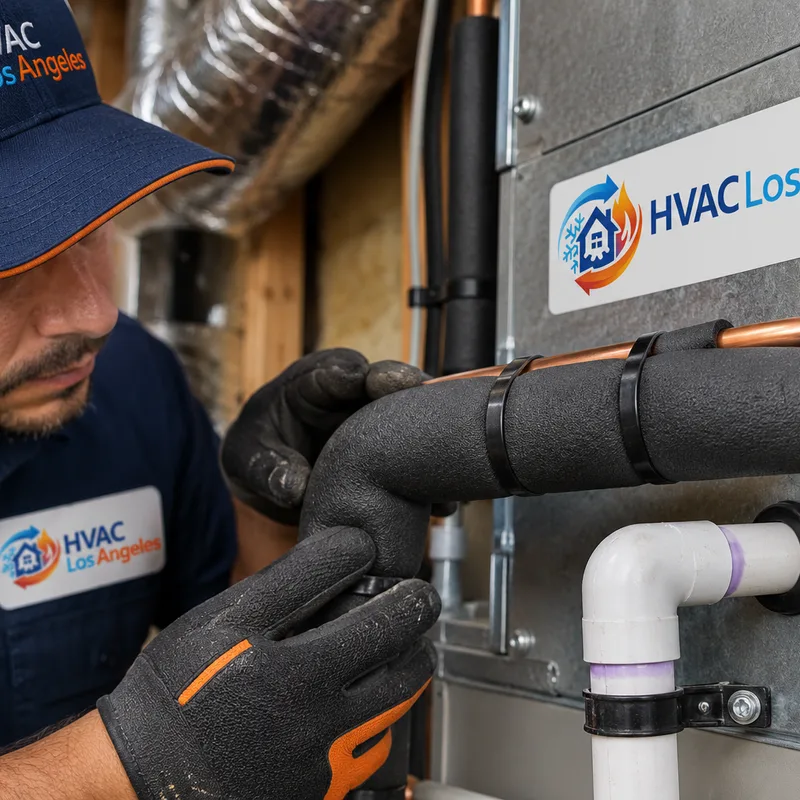
Matched indoor and outdoor equipment is generally the sounder choice when components are incompatible, use different refrigerants or have substantially different condition and performance. The contractor should identify the indoor coil, air handler or furnace, metering device and controls before recommending a partial or complete replacement.
Existing ducts can be reused when their sizing, condition and layout support the required airflow. Ask the contractor to check accessible ducts, return-air capacity, leakage, damaged insulation and room-to-room balance before the installation scope is settled.
The appropriate system depends on the building and how it is used. Central split systems suit many homes with usable ducts, while ductless mini-splits can address additions, converted spaces or buildings where adding ducts would be disruptive. Heat pumps can provide cooling and heating from the same system.
The proposal should identify equipment model numbers, capacity, efficiency ratings and the work included. It should also address ducts, refrigerant lines, electrical work, controls, condensate drainage, equipment removal, permits, inspections and manufacturer warranty terms where applicable.
Mechanical replacement or installation within the City of Los Angeles commonly involves permitting through the Los Angeles Department of Building and Safety, and related electrical work may require approval as well. Requirements vary with the address and scope, so ask the contractor who will obtain the permit and coordinate inspections.
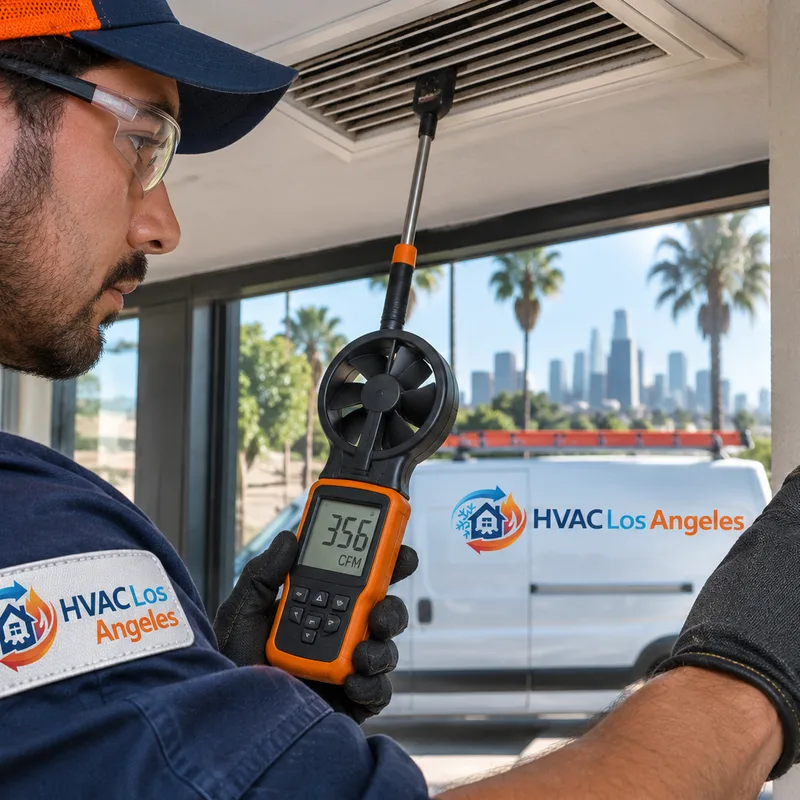
The installer should commission the system rather than stop after confirming that it turns on. Typical checks include refrigerant charge using manufacturer procedures, supply and return temperatures, static pressure, airflow, thermostat operation, condensate drainage and unusual vibration or noise.
Compare the load basis, equipment pairing and complete scope rather than looking only at nominal capacity. Ask why each system was selected, what duct or electrical changes are included, how commissioning will be documented and which warranty obligations belong to the manufacturer or contractor.
Call and get connected with a local air conditioning contractor who serves your area. You talk with the contractor directly about the property, the installation options and what happens next.