
A scope based on inspection
Visible dust at a register does not prove that every duct needs cleaning. The contractor should inspect accessible equipment and openings, then identify the components that warrant attention.
Serving Los Angeles, California & surrounding areas
Calls answered around the clock
One call connects you directly with a local contractor who cleans residential HVAC systems in the Los Angeles area.
CALL NOW: 424 577 5132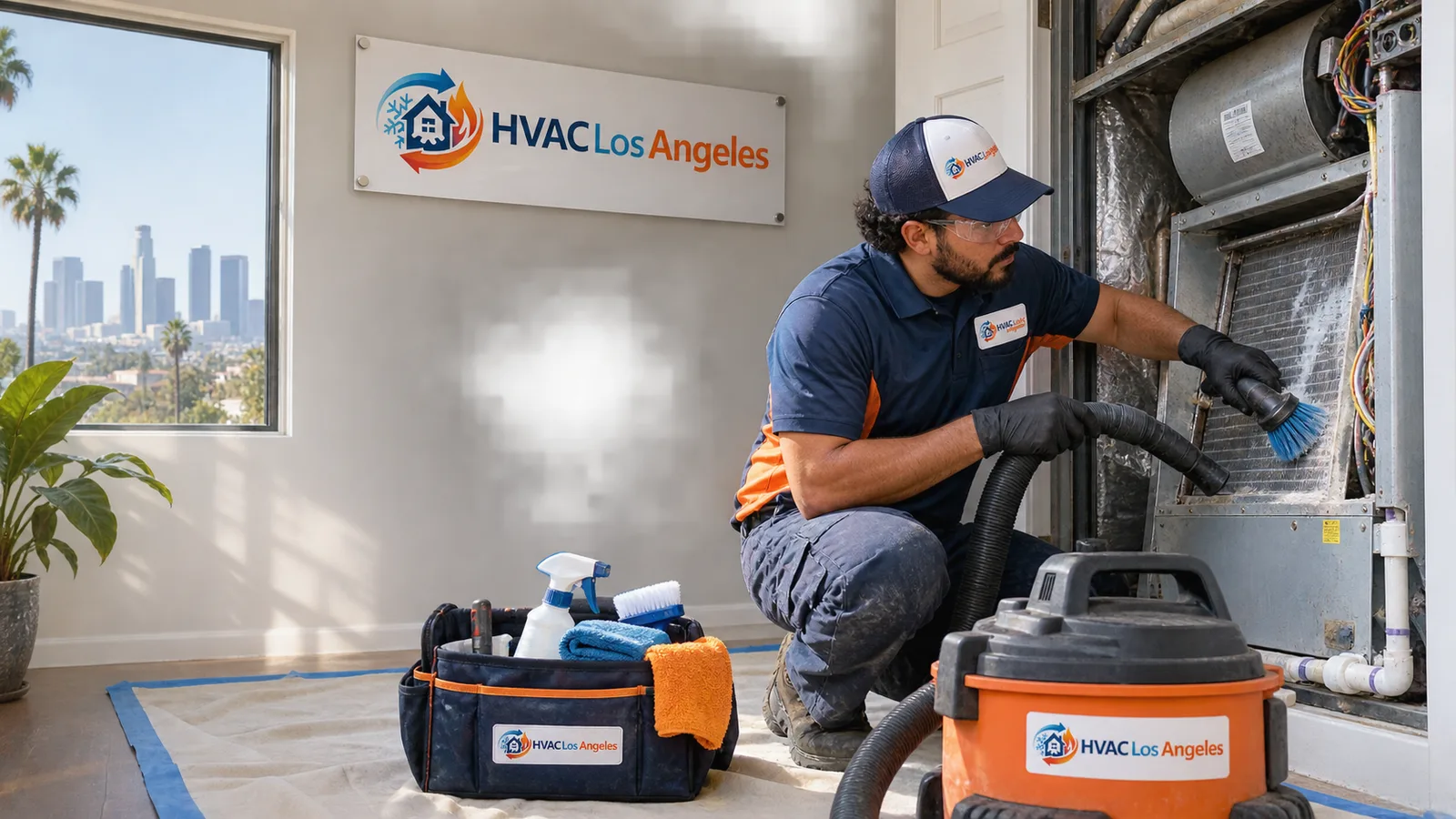
HVAC cleaning Los Angeles homeowners request can address dust, lint, pet hair, construction debris, and residue on accessible heating and cooling components. The exact scope depends on the system and where buildup is found. A contractor may inspect the return grille, filter cabinet, blower compartment, evaporator coil, condensate pan, supply registers, and accessible ductwork before recommending any cleaning.
The first question is whether the problem is limited to grilles and accessible equipment or extends into the duct system. Equipment cleaning can include removing debris around the blower assembly and cleaning the evaporator coil with a product and method suited to that coil. Duct cleaning is a separate, broader task that may involve agitation tools and negative-pressure collection. A contractor should explain which components are included rather than using “whole-system cleaning” as a vague label.
Los Angeles conditions can create several kinds of buildup. Open windows can admit traffic dust and outdoor particles. Wildfire smoke episodes may leave fine particles on filters and indoor surfaces. Remodeling dust can enter returns when registers are not protected during construction. In homes with pets, hair and dander can collect around return grilles and filter racks. Cleaning removes existing material, while the correct filter and a well-sealed filter slot help reduce new accumulation.
HVAC cleaning is maintenance, not a cure for every comfort or air-quality complaint. Weak airflow may come from a loaded filter, dirty coil, closed damper, damaged duct, or mechanical fault. Persistent odor can involve the drain pan, condensate line, wet insulation, or another source outside the HVAC system. If cleaning reveals a repair or replacement issue, heating and cooling in Los Angeles is a separate scope that the contractor can discuss with you.
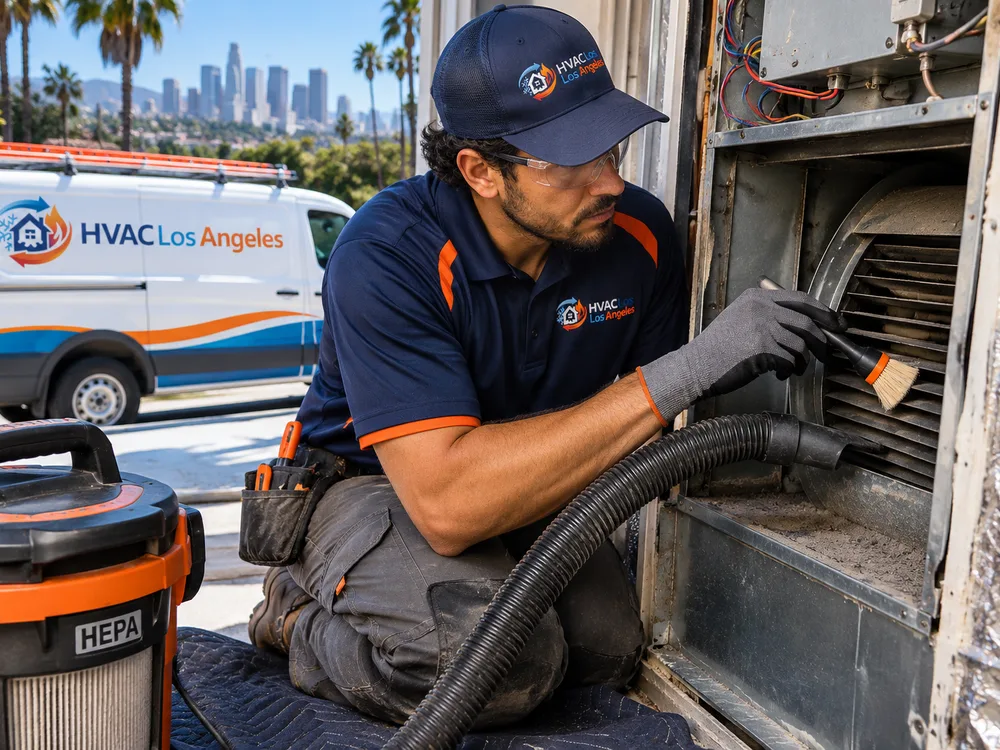
Visible dust at a register does not prove that every duct needs cleaning. The contractor should inspect accessible equipment and openings, then identify the components that warrant attention.
Coil fins, wiring, control boards, insulation, and flexible ducts can be damaged by rough tools or excess moisture. Cleaning methods should fit the material and component.
Collection equipment and controlled agitation help keep loosened material from spreading through occupied rooms. Ask how registers, flooring, and nearby furnishings will be protected.
A dirty filter or coil can restrict airflow, but so can crushed flex duct, blocked returns, or a blower problem. Cleaning should not be presented as the answer until these possibilities are considered.
One call connects you with a local contractor who handles HVAC cleaning. You discuss the scope and quote directly with that contractor, then decide whether to proceed.
Enter your ZIP code and you are connected directly with a local contractor who serves that area. There is no form or intake conversation with a middleman.
The contractor may ask about equipment type, filter changes, odors, visible debris, recent remodeling, pets, and any rooms with weak airflow. You can ask which components they intend to inspect and clean.
The contractor explains what the job includes and provides the quote. Confirm whether the proposal covers the air handler, coil, blower assembly, registers, return plenums, ductwork, or only selected components.
You speak with the contractor directly and choose whether to schedule the work. Ask how the home will be protected and what access the contractor will need.
Skip the round of contractor searches. One call connects you with a local HVAC cleaning contractor who serves the Los Angeles area, and you stay in control of the decision.
CALL NOW: 424 577 5132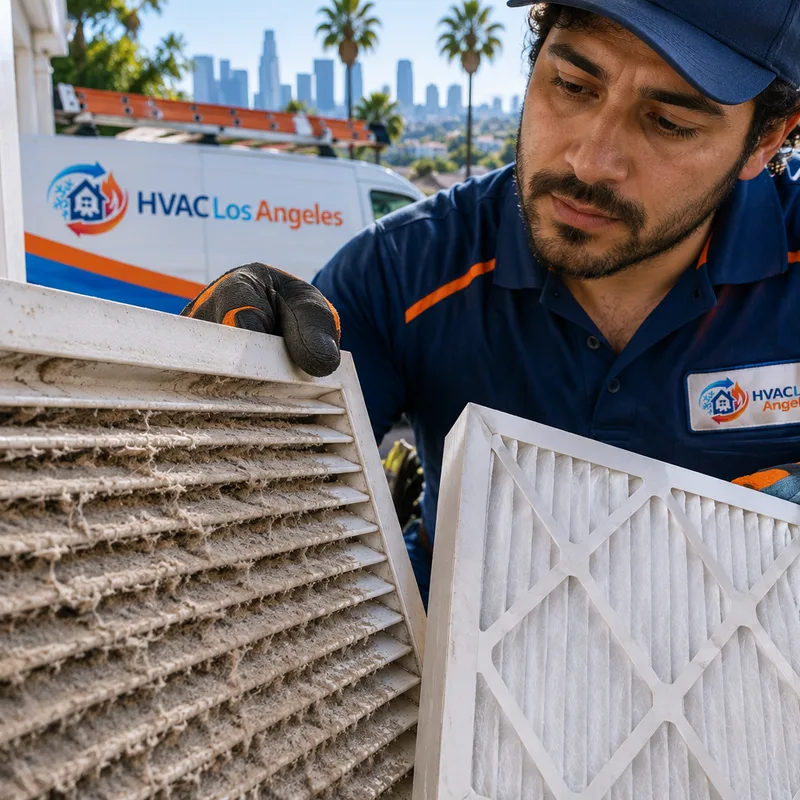
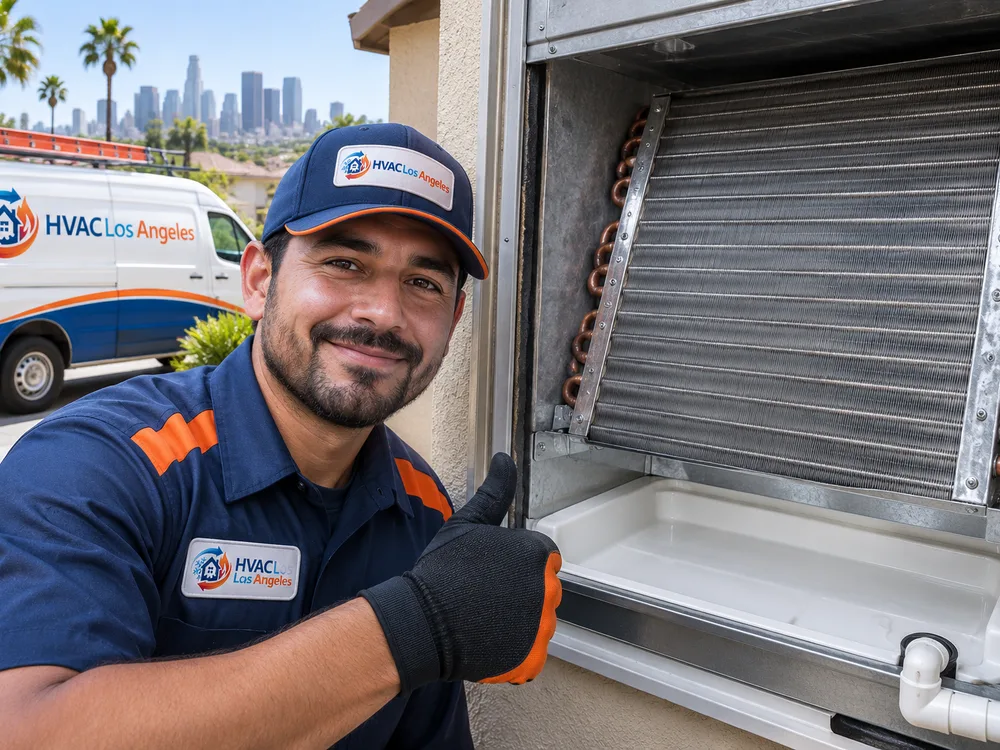
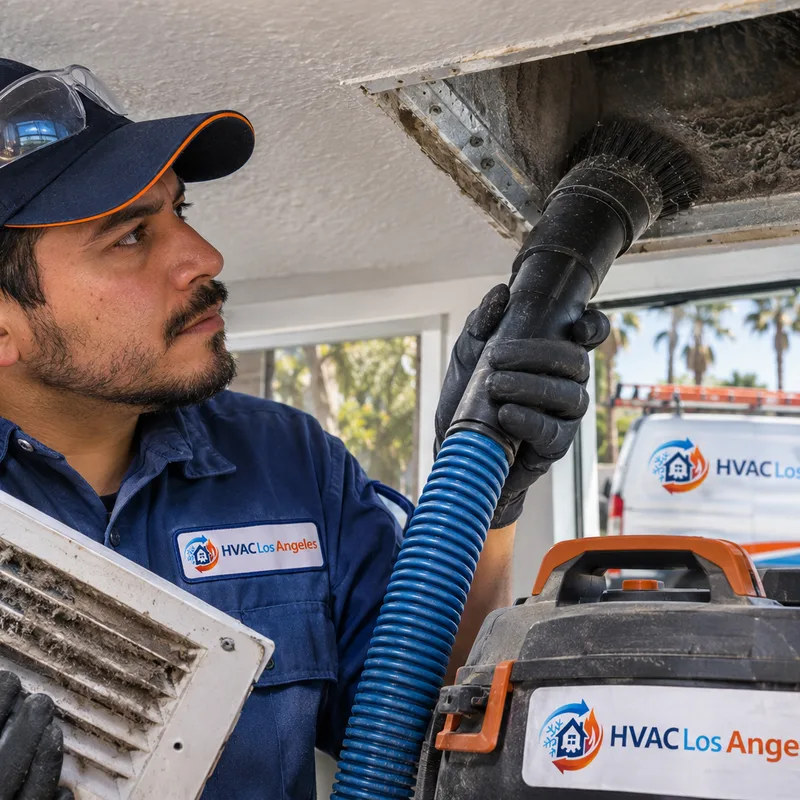
The choice should be based on where the buildup is found. Dust on grilles may call for localized cleaning, while debris inside the blower compartment, coil, plenums, or duct runs can require a broader scope. Ask the contractor to identify the affected components and explain the cleaning method for each one.
An evaporator coil should be cleaned when inspection shows buildup that warrants it, but it must be accessed and treated correctly. Coil fins bend easily, and cleaners must be compatible with the coil and surrounding materials. Ask whether coil access, condensate-pan cleaning, and drainage checks are included in the proposed work.
Cleaning can help when dirt is restricting a filter, blower, coil, register, or duct, but one-room airflow problems can have other causes. A closed damper, disconnected run, crushed flexible duct, or poor return path may be responsible. The contractor should check for these conditions before attributing the problem to dirt alone.
Cleaning may remove an odor when the source is dust, residue, or buildup on an accessible HVAC component. Odors associated with standing condensate, wet insulation, pests, smoke infiltration, or a source inside the room require the source to be addressed. Ask the contractor what evidence points to the HVAC system before approving odor-related cleaning.
The contractor should explain which equipment panels, registers, closets, attic areas, or crawl spaces need access. Homeowners may need to move furniture away from grilles and secure pets, while the contractor should describe plans for floor protection and debris containment.
Confirm the exact components to be cleaned, the method to be used, and any items excluded from the work. Ask whether the proposal includes return and supply sides, the blower compartment, evaporator coil, drain pan, registers, and accessible ductwork. The contractor provides the quote, and you decide whether the scope fits the condition of your system.
Call and get connected directly with a local contractor who handles HVAC cleaning in the Los Angeles area. Discuss the system and proposed scope with the contractor, then decide what happens next.